
67th THESSALONIKI INTERNATIONAL FILM FESTIVAL
5 NOVEMBER → 15 NOVEMBER 2026

11.11.2026
NEWS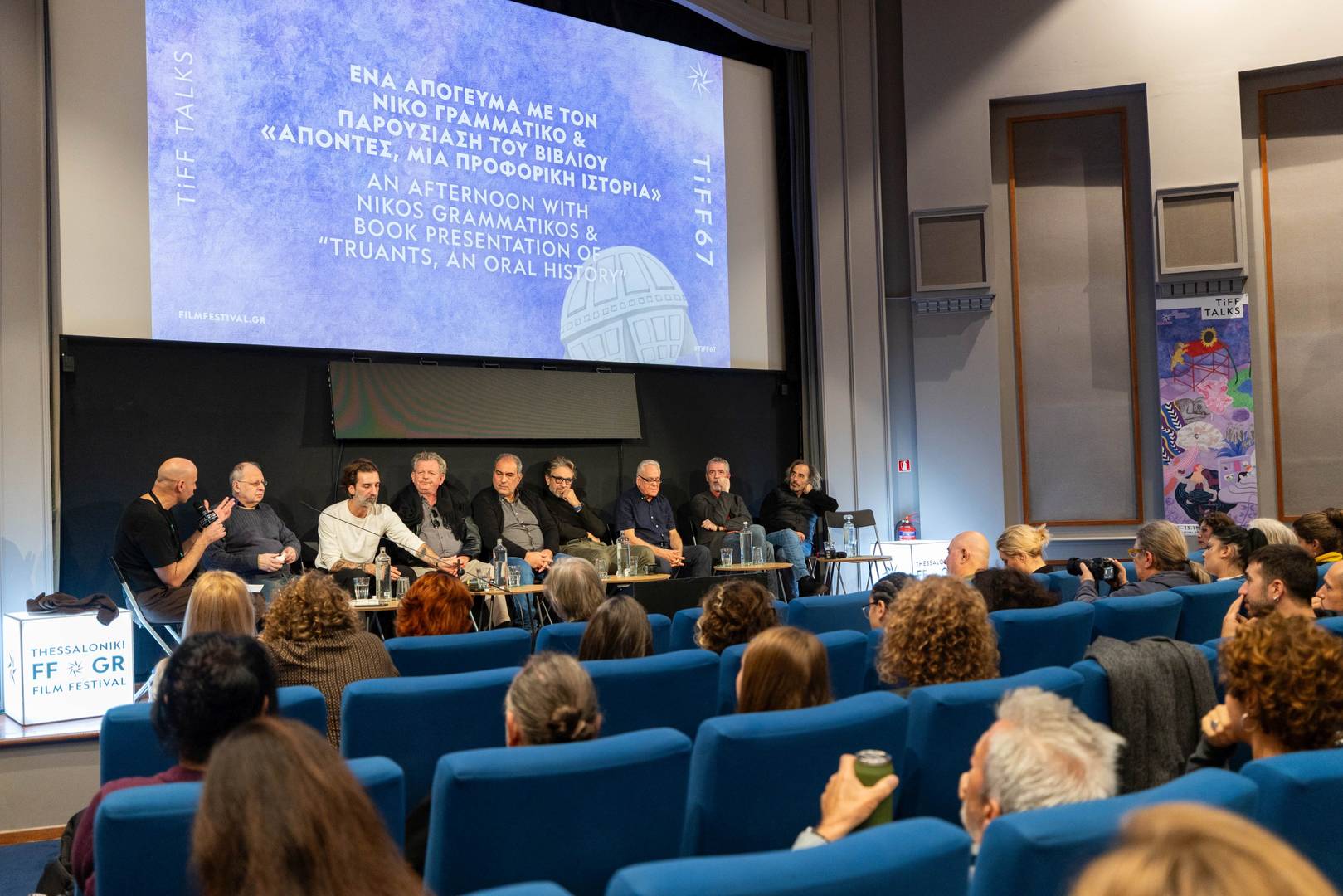
Nikos Grammatikos and the contributors of the film, Truants, met the audience of the 67th Thessaloniki International Film Festival in an open discussion, held as part of the TIFF Talks program on Tuesday, November 10th, at the Pavlos Zannas theater, within the framework of the Festival’s grand tribute to the director’s body of work.
One day after the honorary Golden Alexander was awarded to Nikos Grammatikos, and thirty years after the first screening of his iconic Truants, the director, together with the cast and crew, discussed the creative process and shared stories from the shoots, on the occasion of the very first presentation of the book, titled “Apontes, mia proforiki istoria” [Truants, An Oral History], in which writer, Theodosis Michos, recounts the personal stories of the film’s contributors throughout its making. “I didn’t make the films I could have made. I made the films I couldn’t not make,” Nikos Grammatikos stated, among other things.
Yannis Palavos, TFF’s International Program associate, welcomed the audience, addressing the audience’s emotional response to the screening of Truants during this year’s edition. Then, he invited the book’s author, Theodosis Michos, on stage, as well as some of the people involved in the film: Nikos Panayotopoulos, Yorgos Mavropsaridis, Aimilios Heilakis, Yorgos Evgenikos, Nikos Georgakis and Vangelis Mourikis.
The discussion kicked off with Theodosis Michos’s book, which was released a few days prior and includes the recollections of Nikos Grammatikos, as well as those of the film’s contributors. The author described that the idea came about seven years ago, sparked by a feature story about Truants he wished to write, which ultimately turned into a book. “It was an idea born unexpectedly and without any particular anniversary to prompt it. In 2019, I happened to watch the film for the umpteenth time and, nearing forty myself, it affected me in a different manner than it had previously. I decided to do a feature, and began approaching a few of the people involved,” he explained.
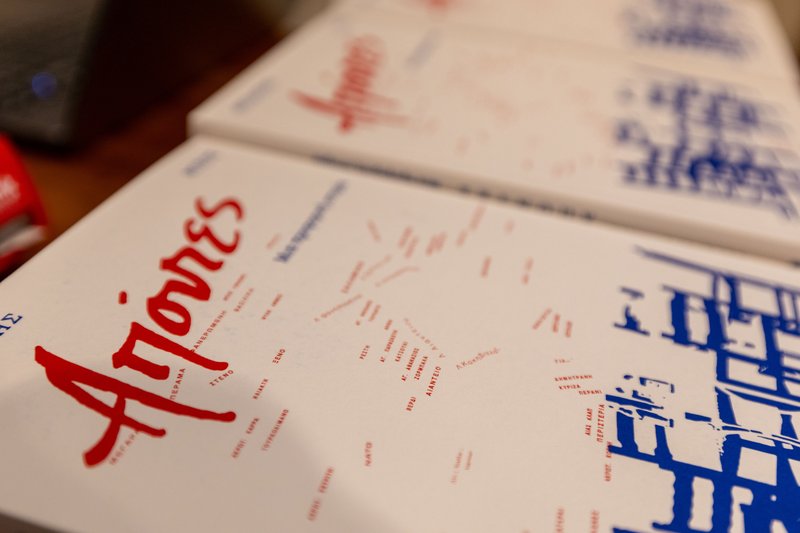
As he mentioned, the feature took on a life on its own, evolving into a book without him even realizing it: “I was interviewing Vangelis Mourikis one afternoon and, while discussing something else, he suggested I write a book about Truants. I told him I was considering it. Thus, the idea began to take shape, and I started to look for all living contributors, conducting interviews.” Theodosis Michos also referred to the methodology he followed, the book’s seven-chapter structure, and the interview process, elaborating further on why he chose the oral story format. As he stressed, what stayed with him most about these conversations was the emotional intensity of his interlocutors.
The film’s contributors then shared their initial reactions upon receiving the author’s call, all those years later, asking them to talk once more about Truants. Aimilios Heilakis touched on the sense of duty he felt: “Suddenly, I was overcome by an immense responsibility to convey the view some of us had about our generation and friendship. Rewatching the film yesterday made me realize we bore something of weight on our shoulders. Yorgos Evgenikos described the elation he felt accepting the call: “Out of the blue, I got a phone call that made me overjoyed. On the line’s other side was Theodosis, a very kind person, who spoke about Truants with incredible passion – winning me over immediately. That’s what matters: the way a person tries to elicit information from their conversation partner. He did it so beautifully, he made all of us open up.”
Scriptwriter Nikos Panayotopoulos discussed his acquaintance with the author, which predated the book, as well as the ease with which they conversed when Theodosis Michos approached him. As he remarked, the book is quite interesting, and he is particularly thrilled it’s been published. On his part, Nikos Georgakis shared how moved he was by the film’s screening at this year’s Festival and by his meeting with the author: “We met up at a bar when he showed me the text. Nothing like this has ever been done before - an entire book being written about a film. Yesterday, at the screening, the audience’s response was truly touching, and so is still being stopped by young people on the street to talk about Truants.”
Vangelis Mourikis noted: “We all had a positive response. The film wasn’t a major commercial success when it first came out, so the chance to talk about it fulfilled a deep-seated longing in a way.” Producer Panos Papachadzis then took the floor to talk about the film’s initial release in theaters: “When Truants was first released, it didn’t get the reception we were hoping for and which, I believe, it deserved. I’ve ruminated a lot on the reason why. For a film to have a good run, you must, above all, believe in it, and we of course wholly believed in Truants. But that’s not all. The distribution, the way a film reaches the audience, plays a pivotal role in its commercial run. Perhaps, way back then, it didn’t find its way. Today, witnessing how it was embraced by younger generations, I feel it found its way at long last.”
Nikos Panayotopoulos, in turn, pointed out the distance separating then and now, indicating that Greek cinema’s evolution has restored the relationship between Greek audiences and Greek films. “A film is seen through different eyes today than it was back then. Greek films have been redeemed in the public’s perception thanks to the numerous films that followed, and today we can look back on the films we dismissed at their time, and cherish them the way they deserve,” he observed.
Then, the President of the Festival’s Board of Directors brought up the reviews published during the film’s initial release, expanding further on the overarching cinematic climate of the era, marked by a period of introversion that began to change after Truants.
The film’s editor, Yorgos Mavropsaridis, said that even though he himself hadn’t experienced what his colleagues described, he discerned the cohesion and love between them from the outset. “The editor comes in later to watch the material. At that time, this was the third film we worked on with Nikos, and it was a personal story of his which resonated with me as well. I used to go to Salamis very often, my friends had a summer house there, so I had also experienced this situation. We have all shed the innocence of our adolescence, and we’ve all gone our separate ways. The film taps into this, taking on a timeless character because we’ve all lived it,” he explained.
A conversation with the audience followed, when Aimilios Heilakis asked why the film still resonates with them today. People of different ages shared their thoughts, highlighting the timelessness of Truants, as well as the intense emotions the film keeps evoking, three decades later.
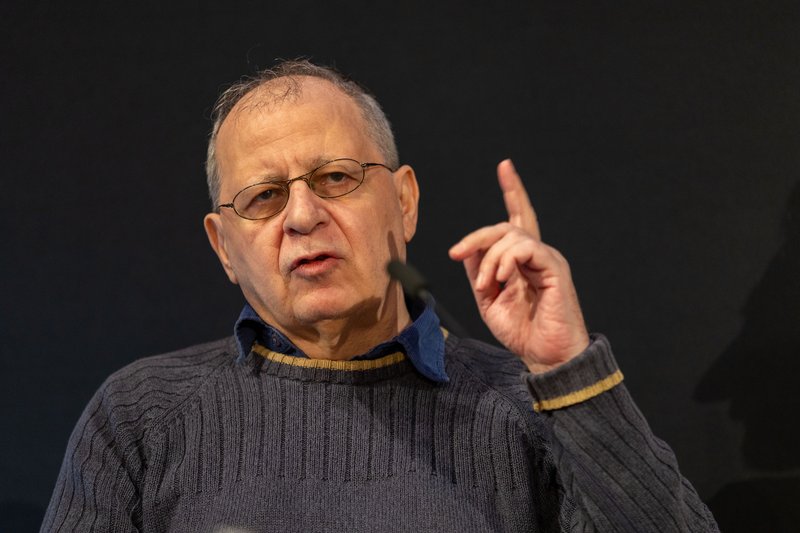
Subsequently, the audience welcomed Nikos Grammatikos with a warm round of applause. The director initially referred to Theodosis Michos’s book: “It’s his book. Just as we do our editing, so did Theodosis,” he mentioned, and then went on to discuss the timeless character of the film, which might have begun from his own experiences, but it was further enriched by those of his scriptwriter, Nikos Panayotopoulos, and the rest of the contributors. “After a lot of thought, I can say that Truants has something archetypal to it when it comes to male friendship. The kind of male friendships some people have, yet live in fear of losing, whereas others have already lost them and built new ones. Just like us – we became close in Truants, and then gradually went our own way.” The talk also centered on the intimacy and special bond developed between men, the importance of male friendship, as well as the notion of the “outsider,” often encountered in the director’s works.
In a particularly personal moment, Nikos Grammatikos spoke out on the insular island community he grew up in, detailing the feeling of asphyxiation which led to him leaving his home. “I don’t find myself agreeing with Homer’s Odysseus in the least. Never return to what you walked away from,” he humorously remarked. He confessed, however, that his visits to the island for the purposes of Truants helped him cope with his father’s death.
The director also referred to the character of Sakis, portrayed by Vangelis Mourikis, and inspired by his childhood friend Fotis Kourtidis. “This was a great loss for me. He battled with cancer for a long time, and I was there for him. I borrowed some aspects of his for Sakis.” He also emphasized his long-standing friendship and close collaboration with Vangelis Mourikis: “Vangelis would come around my house and we’d work till morning. If it wasn’t for him, neither Medea...Louder Than My Thoughts, or Night Flowers would have happened.”
The discussion then shifted to the importance of creating collectively and the relationships forged behind the scenes. Nikos Grammatikos mentioned the exceptional collaborations he was fortunate to have, underscoring that he owes a lot to his collaborators. “One can start a film by themselves, but it can not be completed as such,” he noted, reminding us that along the way, he came across people who were also a great company. As he explained, their collaboration on Truants went far beyond the set, as the contributors had already grown closer during the scriptwriting stage. He recalled visits to a café in Salamis and the rehearsals at Aimilios Heilakis’s house in Exarchia, divulging that it was this café that inspired the film’s original title “Ouzo and Octopus,” which was later replaced by Truants.
Similarly, Nikos Georgakis disclosed a humorous incident featuring Nikos Grammatikos as a lottery ticket seller, while short, true stories that influenced the creative process were also shared, including Giorgos Evgenikos’s fall from his Vespa, as well as the story of two friends from Salamis, who encountered one another by chance in Shanghai. “The script’s narrative structure was crafted by Nikos, and we didn’t stray from it at all. Some improvisation may have taken place during filming, but even then, we were following the narrative structure,” the director stated.
During the event’s final segment, the floor was once again opened to the audience. Asked about how the publishing house had reacted when he first pitched the idea of a book dedicated to Truants, Theodosis Michos referred to the warm response his proposal received by Antipodes publications. Responding to a question about contemporary cinema and all those things that may cause resentment to creators, Aimilios Heilakis talked about Nikos Grammatikos’s way of working, deeming his directorial approach and the atmosphere of creative collaboration on set “a relief.”
Lastly, Nikos Grammatikos explained he didn’t intend to follow strictly predetermined directorial axes, but to seek out emotion and depict the essence of the relationships between people with his camera lens. “There were no directorial axes. There was, however, the geography of relationships, upon which the directing was built. The goal was to capture the key to each scene, which is the emotional core.” The discussion came to an end with the director encapsulating his entire career trajectory into this one phrase: “I didn’t make the films I could have made. I made the films I couldn’t not make.”


