
67th THESSALONIKI INTERNATIONAL FILM FESTIVAL
5 NOVEMBER → 15 NOVEMBER 2026
16.11.2026
NEWS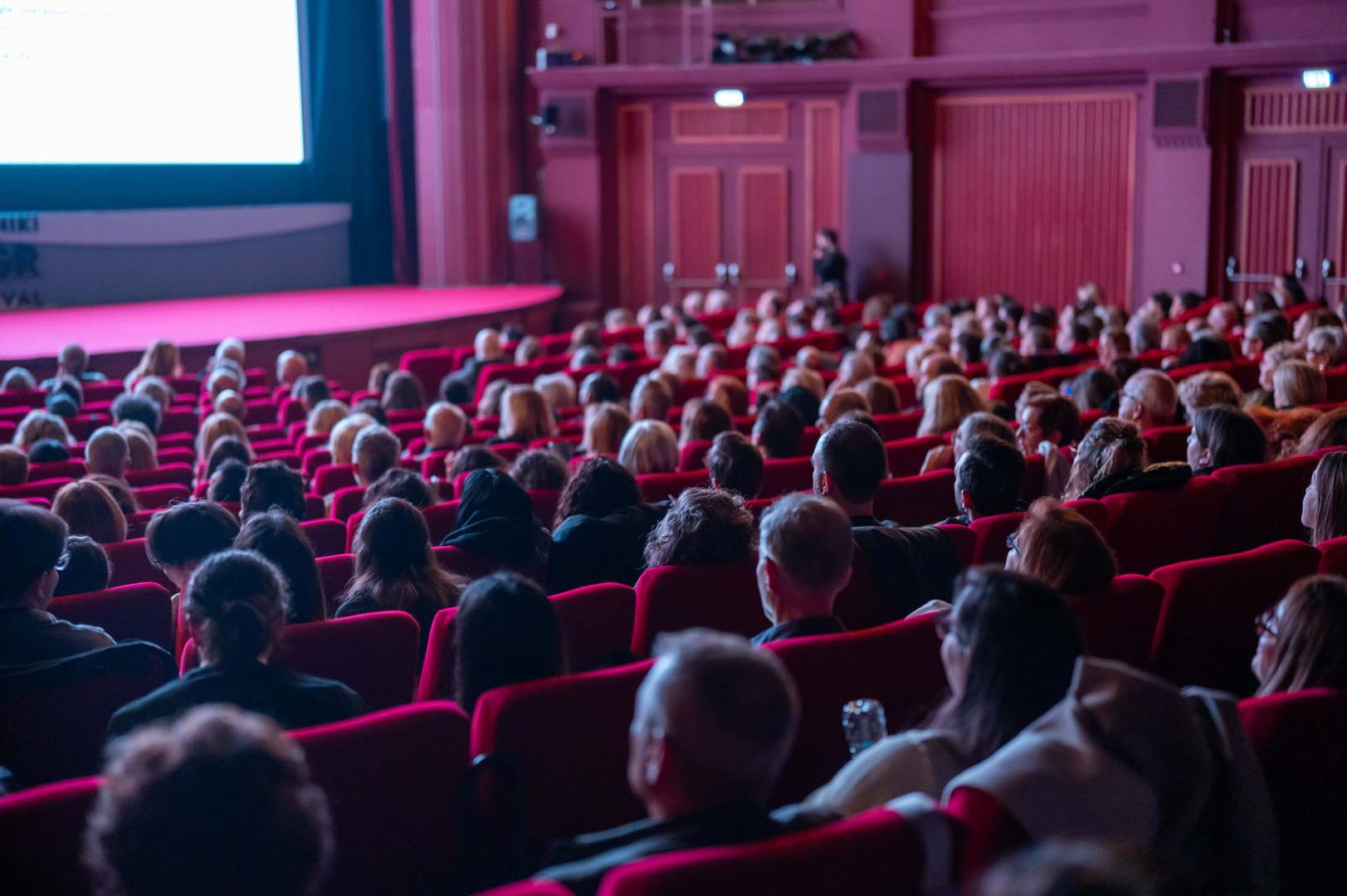
The closing ceremony of the 67th Thessaloniki International Film Festival took place on Sunday, November 15th, at the packed Olympion theatre, in a festive evening that marked the finale of eleven days of cinema, encounters and memorable moments. The Festival called it a wrap with a screening of the film Woman Unknown, directed by May el-Toukhy, which won the Golden Lion at this year’s Venice Film Festival. The film’s two leading actresses of Greek origins, Mathilde Arcel and Marina Bouras, attended the ceremony.
The Festival’s Artistic Director, Orestis Andreadakis, was the first to take the floor, thanking everyone who supported this year’s edition and paying particular tribute to the city’s audience: “The 67th Thessaloniki International Film Festival, like all good things, has come to an end. We would like to warmly thank the Ministry of Culture, the Region of Central Macedonia, the Municipality of Thessaloniki, our sponsors, our partners, our tireless volunteers and, of course, the Festival’s staff for their unwavering support. I would also like to make a special mention. Our guests always leave the Festival delighted, but, as they have been telling us for years, our greatest asset is the Thessaloniki audience. Without exaggeration, they say it is the best audience of all the festivals they have attended: the warmest, the most intelligent, the most engaged, and the one that asks the best questions during Q&A sessions. So, on behalf of the Festival, I want to thank the people of Thessaloniki, all of you!”
Orestis Andreadakis also referred to the awards presented earlier that day, adding: “Over these eleven days, we have watched films, met remarkable people and treasured images that will remain with us forever.”
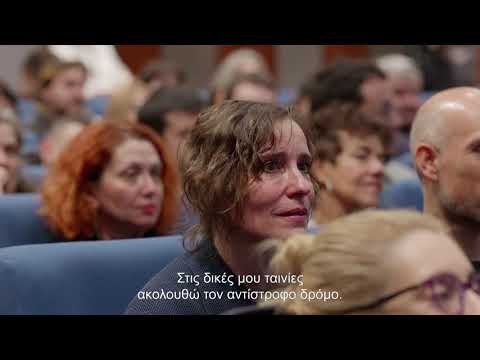
A short video featuring highlights from this year’s Festival was then screened:
Orestis Andreadakis went on to highlight the nominations for the European Film Awards: “In addition to all these films and events, the nominations for this year’s European Film Academy Awards, which will be presented in Athens in January, were announced here in Thessaloniki on Saturday. Films screened in our programme this year received a total of 25 nominations, including the Greek-Cypriot co-production Hold onto Me by Myrsini Aristidou, which won three awards at our Festival. One of the nominated films, and one of the finest of the year, is May el-Toukhy’s Woman Unknown, which won the Golden Lion in Venice this year. It is a period film with a contemporary and up-to-the-minute political hue.”
At that point, Orestis Andreadakis welcomed the film’s two leading actresses onto the stage: Mathilde Arcel, who received the Volpi Cup for Best Actress in Venice and is also nominated for a European Film Award, and Marina Bouras. Both have ties to Greece. “My father is Greek, from Kalamata, and my sisters have been living here for many years,” Marina Bouras said, while Mathilde Arcel explained that her grandmother was Greek, from Lesbos. “The fact that we both have Greek roots makes being here even more wonderful. We have travelled to many places around the world to present the film, but being in Thessaloniki feels like coming home,” Mathilde Arcel remarked. “As Greek-Danish women, we are proud that the film is being screened here today,” Marina Bouras added.
The screening was followed by a discussion with the audience. Set in the aftermath of the Second World War, May el-Toukhy’s Woman Unknown begins with the story of a domestic servant preparing to marry her wealthy employer, before developing into an exploration of the female body as a battleground and a matter of public concern.
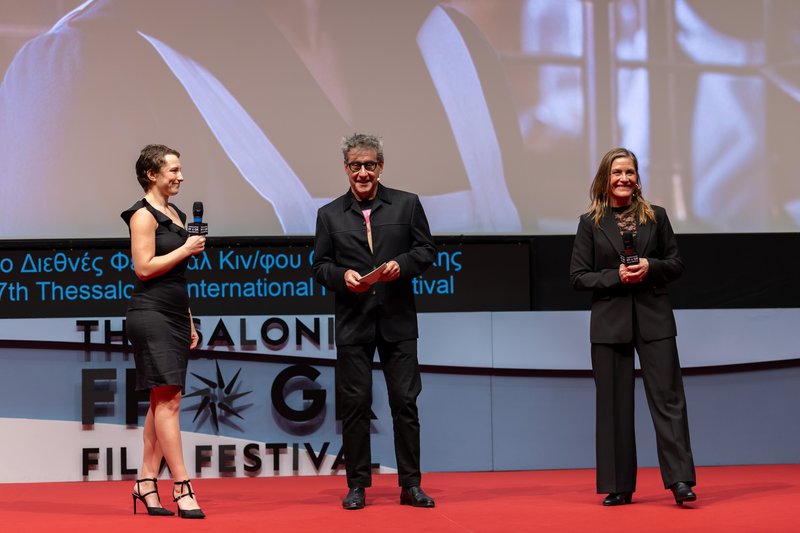
Asked how they approached their characters, Mathilde Arcel explained: “This film was a very different experience for me, as was my role, compared with those I had played in the past. Marie is a woman carrying an enormous secret. When I first read the screenplay, it felt like a puzzle. I found it difficult to understand exactly who this woman was and how she felt. I had to follow a different process from the one I was used to: filling in the gaps in her story myself so that I could understand her better, and then creating her memories for myself. Every time I reached the point of judging her as a person, I realised that I had to put myself in her shoes and understand the circumstances and pressures that had led her to make the decisions she did, as well as the challenges she faced within her historical context.”
Marina Bouras said: “I was extremely fortunate to have the opportunity to work with May el-Toukhy. She gave us very clear directions and was particularly precise about what she wanted from us. Another great advantage was that we had the financial resources to hold numerous rehearsals. We worked on our roles for a long time, and this helped all of us enormously during filming, because everyone already knew what they needed to do with their character. In other words, we had already worked through the emotional background. My character is a woman whose duty is to keep the household together.”
Asked whether the film had been influenced by Alain Resnais’s Hiroshima mon amour, which explores a similar subject, Mathilde Arcel replied: “It is interesting to consider the sources of inspiration one might draw upon when making a film. I have seen that particular film, and there are indeed similarities. Another source of inspiration for the director was the housewives’ movements. Through the film, she wanted to show how the female body is presented as a battleground.
Discussing the film’s political dimension, Mathilde Arcel explained: “I cannot speak on May’s behalf, but I can share what I gathered from our conversations. Her intention was to make a film about the Second World War, but in a different way from most films made about that period so far. May told me that there are many films about that era, but most adopt a male perspective. She therefore wanted to make a film seen through the eyes of a woman who also carried a social stigma, while at the same time showing that reality cannot be reduced to binary oppositions. If you take an absolute position, you cannot preserve the complexity of situations. We kept asking ourselves whether we were going too far, whether we were defending the characters too much or questioning them too harshly. At those moments, we reminded ourselves of the film’s intention: to leave the subject open to different interpretations while preserving its complexity. Marie, as portrayed in the film, is both an accomplice and a victim.”
Marina Bouras reflected on Denmark’s historical context: “Denmark did not follow the same path as other European nations. The Danish resistance emerged relatively late, almost towards the end of the war, when everyone was rushing to take a clear position and demonstrate that they were on the right side of history. These women had to fight twice as hard to prove to their neighbours that they had not sided with the Nazis.”
Asked how the film has affected their lives, Mathilde Arcel was the first to respond: “Of course, this film has had a profound impact on my life and career. I now have the opportunity to travel around the world and attend festivals. It is a unique experience that I am enjoying thanks to this film, as are all those who took part in it. It is a film that brings together many different messages and emotions. When we finished shooting, I was still full of adrenaline, but at the same time completely exhausted. We were filming for twelve to fourteen hours a day, in an apartment set that felt claustrophobic. When filming ended, I felt sad because I was afraid I would forget all the memories I had created for Marie in my mind. So I started keeping a diary, and then I went to the hairdresser and had my hair cut so that I could move on.”
Marina Bouras added: “Our director of photography did an extraordinary job of creating that claustrophobic atmosphere. Even now, watching the film, I felt as though I could hardly breathe, and I remember feeling exactly the same way during filming. All that tension was captured beautifully on screen.”
Mathilde Arcel also spoke about the shooting schedule, which lasted 28 days: “We rehearsed each scene separately, a process that lasted two to three weeks. The screenwriter was with us from the beginning of filming and often made adjustments to the script on the spot. In America, people were surprised by how few shooting days we had, whereas by Danish standards it is quite normal. The editing process was also relatively short, lasting around six months.”
Discussing the film’s title, Mathilde Arcel explained that it can be interpreted in three ways: “First, it refers to Marie, the central character, a woman whom we never manage to know completely, as we usually do with a film’s protagonist. May was also deeply concerned by the fact that many museums across Europe contain paintings of women whose artists’ names we may know, but not the names of the women depicted. The third reason relates to the procedures followed by the Resistance: when they identified women who had collaborated with the Germans, they entered them in their records as ‘unknown woman’. To some extent, this was done to protect them from further hardship later in life, but, as we saw in the film, they suffered a great deal,” she said in conclusion.
Woman Unknown will be released in cinemas by NEO Films on 4 February.


