
FFGR

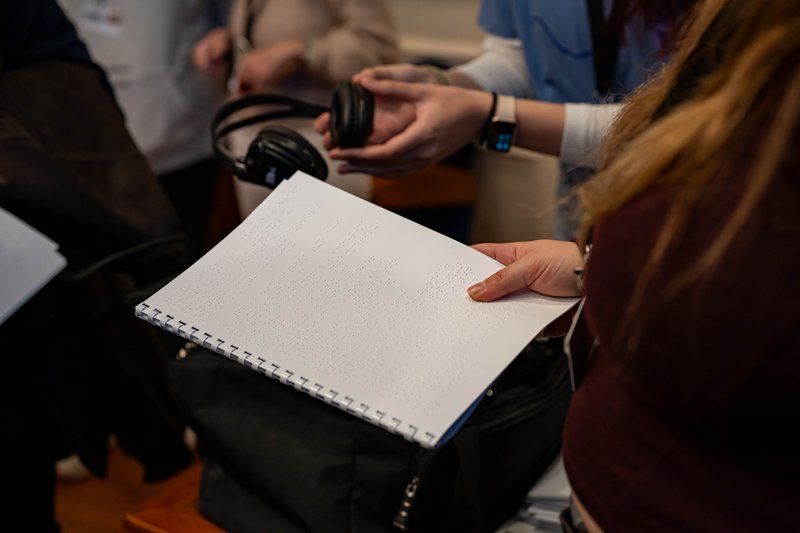
Fully accessible screening of "Night Flowers" by Nikos Grammatikos
09.11.2026
NEWS
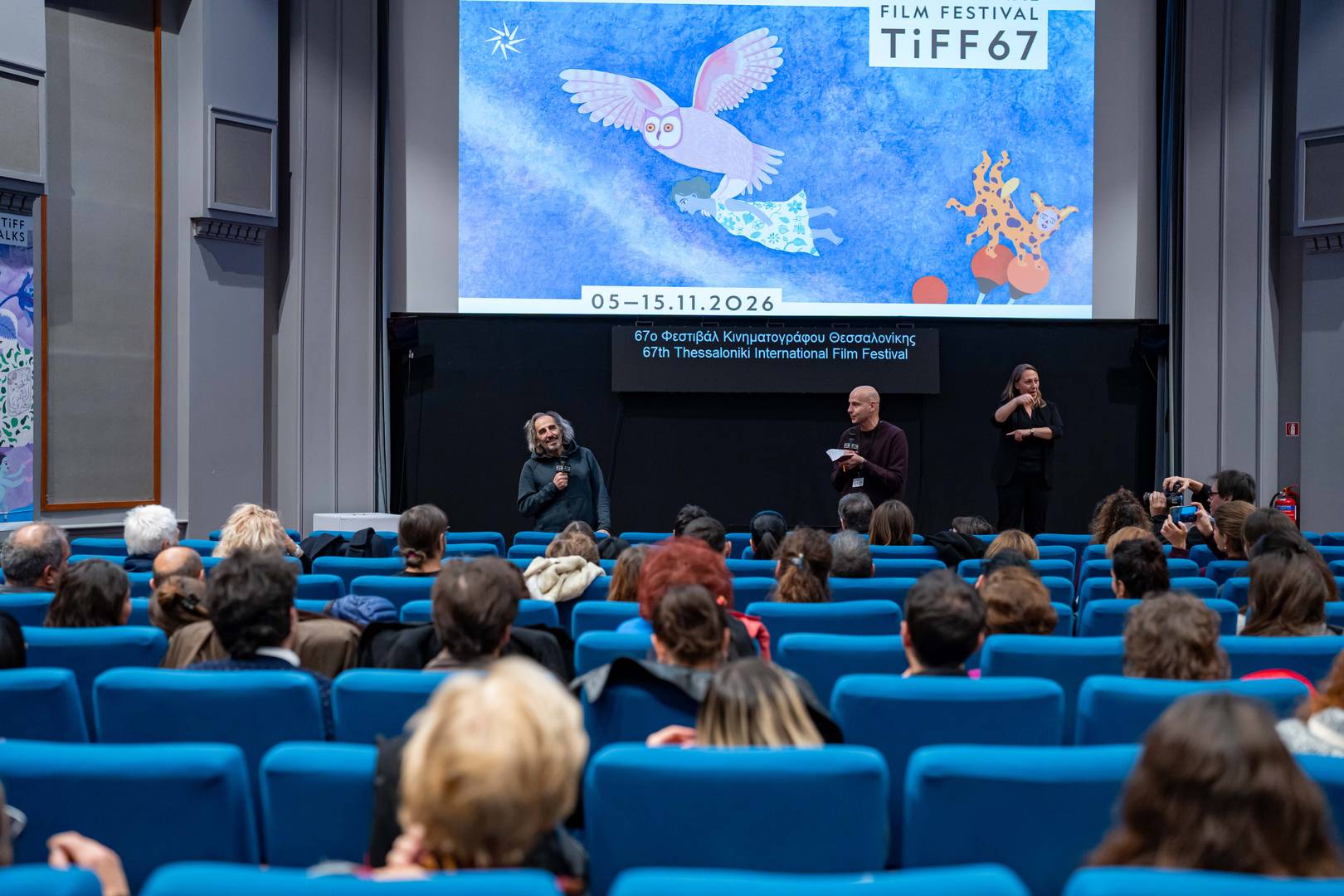
On Sunday, November 8th, the screening of the film, Night Flowers, took place at Pavlos Zannas theater, under fully accessible terms, in the presence of the director, Nikos Grammatikos, as well as the film’s co-writer, Vangelis Mourikis. The Festival continues the program of universally accessible screenings for another year, thanks to the invaluable support of Alpha Bank, the Festival’s Accessibility Sponsor.
The aim of the program is to offer audiences the opportunity to enjoy the magic of cinema, while also bringing to the fore issues that concern people with disabilities. Within the framework of this collaboration, Alpha Bank’s Accessibility Award will be bestowed for yet another year to an individual or a film highlighting accessibility issues in the arts. The award will be accompanied by a cash prize of 3,000 euros.
Yannis Palavos, TIFF's International Program associate, welcomed the audience. “It is the third evening dedicated to the tribute to Nikos Grammatikos, one of the greatest Greek directors that have emerged the past 40 years. We are proud to showcase his entire body of work this year. Tonight, we will present a very special milestone in his career. It is none other than Night Flowers, an exceptionally unique film that is only comparable to his last one, Medea...Louder Than My Thoughts, with which it shares some commonalities regarding its form. This is a film crafted in 1999, screened at the very first Thessaloniki Documentary Festival, which won the Foreign Press Award, as well as the Award for Best Documentary at the Greek State Film Quality Awards. It also enjoyed a significant international run, supported, to a great extent, by Dimitris Eipidis,” he stated.
The screening of the film followed, and then a Q&A with the film’s contributors.
Nikos Grammatikos was asked why he considers this film in particular his favorite out of his entire filmography, and he revealed the story behind its creation, deeming it as an experience that left its mark on both him and all of the film’s contributors. “It’s my favorite film because it was an astonishing experience for us all. Here’s how it all started. In late 1996, I stumbled upon a show on the SevenX television station one evening by chance, featuring a report on the education of children with visual impairments. It moved me. I called the channel, and the journalist who had covered the feature introduced me to the educator. Vangelis Mourikis was in Australia at the time. I remember showing him footage from the educational program, and him asking, ‘Shall we go ahead and make it into a film?’ ‘Let’s,’ I replied. We secured funding from the Greek Film Centre and ERT (Hellenic Broadcasting Corporation), and gradually began filming in 1997. The film was completed a year later. It was a life-changing experience for me. I’d like to let you in on a secret: losing my vision is one of my greatest fears. At home, I still leave a light on at night. I’ve read a lot about blindness, even a small book by H. G. Wells, titled The Country of the Blind, because that’s how I felt, too: a person carrying a camera in a world where all the children were blind. I chose children who were blind from birth, and throughout the entire process, we also received a lot of help from Panagiotis Kouroumblis, a member of Parliament for the Aetolia-Acarnania constituency at the time.”
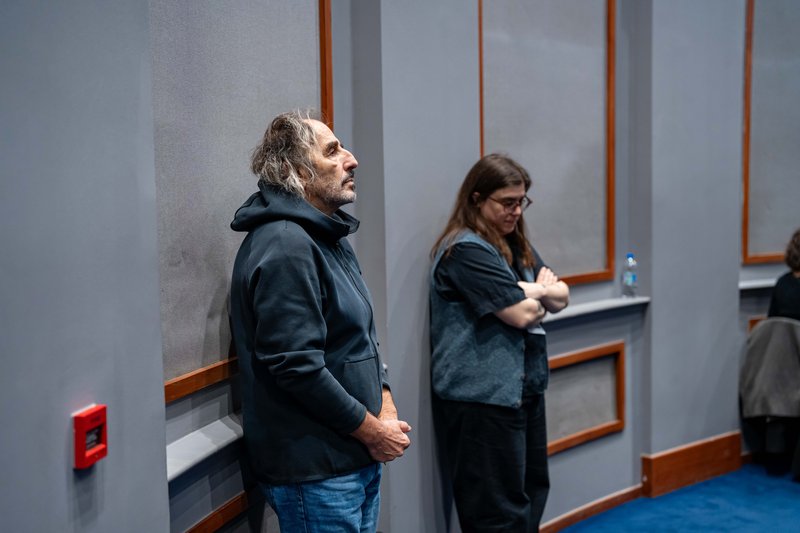
At this point, he mentioned a humorous incident. “Together with Vangelis Mourikis, we went to the Parliament. While we were waiting for Panagiotis Kouroumblis, Konstantinos Mitsotakis turned up, having been informed about the film by Mr. Kouroumblis. He was profoundly moved by the endeavor, and he even told us he would help as much as he could. After he left, Panagiotis Kouroumblis commented: ‘This film is never going to happen.’ Night Flowers, however, not only happened, but it also earned numerous awards. I even remember being featured on the cover of Docs, the only magazine dedicated to documentary filmmaking. Dimitris Eipidis had fallen in love with the film and kept constantly sending it off to international festivals. Once, associations for people with visual impairments screened it at Attikon, which was packed. One image is still anchored in my mind: the white canes the people used to ascend the stairs. In the Attikon foyer, I met up with into Panagiotis Kouroumblis and told him: ‘From this point forward, I will only make films with Mitsotakis.’”
He then went on to add: “We had 70 hours of footage, but ultimately decided to focus on a protagonist experiencing both an internal and an external conflict. Leaning on his own self, as well as on those around him, he finds the strength to move on, overcoming a plethora of obstacles. At the same time, he himself opens the door into the world of the people born blind, for whom image is a wholly unknown concept. All of this was very intense for everyone. We, the film’s contributors, grew to be very close.”
Addressing a question about whether the film remains relevant despite the ever-changing times, the director expressed: “If we were all to look back on our childhood, we would see that we also faced issues with teachers, family members, friends. Anyone can resonate with the film. We sought to avoid making a merely descriptive documentary. At the heart of the film there is a child with visual impairment, yet there is also the reflection of the impairments each one of us carries. Someone might have difficulty hearing, as I do, someone else may have difficulty seeing. There are obstacles, but also triumphs. A person with visual impairment can do everything. The only true obstacle is the city they live in.”
Next, an audience member with visual impairment took the floor, remarking: “Indeed, the difference between those who are born blind and those who have even a little bit of vision is great. The film is exceptional, and it made its way into our lives without pity or misery. I hope it continues to be screened for years to come.”
Vangelis Mourikis said on the matter: “This film was a great joy for us, but also a great lesson. The question it raises - how to film people with disabilities – was answered by Kostis Gkikas, the film’s Director of Photography. It was with great respect and kindness that he approached these people’s faces, who couldn’t discern who was standing beside them. Nikos Grammatikos’s idea was truly incredible, it opened a brand new world before me. We thank everyone who allowed us to approach, and enter their world,” Vangelis Mourikis concluded.



