FFGR
Educational Workshops
Contact
Papasotiri Maria
Cinema Museum Thessaloniki
papasotiri@cinemuseum.gr
2310 378570
The Thessaloniki Cinema Museum, as part of its extensive educational activity, offers a wide range of educational programmes for the current school year.
Our museum educators welcome primary school students through a wide range of visual arts, kinaesthetic, theatrical and other activities, introducing them to the magic of the moving image and guiding them through the first steps of the art of cinema.
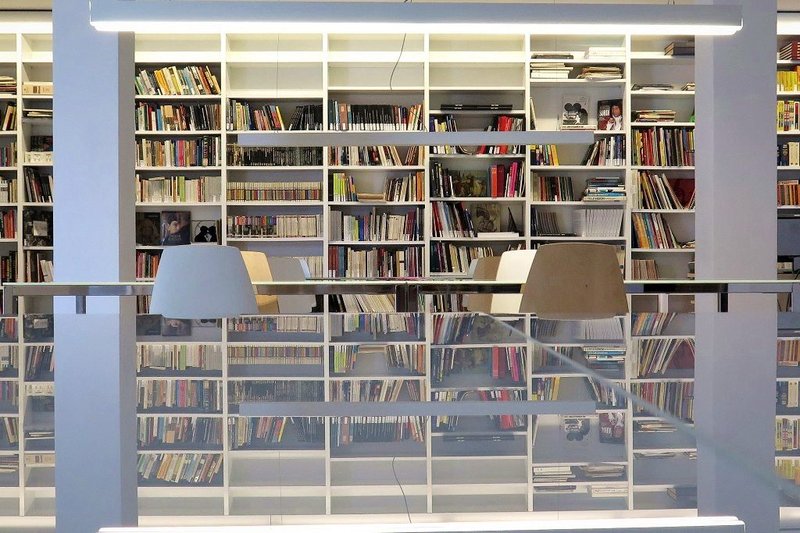
Secondary school students are invited to engage with a diverse range of film education activities, gaining familiarity with the language of cinema, encountering landmark works of Greek filmography, and, above all, seeing the world around them reframed through the craft of cinematic storytelling.
Fully aligned with the school curriculum, the programmes are designed to allow students to explore each field of knowledge through the seventh art, turning the learning process into an original aesthetic experience.
The Educational Programmes Department is available Monday to Friday, from 09:00 to 13:00, for information and to arrange school visits. Educational programmes can be booked by prior arrangement at +30 2310 378570.
The duration of the programmes ranges from 60 to 75 minutes, and each group of students must be accompanied by at least one supervising teacher. The museum can accommodate up to two groups (20 participants each) at a time, and the cost is €2 per person.
EDUCATIONAL PROGRAMMES FOR PRIMARY SCHOOL STUDENTS
Pre-school and early Primary School (1st & 2nd Grade)
Once Upon a Time, There Was a Drawing
A captivating tale that opens up the world of images, alive with movement, colour and unexpected turns.
Get ready. It’s time to discover how the eye turns still images into motion, to bring drawings to life, to give the body its rhythm, and to craft unique stories through the camera. And in the end… we’ll put on 3D glasses and see everything in two.
3rd to 6th Grade of Primary School
The Magic Camera
An immersive experience that draws young students into the wonder of the moving image.
The time machine is fuelled, the passengers are in place, everything is ready for take-off. It’s time to travel back in time and fill our case with devices of another time. (praxinoscopes, zoetropes, thaumotropes).
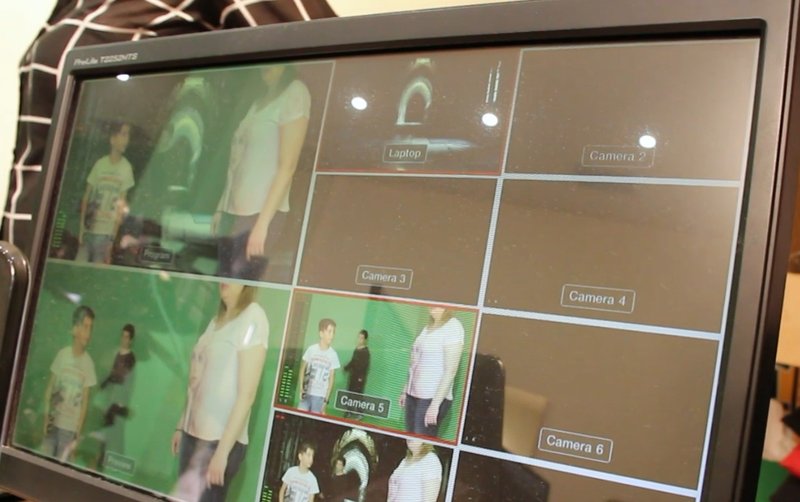
Though our journey comes to an end, the adventure doesn’t. A film crew comes together, and a story takes shape on the green screen.
There are many riddles to solve: What does close-up mean? How do we set the scene? Is music essential? Does make-up matter? Where should the camera be placed for a wide shot? and more.
And in the end… a three-dimensional surprise awaits!
Lights, Camera… Gone!
An interactive game of deduction, discovery and imagination that brings students face to face with the key roles behind a film.
A renowned film crew arrives at the studio. They have just one hour before shooting begins on their next production. Oops! What’s going on? Cameras, tripods, make-up….everything has disappeared.
A mystery unfolds. Can we solve it in time?
Middle School
Stepping Into the Light
Students trace the experiments and pioneers that led to the invention of the first motion picture camera. Through a role-playing activity, they engage with the fundamentals of film language (storyboarding, types of shots, camera angles, etc.) and, in the specially designed green screen studio, create their own short film.
Filmotechnia!
An educational programme that approaches cinema as a complementary teaching tool for Literature. Through the parallel reading of a literary text and its film adaptation, students explore the different narrative techniques through which a story is told. The programme is based on selected literary works by Greek and international authors, chosen in advance in coordination with the teacher following prior communication with the Educational Programmes Department.
Through the Lens of History!
A programme that uses cinema as a lens for exploring history. Starting from a specific historical event from the school curriculum, students watch selected film excerpts and compare how the same event is portrayed from different perspectives. They then step into the roles of a film crew and recreate this historical moment through their own cinematic lens.
Say Yes to Standing Together!!!
School bullying unfolds through selected film scenes, opening space for students to look closer, question what drives it, and, above all, to feel and understand. Then the roles shift. Working as a team, they turn their thoughts into images, shaping their own scenes and bringing their ideas to the screen.
All for One, One for All!
Selected film scenes by notable filmmakers bring into focus the timely and enduring theme of diversity, inviting students to engage with it directly. Building on these cinematic narratives, they go on to work collectively, creating their own scenes and expressing themselves through film against social discrimination.
The Camera in the Chest of Memories
Focusing on the refugee crisis, this educational activity invites students to explore how the cinematic lens captures, records and gives shape to the thoughts of those forced to leave their homeland. Through selected film excerpts and experiential activities, they engage with concepts such as solidarity, mutual support and empathy.
HIGH-SCHOOL
Lumière in Motion:
Across the museum’s spaces, using both historic and contemporary equipment, students discover the pioneers of cinema and the technological developments that shaped its course over time. In the studio, the focus shifts to practice, as they explore cinematic techniques and work with the fundamentals of film language: framing, camera angles, and more.
Gender on Screen:
Through selected scenes from Greek and world cinema, students look closely at how relationships between the two sexes are portrayed and how these representations shift over time. They then move into group research, exploring what they have seen, linking cinematic representation to the socio-political context of each period, structuring their arguments and finding ways to support them.
The programme is recommended to be linked with the courses of Modern Greek Language or Modern Greek Literature.
Filmotechnia!
An educational programme that uses cinema as a complementary tool for teaching Literature. At its core is the parallel reading of a literary text and its film adaptation, allowing students to recognise the different narrative techniques through which a story can be told.
The programme is based on selected literary works by Greek and international authors, chosen in advance in coordination with the teacher following prior communication with the Educational Programmes Department.
Say Yes to Standing Together!!!
School bullying unfolds through selected film excerpts, prompting students to explore its causes and triggers, express their concerns and reflections, and, above all, to empathise. They are then given the opportunity to work collaboratively, creating and presenting their own cinematic take on the issue.
All for One, One for All!
Selected film scenes by notable filmmakers bring into focus the timely and enduring theme of diversity, inviting students to engage with it directly. Building on these cinematic narratives, they go on to work collectively, creating their own scenes and expressing themselves through film against social discrimination.
The Game of Forgetting
Focusing on the refugee crisis, this educational activity invites students to explore how the cinematic lens captures, records and gives shape to the thoughts of those forced to leave their homeland. Through selected film excerpts and experiential activities, they engage with concepts such as solidarity and mutual support.
Museum Kit: The Cine-Valise continues its journey to schools across the country, bringing with it the secrets of the seventh art through original visual tricks and a series of unexpected discoveries.
The programmes have been developed under the research and curatorial supervision of the Museum Educator of the Thessaloniki Cinema Museum, Eirini Delidaki.

