
66th THESSALONIKI INTERNATIONAL FILM FESTIVAL
31 OCTOBER → 9 NOVEMBER 2025
31 OCTOBER → 9 NOVEMBER 2025
5 MARCH → 15 MARCH 2026
17 JUNE → 21 JUNE 2025
FFGR

TRIBUTES / RETROSPECTIVES: John Boorman: a visionary of his time

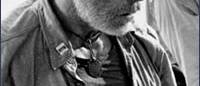
UK • 1998 • 49’• Beta • Colour
John Boorman talks about his close friend, Lee Marvin, and reminisces about two occasions on which they worked together, making Hell in the Pacific and Point Blank.
A desperado in the continents of Myth and a chronicler of adventures from the kingdom of Reality, John Boorman, in the fourteen films he has made from 1965 to the present, re-examines and renews the most important cinema genres, successfully reconciling his artistic vision with the filmgoer's desire to enjoy the show. Boorman was born in Epsom, on January 18th, 1933, and even as a child, growing up in Sheperton, in a household dominated by women, next to the Thames and close to the famous film studios, he felt the irresistible fascination of the world of cinema. In order to enter this world, he followed a "conventional" path, which began in journalism, passed through radio and ended up in television. In 1956, he was hired as an apprentice film editor at privately-owned ITN, and the ten years of successful television work that ensued at various TV stations (Southern TV, BBC Bristol) constitute an invaluable preparation period for his work in film. His first film, Catch Us If You Can (1965), uses the black and white energy of free cinema to illustrate the restless, mercurial and falsely euphoric "swinging" world of advertising and pop music. A much more ambitious and risky project was Boorman's first Hollywood production, Point Blank (1967), starring his close friend, Lee Marvin - a film which consciously attempted to renew the American gangster movie with a sensitive screenplay influenced by the works of Harold Pinter; a narrative structure inspired by Alain Resnais' journeys into the past; and an entirely original and artistic way of working with color. His collaboration with Lee Marvin continued in the strange, poetic and, essentially, anti-war film, Hell in the Pacific (1968). However, in this case, deeming that this ironic micrography of war was not violent enough, the producers undertook the final cut. Furious, Boorman returns home and, far from Hollywood conventions, proceeds to make Leo the Last, starring Marcello Mastroianni, and goes on to win the award for Best Direction at the 1970 Cannes Film Festival. In 1971, despite his success and the fact that he had settled in Europe, Boorman returns to the US. Determined not to risk losing artistic control over his films again, he takes on the role of producer and shoots Deliverance, his most consummate film to date, which masterfully combined adventure with horror, while, at the same time, expressing the filmmaker's concerns about the environment. In his next films, Boorman keeps moving back and forth between the US and Europe, each time testing the limits of a different film genre. Zardoz, in 1973, is a pessimistic philosophical fairy tale about the end of civilization, masquerading as science fiction. Exorcist II: The Heretic, made in 1977, is a painful adventure that breaks through horror film cliches and opens itself up to the savage beliefs and primitive atmosphere of African magic. The majestic historical epic Excalibur (1981), shot in the timeless landscape around Boorman's farm in Ireland, is the realization of a lifetime ambition: to make a film of the legend of King Arthur, the myth closest to the filmmaker's heart. Excalibur was Boorman's most impressive production to date. Having completed the first cycle of his oeuvre, Boorman embarks on new adventures. In order to film the conflict between Western and native Indian civilizations in the ecological western The Emerald Forest (1985), Boorman traveled to the Amazonian jungle, the soul of our planet. Back in the UK, in the award-winning Hope and Glory (1987), he films a tender chapter from his family chronicles: the awakening of the artistic sensibilities of a boy who would grow up to become a filmmaker, against an absurdist World War II backdrop. The innovative, dramatic comedy Where the Heart Is (1990) brings him back to New York, but the unjust commercial failure of this very personal, visually artistic film about family ties and the liberation of young people at the end of capitalism, somewhat thwarts his creativity. A self-portrait on film, I Dreamt I Woke Up (1991), shows him at his farm, in Ireland, surrounded by his daily chores and fantasies, among neighbors and co-workers, as well as dreamlike images of his personal myths. His next cinematic expedition was to Asia, for the feminist political adventure Beyond Rangoon (1995), where the painful journey of catharsis of a traumatized American woman doctor gets caught up in real events during the democratic struggle against the military dictatorship in Burma, in 1988. The gripping suspense of this film is counteracted by the tranquil beauty of his short film Two Nudes Bathing (1995), where Boorman invents a story behind the making of the painting by the same name and, at the same time, produces an enchanting essay on the relationship between painting and eroticism. In his next films, Boorman changes location, theme and images, and concentrates on the portraits of real people. In Lee Marvin, A Personal Portrait by John Boorman (1998), he says goodbye to a great friend and actor, to whom, at least to a certain degree, he owed his career in Hollywood. The General (1998), an award-winning, black and white social chronicle, tells the story of the life and times of Martin Cahill, a true Irish criminal/ popular hero of recent history. In his last film, escaping from real stories is combined with a surprise: a return to traditional film genres and a new journey to Latin America. The Tailor of Panama (2001) is a film version of John Le Carre's spy novel and is a story of lies and exploitation in a cynical, corrupt world, pulsating with eroticism and human vitality.


We use cookies to improve your experience. By accepting, you agree to the use of cookies in accordance with our Privacy Policy.