
66th THESSALONIKI INTERNATIONAL FILM FESTIVAL
31 OCTOBER → 9 NOVEMBER 2025

Greek Film Festival: DISFF Awarded Films
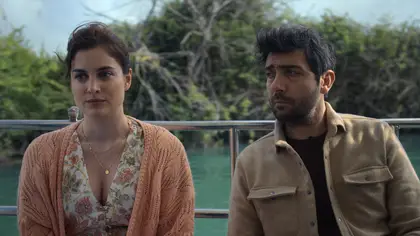
Maria and Nikos, a married couple coping with alienation, are spending the weekend at a hotel nestled in nature, by the river Acheron. During their stay, they will try to strike a new balance in their relationship.

Special Screenings
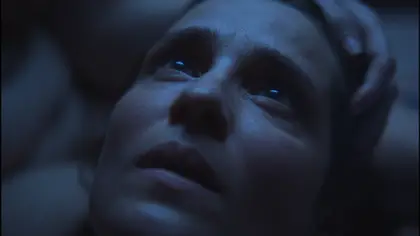
An ambitious actor agrees to undergo a groundbreaking medical procedure to drastically alter his appearance. But the new face he dreamt of quickly becomes his worst nightmare as he loses the role he believed he was destined for and gradually becomes obsessed with reclaiming what’s been lost. A surprising blend of psychological thriller and dark comedy, the film explores the notion of identity, its fluid, elusive, and multifaceted nature, while evoking memories of David Lynch’s masterful The Elephant Man and John Frankenheimer’s unsettling Seconds. At the same time, it subtly critiques society’s hypocritical stance on imperfection. With two outstanding performances from its lead actors (Sebastian Stan’s portrayal earning him the Silver Bear for Best Actor at the Berlin International Film Festival) the film’s impeccable sound design and mesmerizing noir atmosphere make Aron Siberg’s latest one of the finest films of the year.
Special Screenings
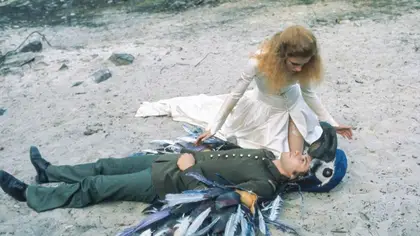
Young Princess Camélia, magically transformed into an adult, must traverse a phantasmagoric and otherworldly landscape filled with enchanted beings, fantastical goblins, and human-like ghouls. Throughout her journey to adulthood, she navigates a minefield of patriarchy, facing a series of frightful encounters in this whimsical and surreal new world. In her second feature (and her first solo feature), the multidisciplinary artist Niki de Saint Phalle pursues her own take on the fairy tale, and the result is a visionary exploration of female desire that unfurls according to the logic of dreams and poetry. The film follows a princess (played by Saint Phalle’s daughter, Laura Duke Condominas) who, following a series of encounters with fantastical beings, is magically transformed into an adult, and finds herself navigating a frightening and surreal new world. A work suffused with ideas and strong ties to Saint Phalle’s work in other media (sculpture, painting, assemblage, etc.), A Dream Longer than the Night is both an exemplary artist’s film and an underseen gem of 1970s French avant-garde cinema.
Jesper Just Tribute
A young woman sits in a cubicle in a strip club. She is obviously afraid, and in an inner monologue memorises passages from the fairy tale The Twelve Dancing Princesses. Just like the princesses in the fairy tale, she has eloped in order to dance her secret dance. This time, however, her prince is no prince in a shining castle. Rather, he is a bloke at a strip-club. Does he desire her too? Do they know one another? When she finally tries to kiss him, he thrusts her aside, and the situation suddenly changes character… A video that not only dialectically inverts the power struggle in the gaze, but also the power struggle at work in a topos that functions as a crucible of unspoken—or unspeakable—fantasies and motives.
Greek Film Festival: Tribute to Panos H. Koutras
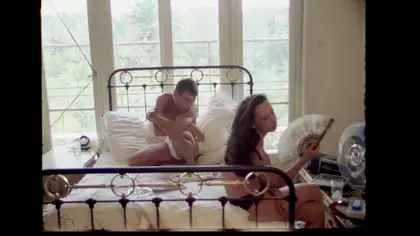
One afternoon. One shot. Two stars. Three reels of film. An hommage to Andy Warhol, Angela Brouskou, and Vangelis Papadakis. The film was shot in an afternoon during the summer of 1989, on Patision Street, downtown Athens. In a single take. With no synchronised sound, no script, no music copyrights.

Survey Expanded: Un-Family-ar
An isolated mountain location in Kosovo offers the ideal conditions for a bastion of matriarchy to be established. Four women have been living in this “refuge” for some time: Emira, firmly oriented towards the pleasures of life, her best friend Lumja, the 70-year-old Gjyla, a widow forced to abandon her family home after her son was killed in the war, and the nurturing Kumrija, mother to the only male of the house – the nine-year-old Aga. The latter is forced to comprehend what adulthood truly is (perhaps bridging the past with the future) through unexpected ways, when a middle-aged Croatian woman arrives at the refuge, sowing the seed of doubt within the heart of this unconventional family. A holistic, edgy, uncompromising drama that gives voice to the members of society who have never experienced what “representation” means (either on- or off-screen), as they struggle to find their place in a precarious peace, cast in the shadow of collective trauma. The underlying tension in a film where a gurgle of laughter is heard, simmers brilliantly.
Greek Film Festival: DISFF Awarded Films
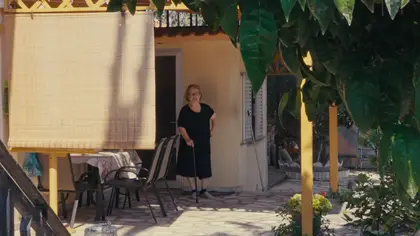
Pavlos travels to his village to visit his grandmother. There, he starts filming her as she prepares his favorite meals. In the process, they will share untold stories and make confessions. In his grandmother’s arms, Pavlos will seek a feeling of acceptance.
Open Horizons
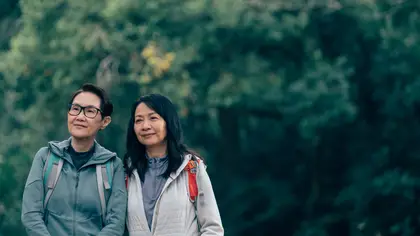
Angie and Pat are a well-off lesbian couple in their mid-60s. They have lived together for 30 years in the flat Pat owns in Hong Kong. Their relationship is accepted by their friends and families and they are valued and loved by those around them. After Pat unexpectedly dies one night, Angie is not only emotionally supported by her circle of friends, but also – at least at first - by Pat’s family. However, little by little, arguments about the burial and inheritance lead to an estrangement. Angie has no legal right to remain in the flat she shared with Pat and is at the mercy of the dwindling goodwill of her dead partner’s family. Even though the couple shared the financial burden equally between them, Pat was the one who took care of everything in their relationship. Supported by her chosen family, Angie embarks on a later-life emancipation journey. As in his film Suk Suk, Ray Yeung once again takes a precise look at the often precarious everyday life of the older queer community. In the character of Angie, he creates a quiet and yet impressively resilient lesbian heroine.
Open Horizons
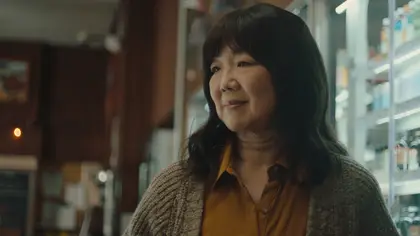
Α study on how cinema can transform even the most mundane into the exceptional meticulously capturing the everyday situations of urgent emotional need. After the death of the family dog, a woman on the threshold of middle age is confronted with the pull of the void: The once familiar warm nest has been left bereft, its temperature changed, the satellites of her life have altered course, and she is forced to take a closer look at the relationships that have been left on ice. Her estranged ex-husband returns to the USA when his career in Singapore collapses, moving in with his sister; their young daughter falls in love and decides to follow her beloved to Australia, without waiting for her mother’s approval; her best friend copes with his own grief through a lifestyle makeover, even if it doesn't align with any sense of moderation; as for one of her colleagues who fosters animals, she offers her another four-legged friend to soothe her woes. A heartfelt yet poignant portrayal of the melancholy that accompanies every new beginning, introducing us to a wonderful bunch of characters and dissecting universal themes with insightful humor: aging, friendship, parenthood, mortality, past loves, second chances and the profound connection to the non-human. A film that teaches us precisely how to love "all that we love."
Special Screenings
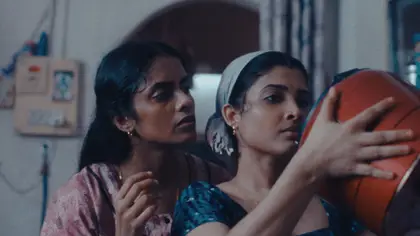
The light and subtleties of the everyday life of Mumbai’s working class are thoroughly examined and commended with warmth, zest, and compassion through the lens of a young Indian filmmaker, a Grand Prix award winner at this year’s Cannes Film Festival for her captivating fiction debut. Honing in on two roommates, both working at a hospital in town (one as a novice nurse, the other as her supervisor), as well as on a recently retired colleague of theirs, this incredibly nuanced film revolves around the mundane moments of connection and distress, hope and disillusionment. The first is married – through matchmaking – to a man living in faraway Germany, while being closely pursued by a doctor in her immediate surroundings. The second keeps dating a Muslim man, but tries her hardest to conceal her relationship from her Hindu family. As for the third, she is abruptly confronted with the threat of eviction from her apartment. As the camera shifts from the ruckus of the metropolis to the tranquility of a seaside resort, every frame evokes an expressive, yet absurd lyrical naturalism, converting the act of daydreaming into a tool of resistance and transformation.
Open Horizons
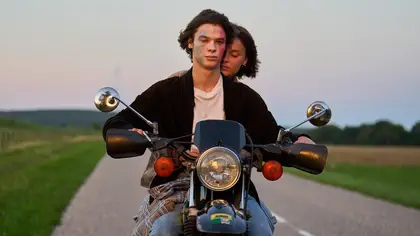
August 1992. 14 year-old Anthony and his cousin kill boredom by the lake. They live in a rusty valley in Eastern France that they share with the extinguished furnaces and factory ruins of the once-industrious small town their parents knew. A chance meeting with an older girl, Steph this stifling afternoon will unlock a summer of first love that will come to define everything, a bittersweet moment in Anthony’s life marking the end of childhood and a coming of age. Rebellious and frustrated, young Hacine turns both their lives entirely upside down. Over the course of four crucial summers, the destinies of Anthony, Steph, and Hacine intersect, collide, and intertwine. In this whirlwind of adolescent turmoil, love tries to forge a path.
Special Screenings
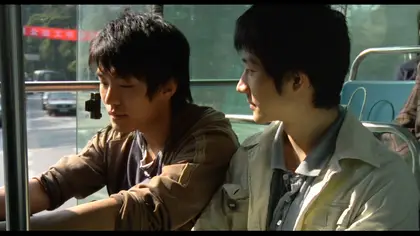
Director Xiaorui convinces his cast and crew to resume the shooting of a film halted ten years earlier. In January 2020, with the shoot almost complete, rumors regarding an illness begin to circulate. A hairdresser from Wuhan is sent home, while the crew follows the news on their phones. The director has to decide whether to halt the filming once again. Some of the crew and actors manage to leave before the hotel is locked down by security guards and everyone left on set is confined to their hotel rooms. As all communication is reduced to phone screens, Wuhan is locked down. The crew continues to communicate via video calls, whilst the quarantined main actor Jiang Cheng struggles to support his wife who is now locked-down with their month-old baby in Beijing.
Open Horizons
NextGen
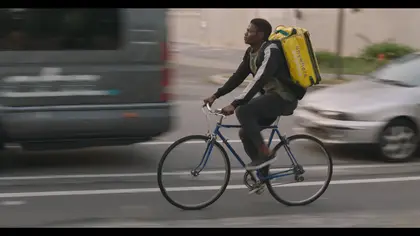
Issa is a young Senegalese undocumented immigrant trying to survive as best he can in Turin, Italy. When he’s fired by his previous employer for fear of being fined by the police, Issa}s friend helps him get started working as a food-delivery rider for the company “Anywhere Anytime.” This new gig gives him a sense of security and freedom, riding his bike around the city, and controlling his destiny. But his newly gained sense of stability quickly collapses when, during a drop-off, the bicycle he’s just spent all of his money on is stolen. Issa then embarks on a desperate odyssey through the streets of the city to find his bike. An hommage to Bicycle Thieves for the 21st century.
Greek Film Festival: First Run
International Competition
Radiant neurologist Katerina has to confront her worst suspicions as she accompanies Yannis, a former well-respected doctor, to identify the victim of a tragic car accident at an off-season seaside resort. Together, but also on her own nightly excursions to a mysterious rustic beach bar, they unravel a haunting tale of love, loss, acceptance and letting go.
Jesper Just Tribute
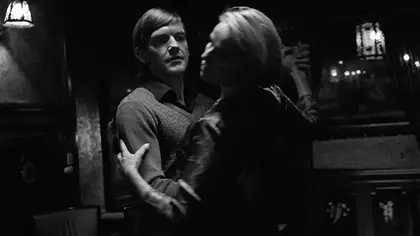
In a film shot in 16 mm, a strange relationship is articulated in the meeting of gazes and dancing, through the sensuous leitmotif of the whistling that introduces them. A Vicious Undertow is built around a female figure of uncertain age, whistling the tune of Nights in White Satin in a bar. The camera glides over her neck, her skin and her lips, and then approaches a second, rather young woman. A man joins them. In a succession of quick shots, the camera focuses on the older and the younger woman dancing a waltz together, then on the man, again dancing with the young woman. Suddenly, the heroine stiffens and makes for the exit. Propelled in the middle of the night onto the steps of an endless staircase, she seems to be trying to escape melancholy or fate by moving through a space that is out of time.
Jesper Just Tribute
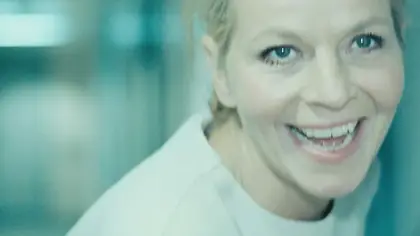
A film anchoring the artistic work of Jesper Just between performance and cinema, with a title that refers to the theme of introspection, that the artist is constantly exploring. In this work, the heroine, played by Danish actress Benedikte Hansen, finds herself trapped in a long, bluish corridor. The staged locations refer to the country of origin of the artist – besides, in the artist’s own words: “I’m very interested in the idea that a place can perform, just like people and characters perform.”
Open Horizons
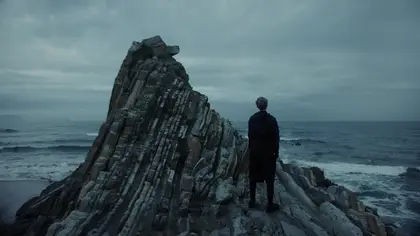
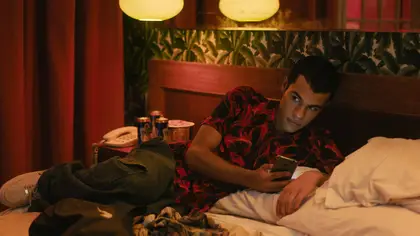
Ingrid is a hired killer with a special power: she can use the darkness to enter a parallel world and reappear somewhere else in the real world. This allows her to get into the homes of her victims and get out again without leaving any trace. However, using this power is turning her into something that isn’t human. Ingrid acquired this power when she was a child, when a monster touched her one night. Her eyes turned black and, since then, every time she returns from the darkness she expels through her head a strange white substance which she collects and keeps very carefully in a metal trunk. Hired by a local gangster called Abasolo, Ingrid kills a man who works in the city’s Port Authority. He was the last obstacle preventing Abasolo, who has just moved to the city, from taking control of the port. The next day, Abasolo gets a visit from Melville, a smuggler who traffics with mysterious creatures taken from the sea. Many years ago, Melville and Abasolo were lovers and when their relationship ended Abasolo left the country, filled with resentment. Melville gradually built up a little empire with the port as the neurological center of his business. Now that Abasolo has come back, Melville is about to lose what it has taken him a lifetime to build.
Open Horizons
18-year-old Wellington wanders the streets of São Paulo, having just been released from juvie. The bridges of communication between himself and his parents have been burned to the ground, and he lacks the resources to rebuild his life. An encounter with the much older and more mature Ronaldo will aid him on his journey, but the passionate relationship that blossoms between them won’t be without its thorns. Queer erotic drama revolving around a relationship that goes against the odds, a story of a rough coming-of-age in the far from idyllic contemporary Brazil, or a leap of faith towards pivotal encounters with life-changing people? Marcelo Caetano’s multifaceted film answers in the affirmative to all of the above, tenderly and honestly embracing his characters in their entirety, flaws, contradictions, inalienable right to err, and all.
We the Monster
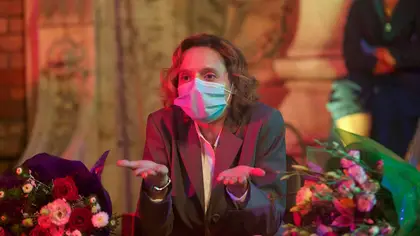
One of the most daring and inventive examples of social satire we've seen in cinema in recent years, Bad Luck Banging or Looney Porn by Radu Jude, which won the Golden Bear at the Berlin Film Festival, is one of the first films to incorporate into its plot the dystopia we experienced during the Covid era, almost simultaneously with the outbreak of the pandemic. Emi, a history teacher at a prestigious school in Romania, sees her professional future hanging by a thread when her personal sex tape is leaked online. Having endured a grueling day, during which she has been confronted with countless sexist and racist attitudes as well as the awkward situations that have arisen due to Covid restrictions, Emi is called upon to defend herself before a group of outraged and reactionary parents in a process resembling a monstrous mockery of an Inquisition. Launching a direct assault on the viewer’s every conservative reflex and playing with the sense of the forbidden and the sacrilegious through interpolated episodes – sometimes sarcastic and sometimes outright provocative – that interrupt the main plot, Bad Luck Banging or Looney Porn reserves the most meta touch for its utterly crazy, completely unpredictable open-ended finale.
We the Monster
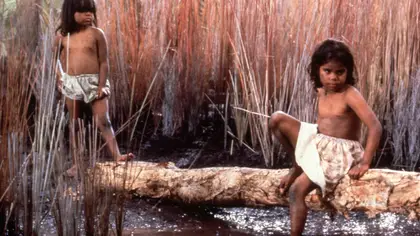
Visual artist, photographer, multimedia artist, and director Tracey Moffatt, is perhaps the most influential and nuanced voice in the artistic world of the Aborigines of Australia, while her work has been exhibited in institutions like Tate and the MoMA in Los Angeles. In beDevil, what unfolds is three stories dominated by the metaphysical element and by references to the Australian tradition. Rick, an Aborigine boy living by the marsh, is haunted by the image of an American soldier drowning in quicksand. Ruby and her family live in a house on the side of some abandoned railway lines, a site where anyone could see ghosts wandering around. A landlord is struggling to evict the tenants of an old warehouse, a couple that has been dead for years. Modern reality, the colonial past, historic traumas, legends, and doctrines intertwine in an immersive, delusional film.
Open Horizons
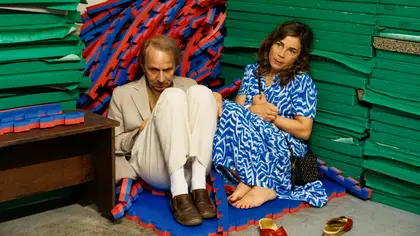
Renowned author Michel Houellebecq travels to Guadeloupe to take part in a look-alike contest. Everything seems to be running smoothly at the beginning, yet, various unforeseen events push Houellebecq past his limits, placing him in the middle of a bizarre intrigue. A loony satirical comedy filmed as a pseudo-documentary, through which one of the greatest authors (and cunning provocateurs) alive makes a self-deprecating attempt at irony, readily ridiculing his image as a misanthrope and harsh cynic with radical political views. Faced -among others- with his alleged racist ideas, the creator of Atomised and The Possibility of an Island wanders as if lost in a place where everything seems both possible and impossible at the same time. A lively, out of tune road movie about reality and appearances, and the private and public truth, that unveils another side of a writer infamous for his pessimism; a very fun and easy-going one. As is typical, appearances can be deceiving.

