
28th THESSALONIKI INTERNATIONAL DOCUMENTARY FESTIVAL
5 MARCH → 15 MARCH 2026

08.03.2026
NEWS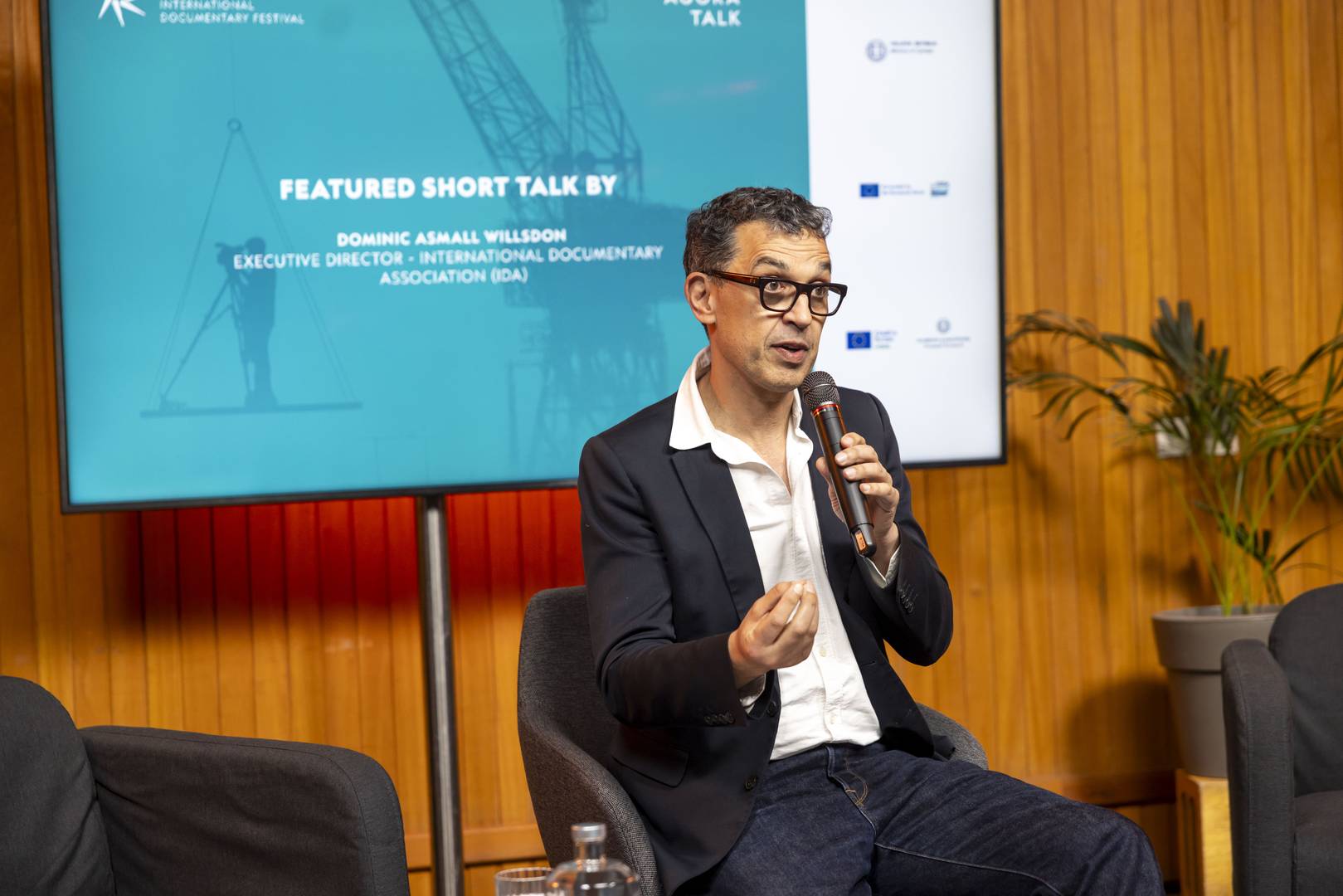
On Sunday, March 8, a Featured Short Talk by Dominic Asmall Willsdon took place at the Music Center of the Municipality of Thessaloniki, within the framework of the Agora Talks of the 28th TiDF. Introduced by Agora Manager Thanos Stavropoulos, the session focused on the International Documentary Association’s (IDA) advocacy work on freedom of expression and support for filmmakers facing urgent risks.
Willsdon explained that the talk stemmed from recent discussions within the documentary community about the need for closer collaboration, noting that organizations are working on aligned initiatives and must better coordinate their efforts. Referring to recent meetings in Berlin, he highlighted the growing awareness that stronger cooperation is essential in order to respond effectively to the challenges filmmakers face.
Over the past two years, advocacy has become central to IDA’s work. “The goal for us was to move from being reactive to being more proactive,” he said, stressing that freedom of expression now shapes the organization’s priorities, partnerships, and funding decisions.
He emphasized that freedom of expression is closely linked to other rights affecting filmmakers, including freedom of movement and access to opportunities, with visa restrictions, limited funding, and political pressure posing increasing challenges. Willsdon also outlined key initiatives, including monitoring media consolidation in the United States, which may reduce opportunities for independent filmmakers, and legal advocacy around visa policies in collaboration with legal experts, journalists’ organizations, and civil liberties groups. “This kind of work requires partnerships beyond the film sector,” he noted.
A central announcement was the launch of IDA’s Emergency Assistance Fund for Documentary Filmmakers, designed to support urgent needs such as relocation and legal challenges. Developed in dialogue with organizations including the International Coalition for Filmmakers at Risk (ICFR), the fund aims to complement existing efforts. “Our intention was not to duplicate what others are already doing,” Willsdon said.
The fund is now available online and operates as a pilot program offering one-time grants between $500 and $5,000 to filmmakers worldwide, regardless of IDA membership, with a rapid-response process that includes a 24-hour acknowledgment and decisions within five days, ensuring timely support in critical situations.
Concluding, Willsdon emphasized the importance of building stronger international networks and sharing knowledge across organizations in order to better support filmmakers at risk. “A coordinated system of support is essential,” he said, adding that meaningful change depends on collective effort, shared responsibility, and sustained commitment across the industry.




