28th THESSALONIKI INTERNATIONAL DOCUMENTARY FESTIVAL
5 MARCH → 15 MARCH 2026

14.03.2026
NEWS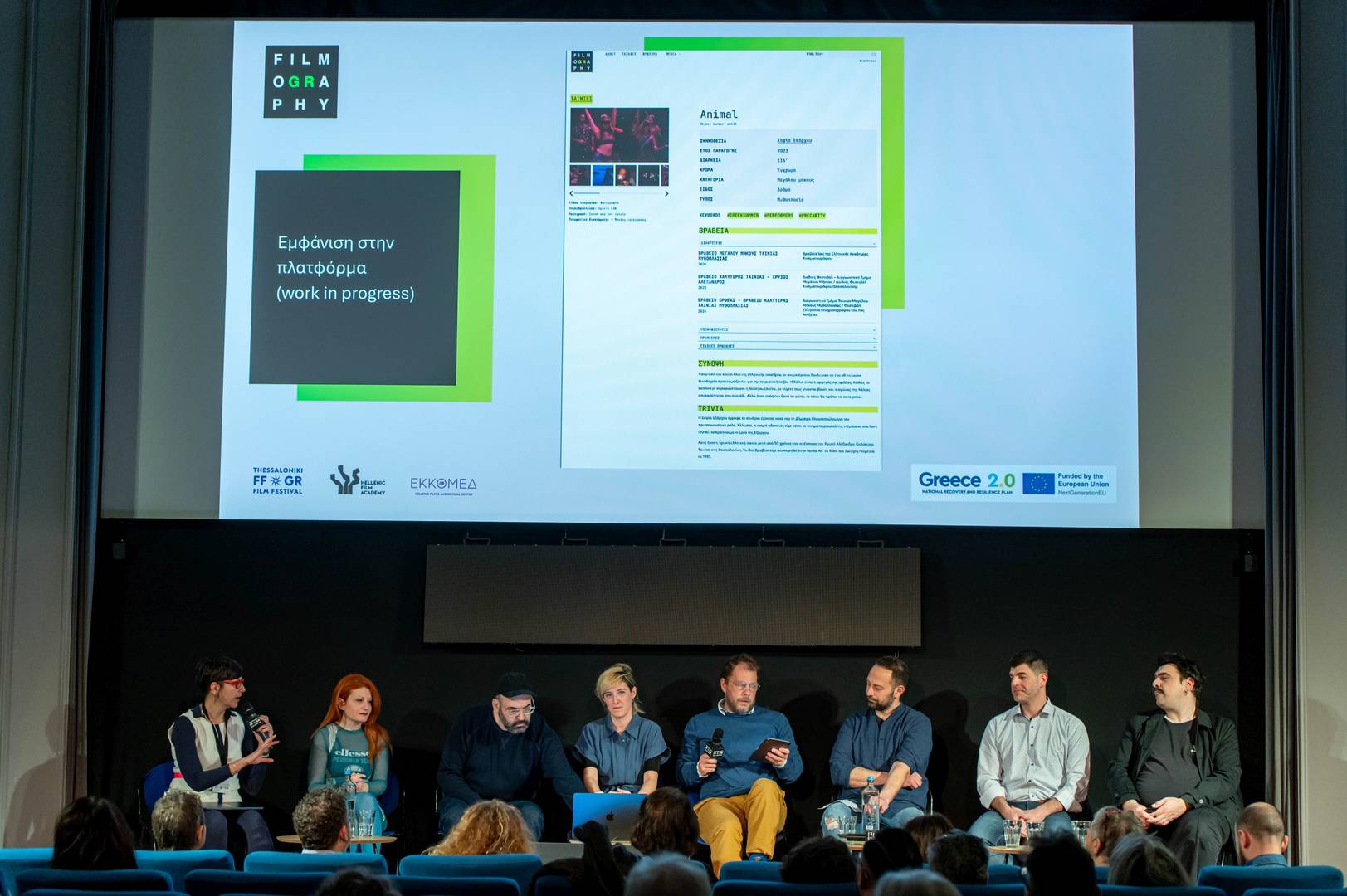
On Friday, March 13, as part of the 28th Thessaloniki Documentary Festival, the audience at Pavlos Zannas theatre was introduced to Filmography for the first time, a new bilingual platform that turns the data of Greek cinema into a tool for knowledge and interpretation, connecting films, people and historical context.
The audience was welcomed by TiDF’s Artistic Director Orestis Andreadakis. “Welcome to the final stretch before the completion of a great project, one that many people, most of whom are here with us today, have been working on for the past three years,” he said, before giving the floor to the representatives of the institutions responsible for implementing the project.
The first to take the floor was Leonidas Christopoulos, CEO of EKKOMED - Creative Greece, who stressed the importance of the project for preserving the country’s cultural heritage. “I firmly believe that establishing an archival policy is one of the most important things one can do in any field or sector. Today we will see something that truly lives up to this wonderful title: Filmography.”
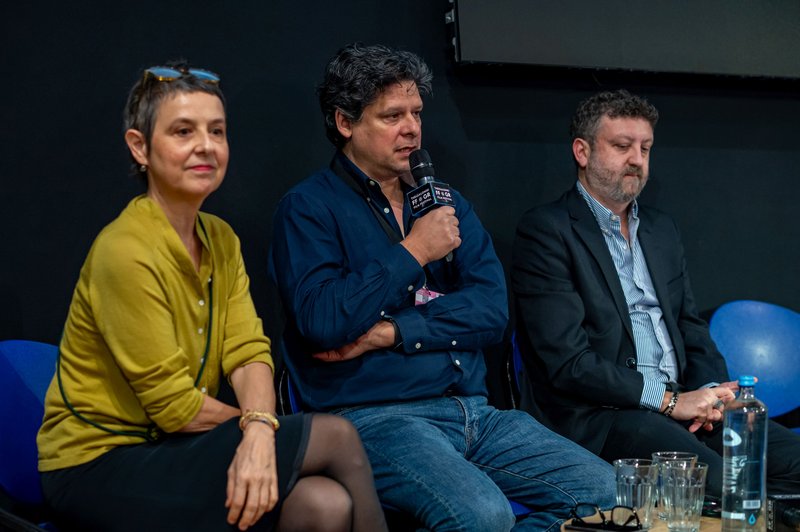
Elise Jalladeau, General Director TFF’s General Director, thanked everyone who contributed to the creation of the platform, expressing the hope that it will continue to grow and evolve. “Filmography is a long journey which we started with our collaborators in 2022. Today the project reaches its final phase, yet its ambition is to remain a work in progress, because Greek cinema is alive, and the films of today are the archive of tomorrow.”
Following her remarks, Lefteris Charitos, President of the Hellenic Film Academy, highlighted the breadth of the initiative and invited filmmakers to help sustain it. “This is a major project. Mapping the filmography of what is, in reality, a small country suddenly opens a window onto the wider world, because it allows its cinema to be seen as a continuous whole, and that is something truly significant. It creates a digital place anyone can visit, from anywhere, with access to information that reaches considerable depth. For those of us who work in Greek cinema, its history carries great weight, yet projects of this kind are far from common. We invite filmmakers to contribute to the continuation of this collective effort, so that it can keep growing over time.”
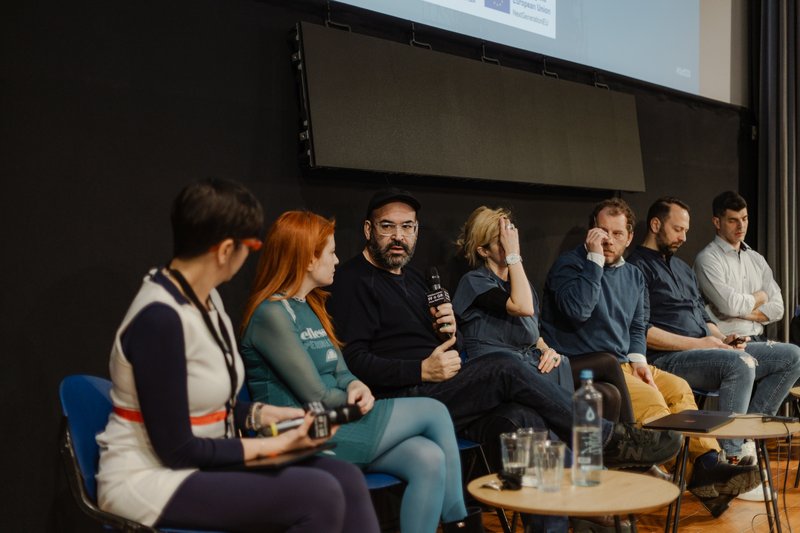
The discussion that followed with members of the Filmography implementation team was moderated by Gelly Mademli, Publications Content Coordinator of the Festival and Documentation Consultant for filmography.gr, who emphasized the importance of the people involved as well as the practices applied in the context of such work. “I am here not only to moderate the presentation of this project, but also as a proud collaborator. As in cinema, we usually only watch the final result on the screen, without ever realising how many people worked to bring it into being, who they were, or what methods and practices guided the process along the way. Today, we are here to discover exactly that.”
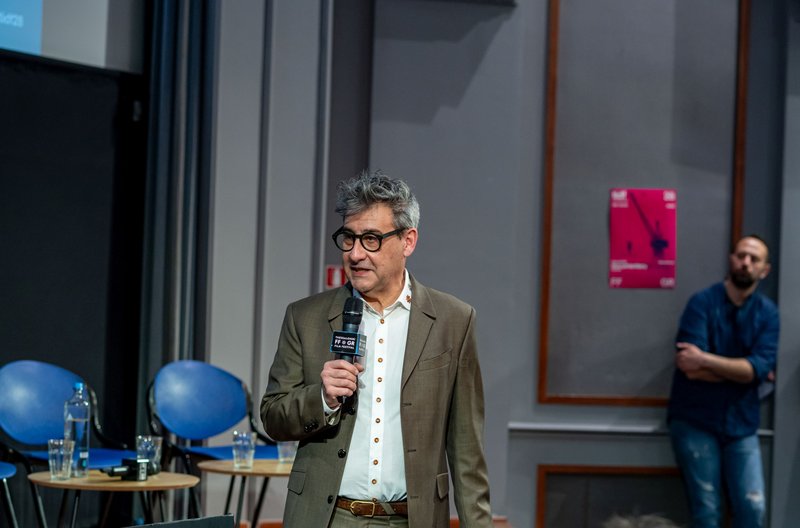
Immediately afterwards, Anastasia Melia Eleftheriou, Project Coordinatiοn Manager, shared insights into the methodology, organisation, teams and stages behind the project. “From the very beginning, we knew this would not be a simple initiative. People with different academic backgrounds, different experiences, and even from different cities, worked together on this. At first, that felt like a real challenge. In the end, though, that diversity brought multiple perspectives, access to different sources of information, and ultimately enriched the result,” she said, before describing the working process that shaped the project. “What matters most is that this is not just a database. It’s the outcome of collaboration, a clear methodology, and the collective work of many different teams.”
Next to speak was Konstantinos Aivaliotis, a member of the Filmography Documentation Team, who turned to the two central pillars of the research: the selection of films and their documentation. “It’s important to note that we didn’t treat the process as something fixed. We approached the historical continuity of Greek cinema as something fluid, constantly expanding. In that sense, the platform itself is a work in progress. It can grow every time a film enters production, travels to national or international festivals, or reaches cinema theatres, and it also leaves space for titles that were not included in this first phase of the project to be added later on.”
Manolis Kranakis, member of the Filmography documentation team, noted that particular emphasis was placed on directors, while also referring to the extensive work of cataloguing, classification and, above all, documentation that made it possible to connect films with festivals and film events. “The journeys of Greek films, from their first screenings to the recognition and awards they receive, and the unexpected ways they find their audiences, open up another path for exploring Greek cinema and the way its story unfolds across the decades.”
Penny Bouska, Assistant Professor at the School of Film at the Faculty of Fine Arts of the Aristotle University of Thessaloniki and Documentation Researcher for Filmography, turned to the sources behind the documentation of the films. She explained that the work combined older and more recent bibliographic research. “We drew on the work of researchers who have studied Greek cinema over the years, Rouvas-Stathakopoulos, Mitropoulou, Karalis, Koliodimos, Delveroudi and others. At the same time, we consulted reliable digital sources, including the databases of the Greek Film Archive, the Greek Film Centre and the Thessaloniki Film Festival.”
“Our research went further,” she added, “drawing on verified digital sources and archival collections, including the Digital Library of the Hellenic Parliament, as well as material from film magazines and newspapers of the period such as Kinimatografikos Astir and the archive of Film. We also consulted contemporary online magazines like Flix. Whenever possible, we even turned to the films’ own credits to cross-check information.” Alongside her, Orsalia-Eleni Kassaveti, Documentation Researcher and member of the Filmography documentation team, noted that material was also drawn from EKKOMED, the Hellenic Film Academy, institutions such as the Greek Film Archive, as well as private collections and interviews with filmmakers and collaborators. “The process of gathering this audiovisual material and digitising it with contemporary methods and careful research also became a way of preserving it for the future.”
I firmly believe that establishing an archival policy is one of the most important things one can do in any field or sector. - Leonidas Christopoulos
Ioanna Rampaouni, Manager of Private Archive Materials, then addressed the archival dimension of the project. She explained that during the research the team contacted producers, distributors, directors, institutions and collectors, eventually gathering around 30,000 items. “Out of these, about 19,000, including scripts, subtitles, dialogue lists and press kits, were preserved as archival material. Around 11,000 items were documented and will appear on the platform. Of these, 6,500 come from the three partner institutions and 4,500 from private archives. They include selected photographs, posters, flyers, trailers and publications that accompany the presentation of the 2,000 films. “We hope that all these images, together with the information that will appear on the platform, will offer users a rich glimpse into Greek cinema, much as they did for us over the past three years. And we hope that this effort to gather, preserve and bring forward the archive of Greek cinema will continue in the years ahead.”
The conversation then turned to the technical backbone of the platform, with IT Manager Zisis Simaioforidis describing the process as a meeting point between two different worlds: the research and documentation of the material on the one hand, and the technical demands of building a large digital database on the other. “It was essential to ensure that the material reached the contractor without losses or inconsistencies, and that it could be properly processed and integrated into the platform. One of the project’s key goals was to design the system as future-proof, in other words, able to grow and evolve over time. For us, Filmography was also an opportunity for our work to meet our love for cinema, and to dive into this vast ocean of information surrounding its history.”
Adding further insight into the technical implementation, Thanis Paraskevopoulos, Project Manager on behalf of Uni Systems, one of the two contractor companies, referred to aspects of the platform’s development. “As a team, we are proud to be part of this project as it reaches completion. Getting to know the people who worked on it, and recognising the spark and the deep love they share for Greek cinema, made it impossible not to embrace Filmography with the same enthusiasm.” Looking at the broader picture of the process, Lazaros Boudakidis, Festival’s Head of IT and Project Manager, focused on the importance of the migration of the archival material. “One of the key challenges was transferring the Festival’s older archives into the new database. It was a particularly delicate task, because there is often the misconception that once something has been digitised, it is preserved forever. In reality, things are far more complex. Technology changes rapidly, software becomes obsolete, and files can easily remain trapped in formats that may not be accessible in the future. Migration keeps the archive alive, not only conceptually, but also technologically, ensuring that its history remains accessible over time.”
The discussion also went on a parallel part of the project: the interviews with figures who have left their mark on Greek cinema, which are incorporated into the Filmography platform. Representing the team behind this work, director and filmmaker Nikos Pastras noted: “We spoke with remarkable creators and studied their work in depth. The result is particularly interesting, as it evolved into a multimedia project with an educational character, something that can be followed with real interest and enjoyment.” As part of the discussion, a video by Nikos Pastras was also screened, featuring excerpts from the documentary-portraits. Gelly Mademli noted: “There is no need to underline how important what we have just watched is. One only has to realise how many of the people appearing in these interviews are no longer with us today.”
Shifting the focus to the future of the initiative, Eleni Androutsopoulou, Head of the Festival’s Greek Program and Project Manager for Filmography, spoke about the platform’s next steps, the challenges ahead and the expectations surrounding it. She expressed the hope that Filmography will become a shared meeting point for the entirety of Greek cinema, as well as for the people who have supported it so passionately over the years. “The video you watched offers a small glimpse of the interviews with the people who shape Greek cinema, the people who inspired the creation of Filmography. The platform will go live and become available to the public in April. At that point a new phase will begin. With the support of the film community, any omissions will need to be corrected, but above all the platform will continue to grow, with more interviews with filmmakers and with more films from across the entire history of Greek cinema. “At this stage, the platform is being completed with resources from the National Recovery and Resilience Plan ‘Greece 2.0’, with the valuable support of the Ministry of Culture,” she said, highlighting the vital collaboration between the Thessaloniki International Film Festival, the Hellenic Film Academy and EKKOMED. “At this point, it is essential to secure a new funding tool so that the platform can continue to develop with the same vision and on the same foundations on which it began. I hope the public will embrace Filmography and that it will become a source of inspiration, just as it has been for the entire project team and collaborators over the past years. And a personal thank you to Leda Galanou, Project Manager, because without her the completion of this project would not have been possible.”
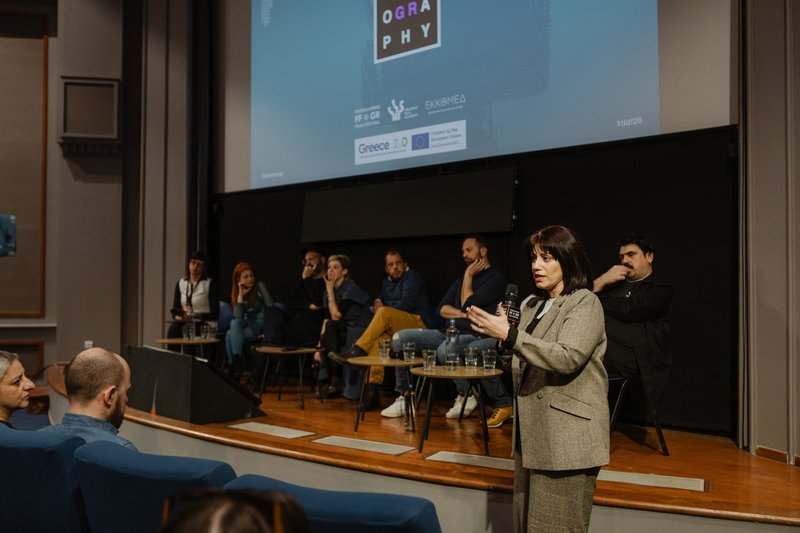
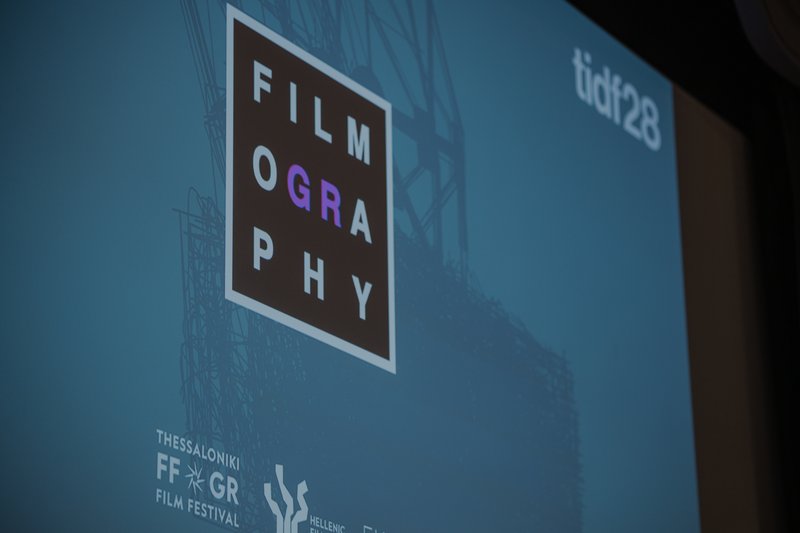
The speakers also thanked the many collaborators who contributed to the creation of Filmography: Marina Angelaki, Robbie Eksiel, Thodoris Koutsaftis, Margarita Manda, Nadia Bakopoulou, Louiza Dourou, Dimitris Pantsos, Despoina Pavlaki, Varvara Savvidi, Evdokia Stefanopoulou, Giorgos Fourtounis, Nikoletta Charou, Giorgos Christodoulou, Elina Psykou, Aphrodite Nikolaidou and Anna Poupou. The Filmography logo was designed by TFF’s graphic designer Menelaos Georgiou.
After the presentation, the discussion continued with questions from the audience about the structure of the platform, the criteria used for selecting the films and the project’s future development. Reference was also made to the so-called “lost” films of Greek cinema, with Manolis Kranakis clarifying: “There are around 46 films considered lost, films that no longer survive or for which no material has been found for many years. Even so, they have been recorded based on the information we were able to trace from different sources.”
Asked about the criteria behind the 2,016 films included in the platform’s first phase, Konstantinos Aivaliotis explained: “We started with a specific number of films, which effectively defined the scope of the project. The selection followed distinct categories of criteria, while the research itself was organised into working groups, each focusing on different periods in the history of Greek cinema.” At the same time, Orsalia-Eleni Kassaveti clarified that the selection was not based on value judgments between “good” and “bad” films. “There is no notion here of a good or a bad film. The aim was to reflect the history of Greek cinema in its full breadth, from commercial productions to the most recent creative trends.” Foivi Oikonomopoulou Angelopoulou also referred to the role of the Information Society, stressing the importance of recognising its contribution. “We should remember that this whole initiative actually began with the Information Society, it was the first database that existed.”
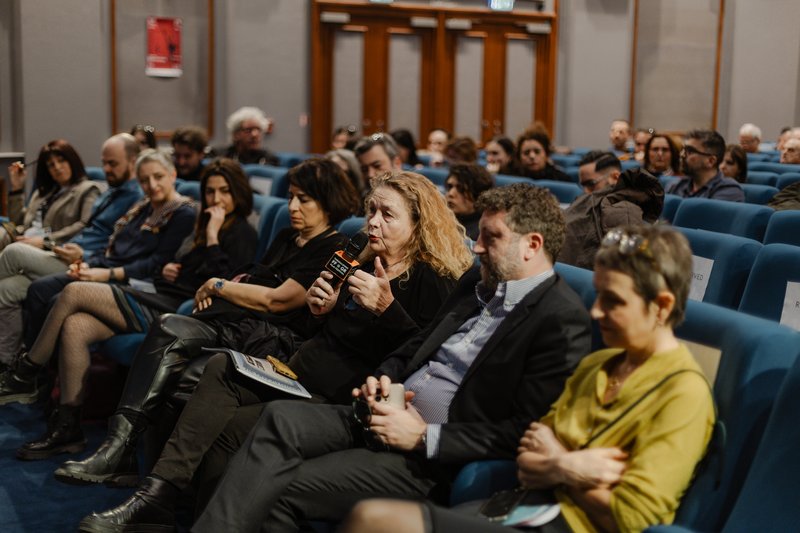
It was also clarified that the platform will be fully accessible to the public, without different levels of access. Referring to its future development and the potential use of new technologies, Thanis Paraskevopoulos noted that the main goal of the first phase was to establish a strong data infrastructure. “A large part of the project was about building the right foundation and the appropriate tools, so that in the future the platform can be enriched more quickly and efficiently with new films and new data.”
Shortly before the presentation came to a close, Leonidas Christopoulos, CEO of EKKOMED, announced the intention to support the platform through funding from the Ministry of Digital Governance. “As of today, I’m pleased to say that we have already secured three million euros from the Digital Transformation Programme for the creation of the National Digital Repository. At this stage, together with the Thessaloniki International Film Festival and the Hellenic Film Academy, we can now explore how these funds can be used to further develop the National Digital Repository through the Filmography project. This funding comes from the Ministry of Digital Governance, which we warmly thank. It gives us a strong starting point for the project to move forward, taking into account the ideas and discussions that emerged from today’s presentation.”
The project was supported with additional material by the Drama International Short Film Festival, the Greek Film Archive (Tainiothiki tis Ellados), Finos Film, Karagiannis–Karatzopoulos S.A., the Cultural Foundation of the National Bank of Greece | ELIA Archives of the Performing Arts, and the Laboratory for the Study of Greek Cinema and Television (EMEKT) of the School of Film, Faculty of Fine Arts, Aristotle University of Thessaloniki. Producers, distributors, directors and collectors also generously shared material from their own collections. The interviews with creators of Greek cinema were based on an idea developed by students of the Audiovisual Laboratory of the Department of Communication and Media Studies.
The project was implemented with funding from the National Recovery and Resilience Plan «Greece 2.0», with the contracting consortium “OTE & Uni Systems”.