28th THESSALONIKI INTERNATIONAL DOCUMENTARY FESTIVAL
5 MARCH → 15 MARCH 2026

08.03.2026
NEWS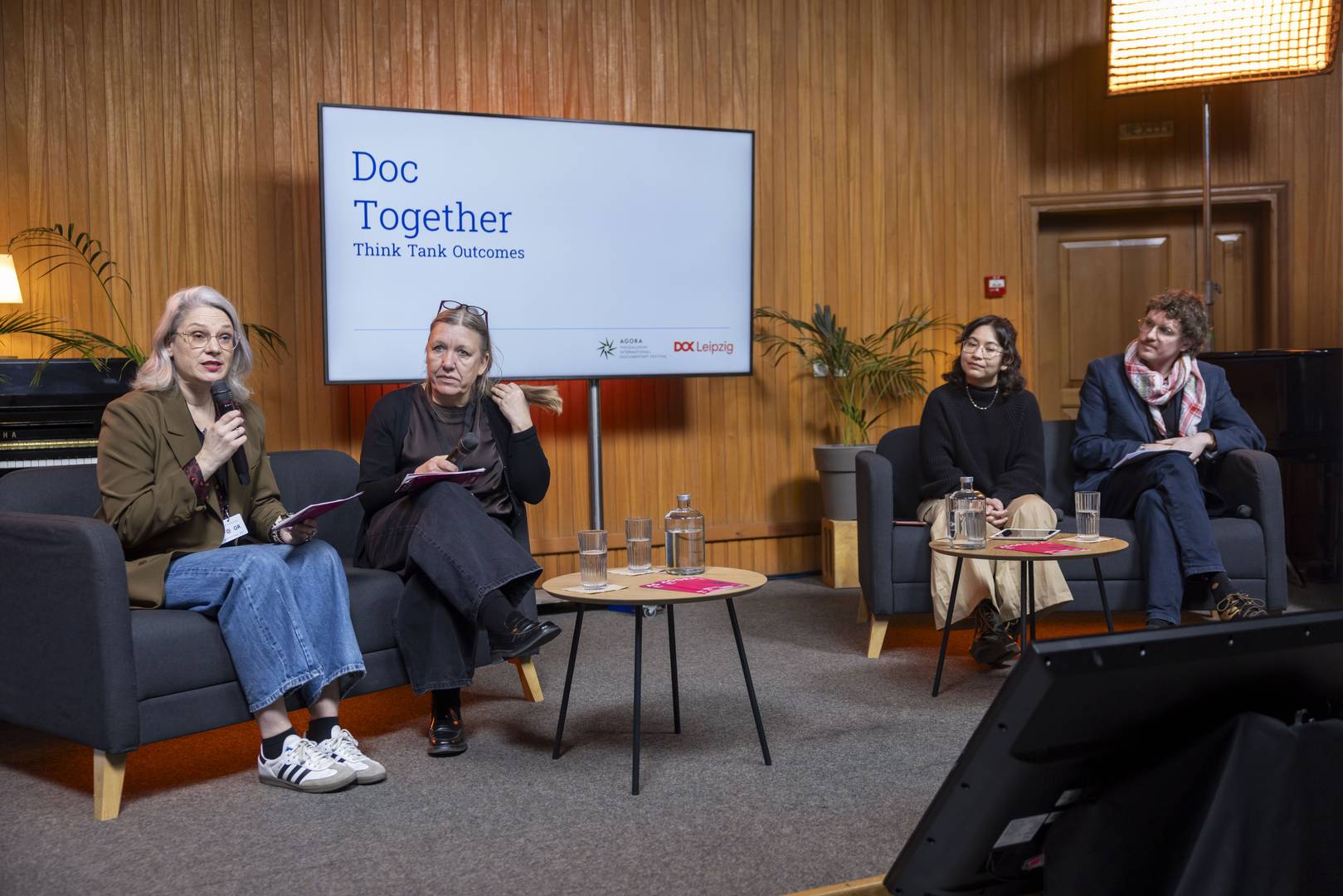
On Sunday March 8, at the Central Events Hall of the Music Center of the Municipality of Thessaloniki, the Agora Talk “Doc Together: Think Tank report presentation” took place.
The event is a part of an ongoing effort to strengthen international collaboration and create practical support structures for filmmakers whose artistic freedom and personal safety are under threat. The discussion’s speakers were Carmina Orozco López, Industry Delegations and Special Programmes Coordinator - DOK Leipzig, Nadja Tennstedt, Director DOK Industry - DOK Leipzig, Angeliki Vergou, Head of AGORA - Thessaloniki Film Festival and Jordi Wijnalda, Coordinator - International Coalition for Filmmakers at Risk (ICFR).
Doc Together is an initiative launched in March 2025 at the Thessaloniki International Documentary Festival, in collaboration with DOK Leipzig. It seeks to establish a long-term, cross-sector coalition to provide sustained support for filmmakers at risk. Following its launch, DOK Leipzig hosted a think tank in October 2025, bringing together 60 participants who represent a broad range of industry sectors. The discussions focused on current challenges, shared factual analysis, and the development of potential strategies and solutions. This report presents the key findings and outcomes of that process.
The discussion was introduced by Thanos Stavropoulos, Agora’s Manager, who welcomed participants and set the context for the session. Emphasizing the collaborative spirit of the initiative, he highlighted the importance of collective action within the film industry.
Mr. Stavropoulos then invited Angeliki Vergou, Head of AGORA-Thessaloniki Film Festival, together with Nadja Tennstedt, to present the background and goals of the Talk Together initiative.
Welcoming the audience, Angeliki Vergou stressed the long-standing collaboration between festivals and industry partners: “As festivals and markets, we are in a unique position. We bring people together, we create spaces where projects find partners, and where ideas can spark into life.”
She explained that the initiative emerged from conversations within the documentary industry about how festivals and markets can better respond to filmmakers working in difficult circumstances. “The question that kept coming back was simple: what are we actually doing to support filmmakers working under conditions of risk — and what more can we do together?” she noted.
Nandja Tennstedt emphasized that the growing number of filmmakers facing displacement, censorship, and political pressure has made coordinated action more urgent than ever. “Filmmakers have always worked under difficult conditions,” she said, “but we are now witnessing an exponential increase in places where filmmaking involves significant risk.”
She also underlined that the initiative does not aim to replace existing efforts, but rather to connect and strengthen them. “There are already many organizations doing vital work. What we are trying to do is bring these efforts together and acknowledge where the gaps are.”
As part of this process, the Doc Together team organized a think tank bringing together around 60 participants — filmmakers, producers, lawyers, NGOs, festival representatives and industry professionals — to identify key challenges and propose practical solutions.
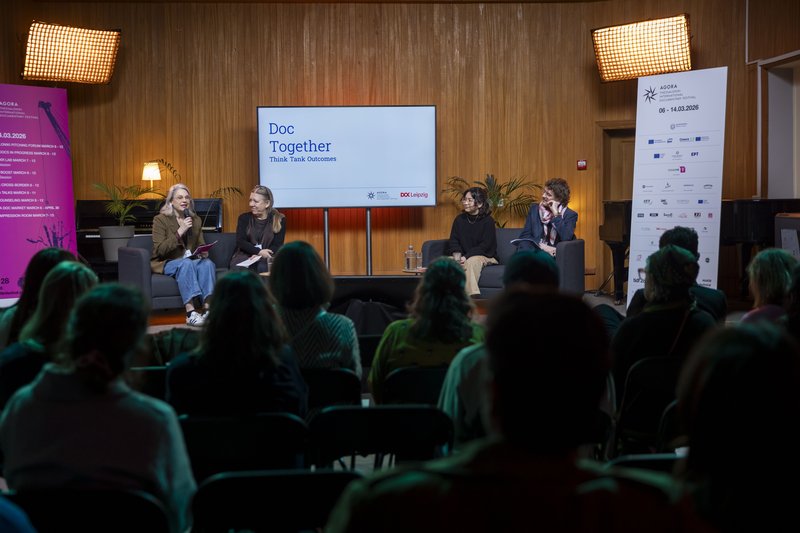
Carmina Orozco Lopez, who undertook the task of compiling, editing and presenting the report, summarized the main themes discussed by the working groups and highlighted the outcome of the overall process. One of the central concerns was access to funding. According to the speakers, rigid eligibility criteria and complex application systems often exclude filmmakers who have been displaced or forced to relocate. Participants also highlighted the need to move beyond narratives that reduce filmmakers at risk to stories of trauma. “There is often an implicit expectation that filmmakers define themselves through disadvantage,” she explained, “but artistic diversity and creative autonomy must remain central.”
Another major issue raised during the think tank was the fragmentation of information and resources available to filmmakers at risk. “There is a lot of support out there,” she said, “but it can be extremely difficult for filmmakers to navigate this overwhelming landscape and understand which resources apply to their specific situation.”
The discussions also focused on long-term sustainability. While emergency support — such as relocation, residencies, or financial assistance — is essential, participants stressed the importance of helping filmmakers rebuild their professional lives after the immediate crisis. Recommendations included long-term mentorship, legal assistance, and mental health support.
Mobility restrictions were identified as another critical barrier. Visa limitations, travel costs, and safety concerns often prevent filmmakers from participating in festivals, markets, and training opportunities. The think tank proposed that festivals strengthen their understanding of visa processes and advocate for more accessible mobility policies within the cultural sector.
The session also featured a contribution from Jordi Wijnalda, representing the International Coalition for Filmmakers at Risk (ICFR), who reflected on the organization’s experience supporting filmmakers worldwide.
Explaining the different forms of risk filmmakers face, he noted: “The risks we are addressing are not simply the challenges of a difficult industry. They are risks that threaten artistic freedom, creative expression, and sometimes even the personal safety of filmmakers.”
He described situations ranging from direct persecution and imprisonment to broader geopolitical pressures affecting cultural workers in conflict zones. According to Jordi Wijnalda , protecting filmmakers requires both visible advocacy and behind-the-scenes support. “Our responsibility is to shine as much light as possible on violations of filmmakers’ human rights”, he said. “It is in the darkness of indifference that oppressive regimes can act without consequence.”
Reflecting on the coalition’s work over the past five years, Jordi Wijnalda emphasized that international solidarity must remain sustained over time. “The biggest challenge is not whether people care — many do,” he noted. “The challenge is maintaining that care continuously and translating it into meaningful action.”
Looking ahead, the speakers stressed that meaningful change will require long-term collaboration across the film ecosystem — from festivals and markets to filmmakers, funders, broadcasters and the wider film industry, as well as advocacy organisations and NGOs.
As Jordi Wijnalda concluded, “no single initiative can solve everything. But together we can build a stronger safety net for filmmakers everywhere. Because ultimately, nobody is free until all of us are free.”
The Doc Together initiative continues to develop its network and resources, inviting professionals across the global film industry to contribute to a more inclusive, responsive, and supportive environment for filmmakers working under risk.
Read the report here




