
28th THESSALONIKI INTERNATIONAL DOCUMENTARY FESTIVAL
5 MARCH → 15 MARCH 2026

11.03.2026
NEWS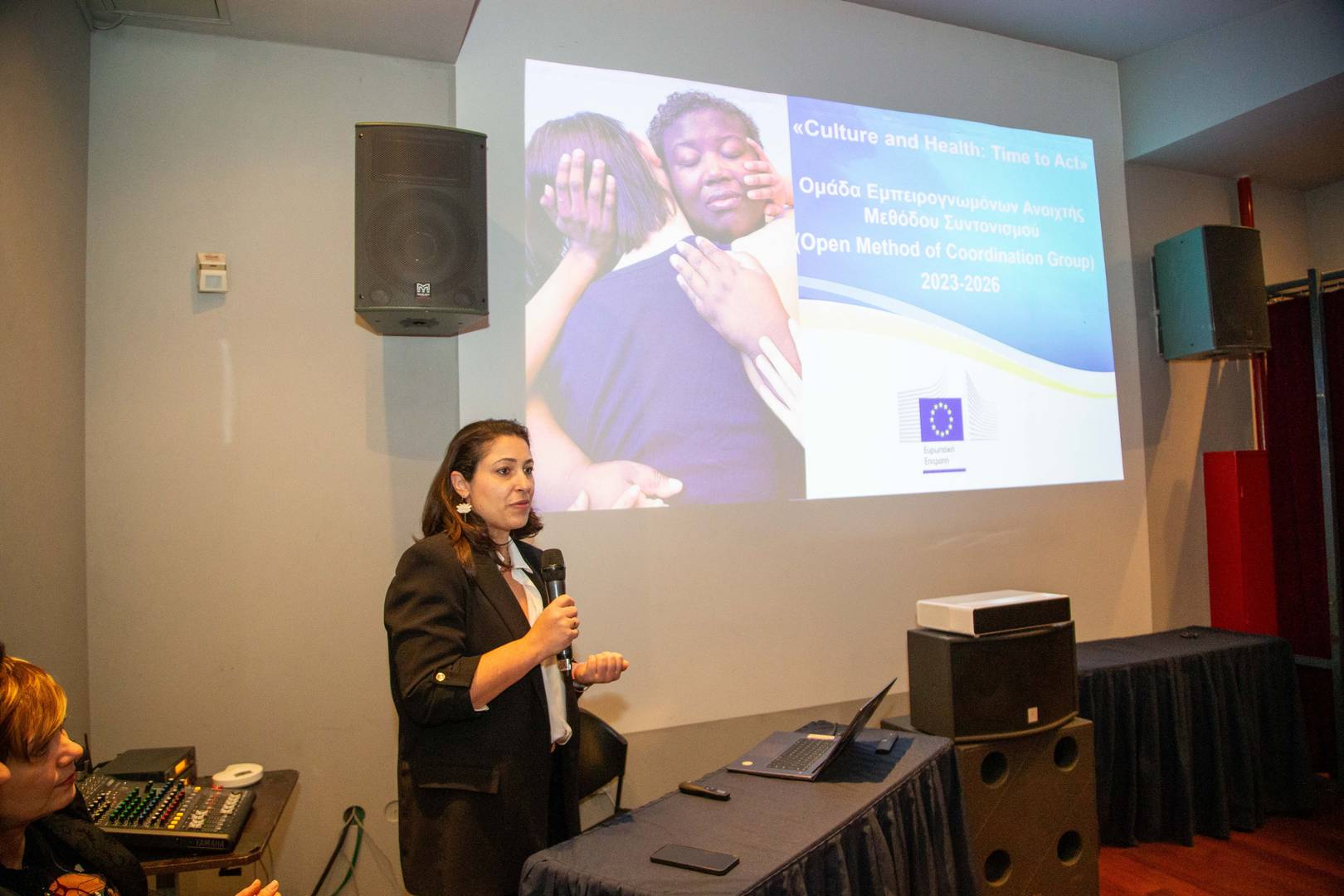
On the occasion of a recent European report examining the pivotal role of culture in promoting mental and physical well-being, an open discussion, titled “Culture & Health: Time to Act,” took place on Tuesday, March 10th, within the framework of the 28th TiDF.
In parallel, the Greek Ministry of Culture presented its pilot project, which advances Cultural Prescription as a supplementary treatment in mental health.
Thanos Stavropoulos, Agora Manager, welcomed the audience: “We already know that art is beneficial. Now we also know, with scientific evidence, that it contributes to health,” he stated, before giving the floor to Anna Kasimati, Head of the Creative Europe MEDIA Desk Greece. “The discussion taking place today comes at a critical time, because even though science is growing by leaps and bounds, and finding solutions, the human-made environment constantly causes new problems. This situation requires us to reinvent the tools we need to protect our health,” he pointed out.
The baton was then passed to Margarita Alexomanolaki, Head of the Directorate of Performing Arts and Cinema of the Ministry of Culture, who initially spoke about the research conducted by the European Commission’s Committee of Experts. “We were called upon in 2023, all the EU member states, to appoint a group of experts from the fields of culture and health so as to discuss the correlation between the two,” she noted, adding that “Health is not only the absence of an illness; It’s also a state of well-being.”
The importance of mental health, especially during the post-Covid era, emerges as a major issue, rendering the need for action more pressing than ever. At the same time, with pharmacology and medicine rapidly advancing and life expectancy increasing, issues such as long-term care and social isolation are brought to the fore. Daily screen time also increases feelings of loneliness and the lack of meaningful communication. “Within this framework, what matters to us is creating an ecosystem of mutual opportunities. To relieve the healthcare system, reduce meditation use, provide personalized care, and help absorb the healthcare workforce. Art therapy also creates opportunities for cultural development, but first and foremost, it has a significant impact on our mental, physical, and spiritual health. We are constructing a different society by combating stigma, strengthening social inclusion, and improving the quality-of-life index,” Margarita Alexomanolaki explained.
As part of the research, the “best practices” implemented in the partnership between culture and health across Europe were examined. “Culture is not only a right, but also a vital resource for health, as well as a tool for building an inclusive society,” Margarita Alexomanolaki stressed. One of the practices brought to light by the research is Cultural Prescription. So, the Ministry of Culture proceeded with the implementation of the project, which is now nearing the final stages of completing its pilot phase.
“This is an initiative that has had a major impact from the outset, mainly because it has been included in the National Recovery and Resilience Plan ‘Greece 2.0.’ It wasn’t a fragmented private effort. It was launched by the Ministry of Culture in collaboration with the Ministry of Health, and beyond the major urban centers, it spread to regional areas as well. Furthermore, it was a very targeted approach from the get-go,” she observed. Ensuring availability and accessibility to various forms of art for people of all ages, as well as supporting research in the health sector, is of the utmost importance for the development of interventions that encourage citizens to participate in activities as a means of promoting a balanced life experience. “Cultural Prescription, as a complementary treatment in mental health, motivates people who might not have taken the first step otherwise,” the Head of the Directorate of Performing Arts and Cinema of the Ministry of Culture emphasized.
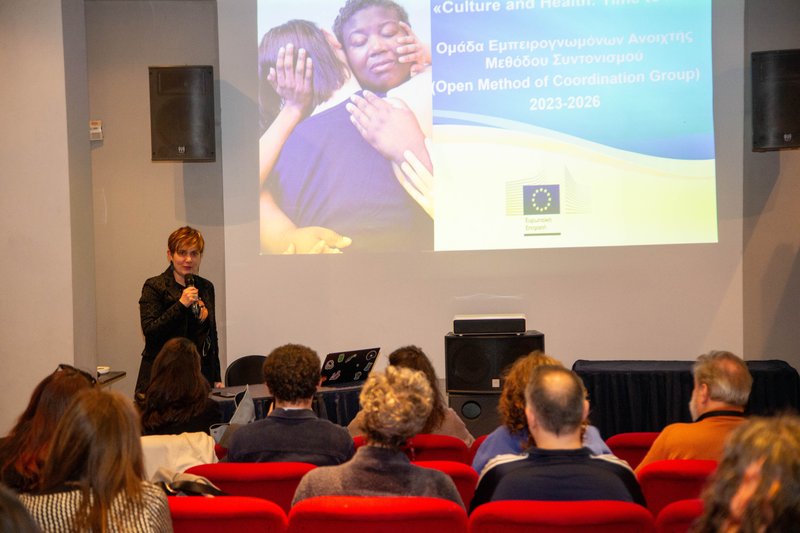
In turn, Maria Kokorotskou, Curator of Education at MOMus, commended the cultural institutions’ response within the framework of the project. “For several years - when we were still a Photography Museum – we used to say that we were offering personal self-awareness programs. The fact that we can nowadays speak about Cultural Prescription is highly interesting. The term ‘prescription’ is often associated with illness. In reality, however, what we provide are therapeutic programs, called Visual Arts Workshops. The term therapy, within the framework of these programs, is used in its etymological sense. It signifies care, social intervention, and refers more to the notion of relief,” she stated, underscoring the importance of prevention.
“One of the key points I wish to emphasize are synergies. An illness, whether mental or not, has numerous parameters. To treat it, synergies are imperative. If we hadn’t found all of these institutions that collaborated with us, the implementation of the programs wouldn’t have been possible. I’m of the opinion that the issue concerns every single one of us. Furthermore, it’s important to note that these programs do not solely benefit individuals diagnosed with mental health issues. We could all end up suffering from an illness, especially in this society – a society where difficulties have accumulated. There is a condition called anxiety disorder, which is not immediately noticeable. A very high percentage of people experience such conditions. And it’s important to keep in mind that similar initiatives make us wiser, more human,” Maria Kokorotskou concluded.




