
28th THESSALONIKI INTERNATIONAL DOCUMENTARY FESTIVAL
5 MARCH → 15 MARCH 2026

PROGRAMME SECTIONS: FOCUS ON CHILDREN OF A HARSH REALITY
At the beginning of the last century nine out of ten people killed in war were soldiers. At the beginning of this century none out of ten people killed in war are civilians. Most of them are children. A Child’s Century of War takes the viewer on a journey through the past century—the bloodiest in history—from the perspective of children and told only in their voices. It is an examination of the way in which modern wars have increasingly threatened and targeted children. The film intercuts the stories of children currently in danger with diaries and voices of children from the past in an eerie parallel of history. Three contemporary conflicts are at the heart of the film. Orphans of the two recent Chechen wars, children growing up on the most dangerous street in the West Bank (Martyr Street in Hebron) and the abducted, raped and amputated children of Sierra Leone. We listen to the children themselves, as their stories throw an unflinching and very disturbing light on the human condition at the beginning of our new century.

PROGRAMME SECTIONS: FOCUS ON CHILDREN OF A HARSH REALITY
With his digital camera, Mohsen Makhmalbaf tracks the children who do not attend school in the border villages between Iran and Afghanistan, and questions why they are not being educated. In one region, he finds girls attending classes held by UNICEF. One of the girls is not willing to remove her burqa, despite the fact that she has run away from Afghanistan and that the Taliban are not present here. She fears the horrifying god that the Taliban have created more than the Taliban...
PROGRAMME SECTIONS: VIEWS OF THE WORLD
The twentieth century was the most violent century in the history of mankind. In the countless wars waged, a total of one hundred million people were killed. What most people don’t know is that a war does not end with the signing of a peace treaty. Based on the book by Donovan Webster, Aftermath presents the individuals whose job it is to clean up after all these wars. In France, the demineurs continue to remove landmines and artillery shells from both World Wars; there are over 12 million pieces of unexploded ordinance left in the ground from World War I alone! Bosnia, too, is full of land mines; in Sarajevo alone, some 18,000 minefields have been mapped. In Russia, Valery Shtrykov is the lonely guardian of a vast field of human bones, belonging to both Russian and German soldiers who fell during the 1943 Battle of Stalingrad. In Vietnam today, the toxic remnants of war are written on the DNA of newborn babies deformed by Agent Orange. A shocking documentary, Aftermath is a reminder that we will continue to pay for the last century’s legacy of war for decades to come.
PROGRAMME SECTIONS: HABITAT
A documentary about modern-day Romania, Asta e, was filmed in the village of Sulina, a long way from the civilized world. Ten years after the fall of Ceaucescu, the last traces of communism have disappeared, but nothing seems to have replaced the void. The people live in great poverty, bravely bearing their fate, with or without the help of black humor. Toni and Varvara are a married couple in their fifties, although they look much older. They squabble all day long, mainly over the odd jobs which the perpetually drunk Toni «forgets» to do. Then there is Nicu and Pal, two friends who live together in a cheerless bunker, where they dream in their beds about women and a better life. During the day, they drag their boat over the frozen river to their nets, which are often just as empty as their lives. Finally, fifteen-year-old Ionut shares a house with his alcoholic father and a earns a little on the side by stealing cable from rusty ships and selling the copper wire it contains. At times funny, at times sad, Asta e paints a sharp and human portrait of a village left behind on the road to progress.
PROGRAMME SECTIONS: GREEK PANORAMA
The life and work of the Kastoria-born poet Athanassios Christopoulos, an unknown but important figure of neo-Hellenism, who lived during the 18th century, mostly in the Principalities of the Danube. He came from a poor family and, leading an almost ascetic life as a young man, he succeeded in enriching his mind with learning which was unheard of at the time and rising to the highest ranks of office. A political writer, philosopher, doctor, legislator, Supreme Court justice, translator of ancient texts, man of letters and playwright, he went down in the history of Modern Greece as primarily a master craftsman of verse and a lyrical poet. The film follows in the poet’s footsteps, visiting the place where he lived and worked, in an attempt to shed light on the unknown aspects of this multifarious personality, while at the same time illustrating the sociopolitical conditions of the time.
PROGRAMME SECTIONS: GREEK PANORAMA
PROGRAMME SECTIONS: GREEK PROGRAM
On the occasion of the millennium, the concept of time has become a major topic of debate within the entertainment and computer industries. But who is it that administers time today, and who is it that determines «landmark-dates»? «It is the stockmarket which measures time, and it is that time which passes and is measured by watches», is the answer of the films narrator. This is an invisible hero, whom we perceive through the films narration, and who inhabits the bodies of children, passers-by, the elderly, inhabitants of urban and rural areas, and also actors, who play out various rhythms of the human body. The hero of the film is born like a firework, together with the explosion of the millennium. Growing up, he experiences everything in haste: games, knowledge, writing, work, food, travel, love. From video games to fast food to phone sex, his life is built upon an alienated management of time. At the same time, ordinary people confess their need for the safeguarding of values that exist in slowness, in the durability of human actions. Finally, images from the variety of Natures rhythms and the art of Rodins sculptures restore the measure of a lost balance.
RETROSPECTIVES: TRIBUTE TO BRUCE WEBER
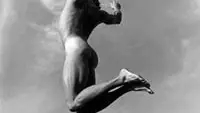
Backyard Movie mixes old home movies with some characteristically cheeky footage of frolicking dogs and naked men on trampolines, all cut together to the rhythm of good-time gypsy music.
PROGRAMME SECTIONS: GREEK PANORAMA
PROGRAMME SECTIONS: HABITAT
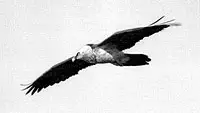
The film, shot on the mountaintops of Crete, takes us to the last refuge of the bearded vulture (Gypaetus barbatus) in Greece and one of the few remaining such refuges in Southern Europe. We will get to know Europe’s largest raptor and watch it as it soars majestically through the sky. The bearded vulture is a solitary bird which feeds almost exclusively on the bones of dead animals which it smashes by letting them drop onto the rocks from a great height. The film includes footage of the vulture’s unusual habit of ‘painting’ its normally white plumage; the vulture and his lifelong mate raising and protecting their sole fledgling; and the moving scene of the young vulture testing his wings and flying for the first time. The bearded vulture, the rarest vulture species in Europe and a true lord of the mountains, is being threatened with extinction, primarily because of human activities and its sensitive place at the top of the food chain. Initially made as an educational film intended to familiarize the public with this bird and to raise awareness among people living close to its habitat, this documentary is ultimately aimed at all of us who wish to re-assess the choices and priorities of our society.
PROGRAMME SECTIONS: VIEWS OF THE WORLD
Afghanistan is one of the world’s poorest, most war-stricken countries. Natural disasters—including severe droughts and famine—have left Afghans impoverished. Meanwhile, man-made afflictions, such as gross economic misappropriation and moral corruption at the hands of governmental officials, have done even more damage. As a result, millions have relocated to refugee camps in neighboring countries, where living conditions are scarcely better. Since the Taliban regime gained power, women in Afghanistan have lost virtually all basic human rights. The nation’s laws allow for the severe beating, stoning and imprisonment of women who exhibit the slightest misbehavior.
PROGRAMME SECTIONS: HABITAT
Director David Hinton and choreographer Yolande Snaith have created an extraordinary dance film by re-editing nature footage of birds. Accompanied by a soundtrack of bird sounds and sporadic rhythmical music, birds of every size and color run, jump and fly every which way. Blue birds jump in circles around green ones, strange ducks repeatedly toss back their heads, an owl clumsily leaps across a field and water fowl run upright across the water. Two large birds of prey are entwined in the sky by one leg and turn around like the sails of a windmill. The makers collected shots of unusual bird movements, in addition to the more common images of a hopping bird or a large flock of birds suddenly changing course. By using repetition and variation, they have created a modern and fascinating dance from the beauty of the nature shots.
RETROSPECTIVES: TRIBUTE TO BRUCE WEBER
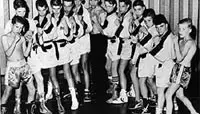
Bruce Weber’s film debut was this beautifully conceived portrait of Andy Minsker, a former lightweight champion, who runs a boxing club for teenagers in Portland, Oregon. On the surface, Minsker is an ebullient small-town guy, yet his past contains some abusive family relationships. Shot in saturated color and smoky black and white, underscored by the soulful jazz of Chet Baker and Gerry Mulligan, Weber’s subject is revealed in both his splendor and his unrealized pain.
PROGRAMME SECTIONS: FOCUS ON CHILDREN OF A HARSH REALITY
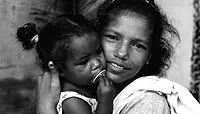
In Recife, northeast of Brazil, life for the street children is extremely precarious. In an effort to avoid abuse and alcoholism at home, they go to the town center, where an even worse type of violence, often fatal, awaits them: the violence of the police. With the Death Squads on their tracks, these children and teenagers will be tortured and killed and their murderers will go unpunished. Confronted with this despair, educator Demetrius Demetrio decided to start fighting against the abuse and the indifference, by trying to give these children the basis for a future. Casual Lives is the answer to the call for help of a man himself threatened by the police. The film is dedicated to the children who only got to know violence, from their first breath to the day of their brutal death.
PROGRAMME SECTIONS: FOCUS ON CHILDREN OF A HARSH REALITY
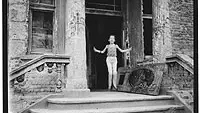
In the spring of 2000, Albanian children in Kosovska Mitrovica confess to the camera the deepest pain they have experienced in their short lives: being forced to witness their parents being brutally humiliated, tortured or killed. In some cases, children had to bury a parent themselves. The black-and-white photography, often shot with a hand-held and deliberately shaky camera, reveals the Apocalyptic reality of Kosovo today: its devastated villages and half-destroyed houses, where some of the children are forced to live, seem to come straight from a futuristic horror movie. Now and then, color Super 8 images, filmed by the children themselves, since they are the only ones that can see their world as it really is, alternate with shots of the destroyed areas. In the words of filmmaker Moldoványi: “If we really want to know something about this shameful war and its consequences because we do not want to forget this painful part of our history or let it be forgotten, to stop it from happening again, we have to look into the eyes of these children and listen to their stories.”

PROGRAMME SECTIONS: FOCUS ON CHILDREN OF A HARSH REALITY
In Haiti, many parents are forced by destitution and desperation to give away their children. The children—who may be as young as four years old—then go to live and work for other families as unpaid domestic servants, or slaves. The film follows the restavek children of Haiti as they go about their daily chores—the endless cycle of cooking, washing, sweeping, mopping, shopping at the market, fetching water, running errands, etc. In heartbreaking interviews, the children speak openly and shyly about the lives they are forced to lead. Their ‘aunts’ speak openly and proudly of the vast mountain of work that ‘their’ restavek does for them, while the parents talk about the kind of situation that would force them to give away one or more of their children. Both emotional and informative, this is the first film to be made about this subject, which, until recently, had never been talked about.

RETROSPECTIVES: TRIBUTE TO BRUCE WEBER
Just like its namesake, Chop Suey is a delicious mix of ingredients, both amusing and flavorsome. Bruce Weber introduces gorgeous teenage wrestling star, Peter Johnson, to his personal universe. Whether recreating the music and life of cabaret star Frances Faye, appreciating the wily wit of Diana Vreeland, or considering his own world-class collection of still photographs, Weber imparts a deeply felt humanity. He is a man for whom love, loyalty, friendship, humor and beauty is all important. Chop Suey brilliantly encompasses Webers myriad passions and fantasies, his almost Peter Pan like relationship to those objects of desire the rest of us experience in glossy magazines or towering billboards.
PROGRAMME SECTIONS: FOCUS ON CHILDREN OF A HARSH REALITY
Exploring a problem many wish to hide far from view, the film allows an audience to confront the disturbing subject of child sexual abuse, both an uncomfortable and taboo topic, and exposes the complexitites that surround this heinous crime. Focusing on five cases from different parts of the country, the film permits the subjects to tell their stories in their own words. We meet two resilient young sisters who were abused by a family friend while in his care. Then there is a professional hockey player, who, along with hundreds of other teenagers, was molested by his nationally renowned coach. A young woman talks about the fact that, years later, she is still not ready to confront her abuser for fear of the ramifications for her family. Footage from a caseworker’s interview with a very young girl describing her abuse by her father is harrowing. The film appropriately demystifies the predator by including scenes from a convicted sex offenders’ group therapy session. The men describe their motivations and the means by which they methodically gained access to their victims. The film reveals how calculating and cautious they are to reduce their chances of being caught.
PROGRAMME SECTIONS: GREEK PANORAMA
Thousands of people arrive in Greece every day, seeking a new beginning in their lives. This contact with us creates a new reality. The awkwardness we feel often leads to fear and persecution of that which is different. Perhaps we have forgotten too soon that we were in the same position 40 years ago.
PROGRAMME SECTIONS: STORIES TO TELL
What does the American family look like? In recent years, due largely to hard-won battles by gays and lesbians and with thousand s of gay men consciously deciding to become parents, it’s been up for interpretation. This unprecedented moment is the subject of this documentary, which opens a candid window on the personal, cultural, and political implications of gay fatherhood. Turning his lens on four households and never ducking from the issue, Symons examines the effect of gender and sexual orientation on children, the dilemma of white fathers raising African American kids, the problems of adoption, and the opinions of the public. Symons himself, who at first resists becoming a father, must, later, together with his partner, negotiate a painful snag in the adoption process.

RETROSPECTIVES: TRIBUTE TO MONICA TREUT
Didn’t Do It for Love is a portrait of Eva Norvind, aka Mistress Ava Taurel, born in Trondheim, Norway. The film follows Eva’s career from posing as a showgirl in Paris to becoming Mexico’s Marilyn Monroe in the sixties and New York’s most famous dominatrix in the eighties. Today she’s pursuing a degree in Forensic Psychology in order to work with sex offenders because she identifies with sex offender components within herself. Using clips from Norvind’s Mexican movies, stills from various periods, and interviews with her friends, partners and family, the film traces Eva’s search for the wellspring of her obsessive and dark sexuality.

