
28th THESSALONIKI INTERNATIONAL DOCUMENTARY FESTIVAL
5 MARCH → 15 MARCH 2026

Themes: Habitat
Themes: Portraits
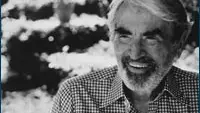
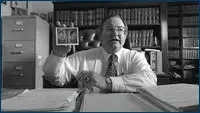
The film unfolds to offer an engaging balance between Peck's public persona and his private life, using excerpts from a number of Peck's recent one-man shows and the well-known clips from many of his great movies. At each stop fans ask new questions, and some tell how Peck's film characters inspired their careers. Some have even named their children after him. It isn't just ordinary citizens who appreciate Peck's contributions to American culture, as Peck is filmed being presented with the National Medal for the Arts from President Clinton. When it comes to the personal side of things, the film offers snapshots from his youth and old home movie footage, as well as wonderfully funny and intimate moments with Peck's family and closest friends, among them Lauren Bacall, Martin Scorsese and Jacques Chirac.

Themes: Recording of memory
One of the least known events of Modern Greek History is the persecution of the Greeks in the Soviet Union, which began in 1937 and ended in 1949. After the Asia Minor disaster, thousands of refugees from the northern shores of Asia Minor poured into Russia. The refusal of the Greek government after 1928 to allow these refuges to come to Greece (even though they were covered by the Treaty of Lausanne, forced them to remain in the Soviet Union. The Greeks living in the Soviet Union participated in all the phases of the soviet experiment, while at the same time they established a network of Greek schools, theater groups, and publishing houses, published numerous Greek periodicals and formed Autonomous Greek regions within the framework of the Soviet administrative system. However, they also suffered the consequences of Stalinism. Approximately 44 to 50 thousand Greeks were executed or died from exposure as a result of their persecution, while over 200,000 were exiled to Siberia, the Urals and Central Asia.
Themes: Stories to tell
Themes: Portraits
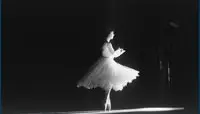
Dance, particularly ballet, is not generally associated with the desert or the aging body, but in this film they come together almost naturally in the form of the Amargosa Opera House, run by 75-year-old dancer-choreographer-painter-composer Marta Becket. Located in the ghost town of Death Valley Junction, population ten, and 25 miles away from the nearest town, the opera house is proof that if you put on a show, people will come. The opera house is also a testament to the creative spirit, as-since coming to the town in the 60s-Becket has not only covered the theater walls with murals, but regularly put on shows of her own brand of dance theater, playing to the murals before the live audience began attending. The film slowly builds a biographical sketch of Becket, telling us of her disappointments, sacrifices and achievements. Her life and art become a means of exploring creativity and the courage necessary to follow an artistic path.
Themes: Stories to tell
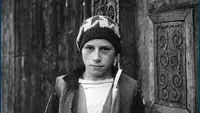
When he was twelve, Levente Fulop went away with a man who had asked his parents for a farm hand. Levente moved from Parajd to Atyha, two villages in Transylvania. At first, his boss thought he was too small, but he was soon pleased with Levente's obedience and dedication. Levente was glad to be away from his drinking, abusive father. What would be considered child labor in certain European countries is freedom to Levente. Most of his nine brothers and sisters are in an orphanage. Levente has only been in school for two years, and he would like to improve his reading. Still, his dream lies in the Transylvanian countryside; he hopes one day to have saved enough money to buy his own farm. Director Attila Moharos needs no more than seventeen minutes to put across the bond between Levente and the beautiful landscape of Transylvania. In magnificent panoramas, dark clouds drift ominously over green hills and valleys. Levente drives past in his horse and cart, dreaming of his future.
Themes: Habitat
Tributes: Yugoslavia in focus: Anatomy of horror
A group of people spent the war in a house in Belgrade. During the air raids, they made a documentary about themselves and their friends. A state of war was introduced in Yugoslavia in March 1999 and the NATO air strikes began. Radio Station B92 was raided and all its equipment seized. A pro-governement management was simposed, but none of the 170 staff members agreed to work under these conditions. Filming in the streets was forbidden. This film was made by the crew of B92, the radio station which was not meant to exist. It was shot in the rooms, the kitchen, the basement and the gardens of one house. This is a wartime diary of a group consisting of close friends, colleagues, lovers, relatives and pets.
Themes: Portraits
Tributes: Yugoslavia in focus: Anatomy of horror
The film captures images of the four months of demonstartions by citizens and students in Belgrade, against the regime of Slobodan Milosevic, following the rigged elections of November 17th, 1996. Hundreds of people found themslves united in the struggle for freedom and democracy. We are presented with scenes of the work being done at radio B92, the only independent medium in Serbia; the counter-demonstations by Milosevic supporters; the cordon surrounding the Belgrade students as they resisted the police for eight days in one of the city's busiest streets; the violence of those in authority against the demonstrators; people "gone mad".
Themes: Stories to tell
Themes: Habitat
Themes: Stories to tell
Themes: Habitat
Bugs in Spring is a 10 ́ test piece to examine the viability of wildlife film-making with digital equipment. Top cameraman and zoologist James Reardon, expert in film and HD equipment, drove it to its limits, producing some of the most impressively film-like photography from such equipment. Toured around various locations in Greece by TV presenter, mountaineer and environmentalist Alexander Chalkidis, he focused his zoological expertise on various aspects of the flora and fauna to create this short, instructive piece about the co-existence of plants and insects. The script and shooting were to a large degree improvised on location and the material then loosely edited around a central idea.
Themes: Music through the lens
Calle 54 ventures into the sensual world of Latin Jazz, a genre of music which has fascinated Trueba for nearly twenty years. Travelling to Cuba, Puerto Rico, Spain, Sweden and the United States, Trueba gets at the heart of a powerful movement from all sides, immortalizing some truly memorable performances in a fitting tribute to the initiators of Latin Jazz. Calle 54 is a once-in-a-lifetime event, capturing all the force, energy and sheer brilliance of these exceptional musicians in a single film for the very first time. The performers are all masters of the genre: veteran Bebo Valdes, who has a sparkling duet with both his son Chucho (a monster on the piano) and the still nimble Cachao; the symphonic sounds of Chico O'Farrill's Big Band; Michel Camilo with an awesome trio; and, in his last performance on film, the late Tito Puente with his Golden Latin Jazz All Stars. Trueba's searching eye also captures these performers in mesmerizing candid moments as they rehearse and talk about their art.
Themes: Recording of memory
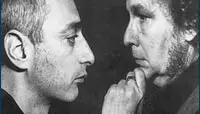
The film raises the painful question of whether it is always a good thing to find out the truth. Journalist Daniel Ganzfied, who accuses the self-declared Holocaust survivor Binjamin Wilkomirski of lying, applies a strong argument. If false accounts of the concentration camps are accepted, it leaves room for false denials. But camp victims who consider Wilkomirski their spokesman, feel that their own credibility is being undermined by Ganzfield. It was not surprising that his attack on Wilkomirski was embraced by those that dispute that the Holocaust even took place. Director Christopher Olgiati first follows Wilkomirski's own story, as written down in his international best-seller Fragments. Wilkomirski claims to have been born in Riga, where his father was murdered by Latvian fascists. When he was three or four, he ended up in the concentration camps of Majdanek and Auschwitz. Wilkomirski himself was only kept alive as a medical experiment by the infamous Dr. Mengele. In Switzerland, after the war, he was given the name Bruno Grosjean. This name turns out to be the key to Wilkomirski's real past. Olgiati manages to trace former friends and relatives of Bruno Grosjean...
Themes: Stories to tell
Tributes: Docs from Iran
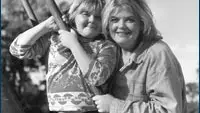
Christine is a Swedish woman living in the United States, who discovers that she is Iranian, and that she was adopted by her parents years ago. She travels to Iran in an effort to find her roots and her biological parents, however she confronts many different families claiming to be her real parents, brothers and sisters...
Themes: Views of the world
Tributes: Docs from Iran
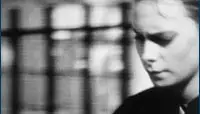
Close Up Kiarostami shows Abbas Kiarostami's opinions as well as the views expressed by some international film figures and critics on Abbas Kiarostami's oeuvre.
Themes: Habitat
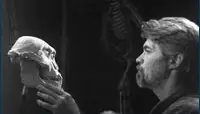
"Why do human beings exist?" This fundamental mystery forms the backbone of this incisive documentary from Swiss filmmaker Matthias von Gunten. Far from a dusty history lesson, von Gunten's film takes us back to the dawn of human existence, to look at the precise mechanisms involved in evolution, and to locate the exact moment our ancestors started on the path from ape to something-more-than-ape. What was it that propelled them on this path? Is evolution a completely random process, or are there signs that Νature intended it that way? These questions are tackled in the film by some of today's most influential scholars working on research into prehistoric man. Among them: Kamoya Kimeu, the world's foremost fossil collector; Maeve Leakey, the paleontologist responsible for some of the most significant finds to do with our prehistoric origins; Christopher Boesch, a Swiss biologist doing research on chimpanzees; and Elizabeth Vrba, professor of paleontology, who, in Botswana, conducted studies into the habitat of our earliest ancestors. In deserts, primeval forests and laboratories, Matthias von Gunten's film delves with these research scholars into the million years of the history of our origins, relentlessly seeking the answer to the question of what it was that initiated our species so long ago.

