
28th THESSALONIKI INTERNATIONAL DOCUMENTARY FESTIVAL
5 MARCH → 15 MARCH 2026


Themes: Views of the world
On May 17, 1996, Jennifer Abbott was arrested at Intercontinental Packers Ltd. for crawling under a fence and videotaping a dead cow. While the crown later dropped the charges, security alerts quickly went out from producer associations in the meat industry warning of Abbott's project. Her experience was a perfect example of her thesis - that social forces in our society conceal, distort and legitimize factory farming with perilous repercussions to animals, humans and the environment. Every year in North America, billions of farm animals are slaughtered for meat, yet we tend to accept this as the price of dinner. Our acceptance is what Vandana Shiva calls the "ethics of anaesthesia". Weaving together interviews with animal rights activists, agribusiness representatives and animal welfare experts with archival and documentary footage, Abbott has produced an extraordinarily compelling, powerful and visually stunning documentary, which looks at a situation many would rather not know about and many would prefer was never told.
Tributes: Night Times
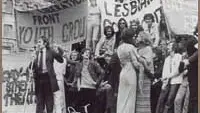
A sequel to the Emmy award winning Before Stonewall, the film chronicles the history of lesbian and gay life from the riots at the Stonewall Bar in Greenwich Village in 1969 to the end of the 20th century. After Stonewall tells the story of a community that forever changed the way America and the world would view not only its homosexuals but itself, and begin questioning its own fundamental values with regards to family, work, religion and relationships. The filmmakers interviewed more than 200 people for the film, including authors Armistead Maupin, Rita Mae-Brown and Dorothy Allison. Archival and never-before-released footage, including personal videos and 8mm home movies capture the immense scope of changes that the gay and lesbian community has experienced and instituted since the riots in 1969.

Themes: Views of the world
This is the true story of a woman, Anna Diomina, who is as old as the century. Every day, for the past seventeen years, at the same time, at the same station, an elderly lady with a hump and a cart boards the same train. She leaves the train at a far away station and starts her journey through the woods. As we follow this old woman along the icy pathways, her story and that of Russia's unfolds. It is a story of loyalty and betrayal for both. Striking archival material from 20th century Russia is accompanied by simple yet lyrical images of contemporary Russia and our heroine, as she goes about her day. And as her poignant mission is revealed, a hundred years of Russian history unfolds through her personal retelling.
Themes: Gypsies - Live without borders
Gypsies are possibly the most consistently reviled group in Western history. One of the main reasons for this is because as a community that in the past was constantly on the move, Gypsies have steadfastly refused to integrate. To outsiders, such a stance has always seemed suspect, yet Gypsies' insularity has allowed them to maintain an almost unbroken line of tradition for hundreds of years. The subject of the film is not simply Gypsies as a whole, but the quixotic figure of Jimmy Marks, whose family began as car traders. Marks grew rich from the business, bought a house, and settled with his family as comfortable members of the Spokane, Washington community. Marks's life was ripped asunder when police, inherently suspicious of Gypsies as a group, searched his home and subjected his family to abusive treatment. The police seized a huge sum of cash, which they assumed was gained from the sale of stolen property. Marks explained that, as an important member of the local Gypsy ruling council, he acted as a bank for money that belonged to members of his community. As a result of the search, according to Gypsy tradition, Marks's home had been contaminated by outsiders and thus the family was ostracized from the Gypsy community. In response, he initiated a multi-million dollar civil suit against the city and police department
Themes: Portraits: Human jurneys
As a royalist, Angelos Papanastassiou's life in the thirties was mainly defined by the royalist/republican schism. As a result, he had to leave the navy and eventually become a successful stockbroker, factory-owner and, in the late thirties, an alderman of Athens. After Greece bravely fought off the first Italian invasion, Angelos, along with all his fellow-Athenians, was forced to witness the full might of the German war machine entering Athens. The population was shown little mercy. Somehow, Angelos realized that the full horror of these events should be recorded. He used all his resources to secretly acquire a stock of film, and then set about filming the rapid downfall of Athens and the terrible deprivation and atrocities the Athenian people had to suffer, knowing full well that anyone caught taking so much as a photograph would be sentenced to death. There was little that happened during that time that Angelos did not capture on his little camera. There is footage of the Italian invasion of Greece in 1940; the German invasion in 1941; the raising of the Swastika on the Acropolis; starvation on a massive scale; the SS execution squads; scores of people being hanged in the streets. At the same time, he kept on filming his family and gatherings with friends. Forgğcs ingeniously intertwines scenes of Greece's history with the day-to-day life of a young family.
Tributes: Tasos Psarras
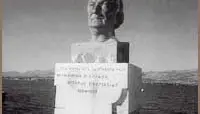
Angelos Sikelianos was born in Lefkada, in 1884. After finishing school, he came to Athens to study Law. However, he soon gave it up and devoted himself to poetry. In May 1927, with the support of his wealthy American wife Eva Palmer, Sikelianos held the First Delphic Games, which included a performance of "Prometheus Bound", athletic games torch-races, a concert of byzantine music, an exhibition of folk art, etc. The event was hugely successful, but the expense of organizing it proved excessive. Thus, and despite state assistance, the effort was repeated once more, the following year, and then it was permanently abandoned. Some time later, Eva left for the United States, and Sikelianos married Anna Karamani. During the German occupation, Sikelianos was a source of insipiration to the Greek people in their spiritual resistence; the crowning event of this period was the speech and poem he recited at the funeral of the great poet Palamas. From Sikelianos's many works, the poet Nanos Valaoritis has selected and analysed his most important poems.
Tributes: "Behind the scenes"
Born in St Petersburg in 1922, Aris Alexandrou arrived in Greece in 1930, where he spent a large part of his life in prison or exile (1948-1958). In 1967, he went to France, where he stayed until his death in the summer of 1978. "Backstage" examines the life of the great writer, and tries to shed some light on his unique lifestyle and the principles by which he lived.
Themes: Recording our memory
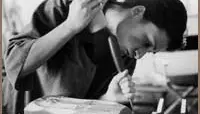
The tale of a divided city, the last one in Europe after the fall of the Berlin Wall. Thanks originally to the vision of two dynamic mayors, Greek-Cypriot and Turkish-Cypriot, and the vital support of the UN, over the last 25 years, a dedicated team of architects, townplanners, sociologists and others have worked together discreetly to develop the Master Plan of a city ready to be united as soon as politics allow. Traditional neighbourhoods with distinguished architecture and monuments that lay along what was to become the dividing line were abandoned when the invasion took place. They are now being restored and given new life, in a project so complex and thorough that it is one of the most impressive in Europe today. Filmed on both sides of the dividing line, and using rare footage, Beyond the Barbed Wire reveals the concerns and thoughts of ordinary people. While candidly presenting the traumatic experiences of war and political expediency that have marked their lives, they express a longing for collaboration, for overcoming divisions both physical and mental. Thus, the restoration of the old city of Nicosia becomes a testament to compassion and humanity. Even across the barbed wire, Cyprus, as Seferis points out, is still capable of miracles.
Themes: Gypsies - Live without borders
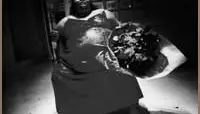
The documentary film about the well-known Romany singer Vera Bila and her KALE group is a fascinating and sensitive portrait of a striking artist and strong personality who refuses to change, despite the intolerance that exists in Czech society towards Romani ethnicity. Over a lengthy period, the filmmaker observed Vera Bila during ordinary work situations and during exceptionally tempestuous moments of her life. The singer, who considers herself to be a typical Romany, lives with her husband and her beloved adopted son who, at the time, is in prison for robbery. Mrs Bila is looking for a wife for him from a poor family in Slovakia, where she comes from, but he is not interested. She certainly doesn't fulfill one's conception of a star: she smokes thirty cigarettes a day, plays slot machines, is an avid eater despite her obesity, often flounders in dept, and has taken her hi-fi to the pawn shop eighteen times. She buys her clothes in second-hand shops and insists that talk about her wealth is just gossip. The film director manages to bridge the distance the artist usually puts between herself and the media, to create an image that simply portrays Vera Bila as she is.
Themes: Gypsies - Live without borders
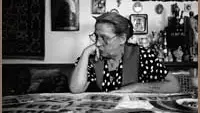
Ceija Stojka is the portrait of 66-year-old Austrian Rom Ceija Stojka, who, after a nomadic childhood, settled in Vienna many years ago. In the recent past, Ceija Stojka's fame as an author, painter and singer has spread outside Austria. She represents the opening of Rom and Sinti society to the world of the "gadje". This process and all the difficulties it involves is unique in the history of the Rom of Central Europe. The central theme of the documentary is the fusion of two extremely different worlds in this fascinating woman. The film commences with the portrayal of Ceija Stojka as she is now and reconstructs her biography with all its wealth of references to the collective experiences of the Romani and Sinti from the thirties up to the present day. This cinematic portrait communicates a rare sense of vitality, which has its origin in a way of life that is now practically extinct.
Themes: D.A. Pennebaker: Music through the lens
The master showman of rock'n'roll and guitarists, performs his all-time greatest hits at this live concert, filmed in Toronto, in 1969. Songs include: Rock'n'Roll Music, Long Live Rock'n'Roll, Johnny B. Goode, Promised Land, Carol, Hoochie Koochie Man, and Maybelline
Themes: Recording our memory
Tributes: Canadian Focus
A feature documentary about documentary, Cinema Verite: Defining the Moment is a major retrospective of some of the century's finest non-fiction films, and a celebration of the contemporary legacy of the cinema verite revolution of the late 50s and early 60s. The revolution had many names: Free Cinema, Direct Cinema, Candid Eye, Cinema Verite. And it broke out simultaneously in England, France, the US and Canada. Wherever it appeared, the form marked a completely new way of understanding film, the audience and the world. The world of cinema verite filmmaking was created by a group of driven, dedicated rebels who did for documentary what Cartier-Bresson did for photography. All the key players, including Michel Brault, Robert Drew, Wolf Koenig, Richard Leacock, Al Maysles, Donn Pennebaker, Pierre Perrault, Jean Rouch, Hope Ryden and Fred Wiseman, are featured in this film. Their use of lightweight, hand-held cameras and portable sound equipment, along with their unfailing commitment to recording reality as they saw it, revolutionized not only the documentary, but all forms of movie-making. Set against the stilted, lecture-style documentary that preceded them, their works are still timeless: as fresh and original today as when they were first released.
Themes: Recording our memory
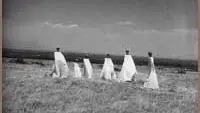
Dedicated to Memory presents information surrounding the ancient Macedonian burial rituals which emerged during years of archaeological excavations at the royal necropolis of Aegai (Vergina). The death and funeral rites of Philip II; the hero-worship of the chosen one; the fear of the inevitable end; the expectation of an after-life; the pain of separation; the longing for eternal rememberance, are all issues touched upon in this documentary. With the archaeological treasures in the leading role, the film endeavours to illustrate the myth of death.
Themes: Portraits: Human jurneys
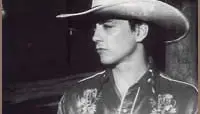
Deep Inside Clint Star takes you on a hilarious, bittersweet and intimate journey into the hearts and minds of some very ordinary, extraordinary young Canadians. Director Clint Alberta leads us through the film as the character Clint Star. Handsome and charismatic, Star adopts several personas, from 70s disco king to futuristic robot. Up gritty city streets and down dusty reservation roads, Star seeks out his far-flung buddies, young Natives like himself. They talk about it all -sex and life; love and abuse; five hundred years of oppression- with humour, grace and an uncommon dose of courage. The film explores complex issues of identity, sexuality and intimacy, while retaining the creative and playful styleof a director who is not afraid of turning the camera on himself.
Tributes: "Behind the scenes"
A documentary dedicated to the distinguished Greek writer Dido Sotiriou, known especially for her literary work concerning the Asia Minor disaster in 1922.
Themes: D.A. Pennebaker: Music through the lens
"As far as I'm concerned, it was never meant to be a documentary. I don't like them much. To my mind, the most interesting filmmaker that I ever knew about was Robert Flaherty, who made Nanook of the North. It was about this Eskimo, and Flaherty didn't try to tell you everything there was to know about the life of an Eskimo. He just wanted to show you what it was like to be with an Eskimo for a little bit. And that's the feeling I tried to put across. I was never interested in educating people about Dylan. First of all, I don't know enough about him. Who does? Besides, that's Dylan's business. If he wanted to educate people, I'm sure he knows how to do it. What I wanted to do was just be present when Dylan enacted his whole life and show you what he deals with and what interests him. It may not be so much about Dylan, because Dylan is sort of acting throughout the film. And that's his right...He had to be extraordinary where most of us settle for just being adequate."
Themes: Recording our memory
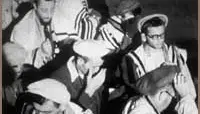
The Danube Exodus is a documentary about an exodus in two directions, caused by a decision made by the Great Powers. It did not find its way into the history books and no professional cameramen witnessed it. We are able to re-live it because an amateur filmmaker realized its significance and recorded it. It is the summer of 1939. The puppet government of Budapest is rapidly becoming very friendly with the third Reich. Two boats are hired for the exodus of 900 Slovak Jews. Captain Nðndor Andrðsovits meticulously filmed the travellers during their journey to the Black Sea, and though his film could have finished there, it did not. When he next points his camera at the deck of the "Erzsebet Kiralyne", it becomes apparent that the ship will not be sailing back empty. According to the pact made between Hitler and Stalin, the Romanian regions of Bessarabia and Northern Bukovina were ceded to the Soviet Union. The Germans living in those regions had to be repatriated. For this purpose, the Nazis rented the same boats that had just unloaded their Jewish cargo. Germans clad in black come on board with their wives and children and are registered on deck by German officers.
Themes: Stories to tell
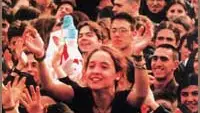
Autumn 1998. Thousands of high school students went out into the streets in cities all over Greece, demanding changes in the new educational system proposed by the state and in the quality of their everyday life which is constantly threatened by increasigly intensified school programmes. Programmes proposed by a society which aims to create useful employees, and by an educational system which appears to demand creativity and innovation, while at the same time rejecting the only innovative elements that adolescence can produce. A fast-paced and complex educational system that aims to create individuals ready to earn a lot of money, arming them with just enough knowledge to satisfy their material needs. Nowadays, when anything not deemed useful is rejected, a laid-back approach to life appears practically incredible, and certainly reprehensible. Intercutting scenes from the recent high school student demonstrations with texts by writers such as Camus, Nietzsche, and Beckett, filmmaker Rikaki produces a documentary filled with "words and images on the things that are not the way they should be"...
Themes: Stories to tell
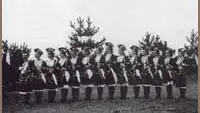
A light-toned, music-filled portrait showing one of America's most accomplished folk dance group, The Hellenic Dancers of New Jersey, preparing for the group's 25th anniversary performance. The video shows the young members of the group, as well as old-timers, reflecting on their Greekness, worrying about the important event and, of course, dancing. Greek music and hip hop (both from the US and Greece) feature large, with numerous dance sequences intercut with interviews. The footwork is very impressive, and it seems as if the group's leader, Eleni Chakalos, has a magic way of making her dancers remember the steps. The film, which includes the director's family members, also shows how one community keeps itself together. Greek Americana at its best.
Tributes: Night Times
For more than 15 years, sexual provocateur and film festival fixture Monika Treut has been cheerfully championing a laissez-faire approach to the pleasures of the flesh in her documentaries and features, rattling the cages of moralists and militants alike, by eschewing politically correct strategies in favor of a more benevolent approach to gender expression. She's at it again in Gendernauts, a surprisingly accessible look at "gender elimination phenomena", that focuses on a handful of travelers journeying from female to male.
Themes: Portraits: Human jurneys
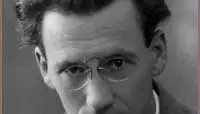
The film is a portrait of George Zioutos, journalist, editor, publisher, researcher and leftist intellectual, and is based largely on his diaries and notes. Born on Mount Pelion, in 1903, Zioutos studied Law in Athens. He entered journalism at an early age, and worked as a writer and editor for various newspapers. He became actively involved in Greece's workers' movement, and during the German Occupation he was an important figure in the outlawed resistance press of the National Liberation Front (EAM) and the Communist Party. After the armistice, he worked as director of the Communist Party's publishing company "New Books". In 1947, he left for Paris, where he remained until his death in 1967.

