
28th THESSALONIKI INTERNATIONAL DOCUMENTARY FESTIVAL
5 MARCH → 15 MARCH 2026

Film Forward: Short Doc Experiments Oberhausen
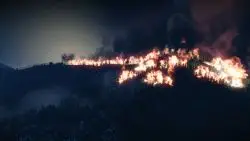
The film is transcribed according to the testimony of a former soldier in South Korea, Kim. It gives us access to the demilitarised zone and immerses us into the heart of the personal memory of a soldier who tells us about his experience in a reconnaissance mission.
Segments: Cinema
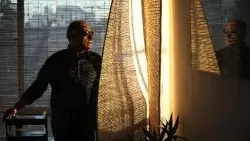
Τhe portrait of an artist whose exceptional approach to art defined him as one of the most ardent admirers of life itself. The leading aim of this documentary is to share 76 minutes and 15 seconds of undiscovered moments of Abbas Kiarostami’s life and work, in commemoration of his 76-year-and-15-day-long creative journey. The shots of this documentary were selected out of hundreds of hours of footage filmed during 25 years of friendship, inside and outside Iran on various occasions: film festivals, photography sessions, artistic events, workshops and some unique moments of his daily life.
Segments: Cinema
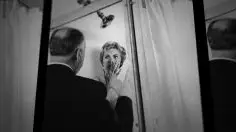
An unprecedented look at the iconic shower scene in Alfred Hitchcock’s Psycho, the “Man behind the Curtain,” and the screen murder that profoundly changed the course of world cinema. This delightful, min-bending documentary doesn’t address solely to film buffs, but to anyone who loves hidden details and wild reasoning, and read between the lines and the (52) cuts.
Segments: Memory/History
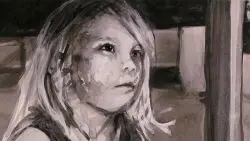
In 1909, in an undemocratic Sweden, a bastard child is born and given the name of Hervor. Her mother is unmarried and is driven from her home. Hervor grows up at shelters and orphanages, unwanted, rejected by society. As an adult she spends her life struggling for social justice. In old age she tells us her story. Director Knutte Wester brings his grandmother's memories to life thought hand-painted animated images and has us witness someone being rejected in order to unite others. A story that still repeats itself.
Kaleidoscope: Main Program
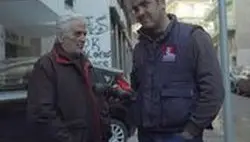
How does a visitor from Northern Europe record the Greek crisis? A Dutch director quietly observes Tasos Pafralides and his sister Evdokia, who run a business selling heating oil to their fellow citizens in Thessaloniki. With the crisis ever deepening, fewer and fewer Greeks can afford to buy oil and keep themselves warm. Every day, the two of them face a difficult dilemma: should they refuse heating oil to people who don’t have the money or try to help them out? A fly-on-the-wall documentary about how warm or cold relationships can be when a deep crisis forces everyone to fend for themselves.

Segments: Docs for Kids
The shy Ahmad (12) is new in the Netherlands. He is a refugee from the war in Syria. Ahmad would love to make Dutch friends, but he doen’t dare to make the first move. Most striking about Ahmad is his long hair. It’s long for a reason. It’s his way of giving something back for all the help he and his family have received from the Netherlands. While Ahmad's hair grows, so does his confidence. Will Ahmad succeed in making friends in the Netherlands?
Kaleidoscope: Μinorities
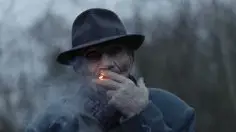
Little is known about the tragedy of the Roma and Sinti during World War II. They were murdered by the tens, hundreds and thousands, in concentration camps, by the edges of mass graves and roadsides, by rifle butts, hammers or gas. Silence surrounds them. For years they existed and still exist on the edges of society. They survived and keep their memory and scars as proof. In a world where fasciscm is once again prevalent, they are some of the last living witnesses to the Holocaust. They exist with a hole in their head, an imprint from the past.
Segments: Greek Panorama
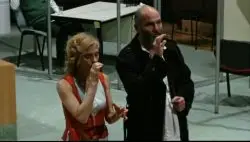
The actor-director Akyllas Karazisis, who was born and raised in Germany and has been living in Greece for over twenty years, delves into the world of Austrian-Hungarian writer Odon von Horvath, through his play Faith, Hope, and Charity, a story set in the Interwar period in Austria. The similarities with modern-day Greece are obvious. The documentary captures the exciting process from the first rehearsals to the premiere, during which a teaching of high quality ufolds; this leads to a performance in which theater and real life meet and come together.

Segments: Memory/History
A cinematic journey through the tumultuous life and prolific works of Greek novelist Alki Zei. A life that encapsulates Greece’s entire 20th century history and writings that have received international acclaim and continue to be honored, touching generation upon generation of readers. The film is based predominantly on the verbal testimonies of Alki Zei, but also on those of her sister, Eleni Kokkou, and her dear friends and fellow travellers, film director Manos Zacharias and poet Titos Patrikios.
Kaleidoscope: Main Program
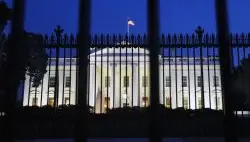
This is the story of a new wave of independent journalists who are changing the face of media, providing alternatives to mainstream, corporate news outlets, and carrying on the legacy of an iconoclastic rebel journalist named I. F. Stone, whose fearless reporting from 1953 to 1971 filled a tiny 4-page newsletter which he wrote, published, and carried to the mailbox every week. The camera follows them as they dig for truth, while media conglomerates that own the mainstream news sources are increasingly reluctant to investigate or criticize government policies – particularly on defense and security, or the rampant intrusion of state surveillance into citizens’ private lives.
Kaleidoscope: Main Program
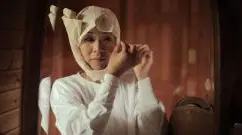
The unknown story of the Ama-San, the “sea women” of Japan who continue a tradition that began 2000 years ago. In Wagu, a small fishing village on the Pacific coast, the women’s maritime life begins when the cherry trees blossom. While men were out hunting or fishing for extended periods of time, women, in order to provide for their families, would dive to catch shellfish. The pearls from the oysters they sold made them a symbol of power, beauty and spirituality. The film follows three of them as they dive in deep water without breathing gear, transcending the limits of their delicate bodies and reaching freedom.
Kaleidoscope: Main Program
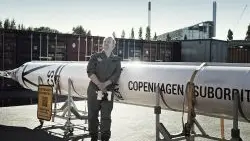
Over a period of six years, award-winning director Max Kestner follows two best friends and top engineers building a DIY rocket to travel into space – and he becomes their friend, partner, and partner-in-crime... Against all odds, they build the cheapest rocket for the cost of a small car. This is the story of one of the greatest dreams of mankind, which proves that rather than the DIY techniques, it’s the power of will that can bring the common people closer to the stars.
Kaleidoscope: Main Program
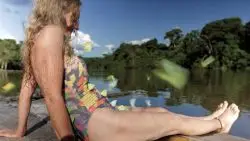
This is the story of Val and Clare: a mother and a daughter. After the tragic death of her eldest child, Val left her kids and family behind and escaped into the Colombian jungle. Only 11 at the time, Clare Weiskopf, the director of this film, couldn’t understand what her mother was looking for. Thirty years later, when she becomes pregnant, Clare decides to confront her mother. Together they go on an intimate journey exploring the boundaries between responsibility and freedom, with all the guilt and sacrifice they entail. What makes someone a good mother?
Kaleidoscope: Main Program
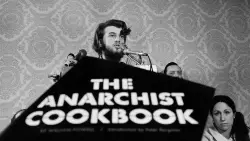
In 1970, as the heady days of the 60s came to an end, 19-year-old William Powell wrote one of the most infamous books ever published: The Anarchist Cookbook. Part manifesto and part bomb making manual, Cookbook sold over 2 million copies. Now 65, Powell is a man struggling to make sense of the damage it has done, as it wasn’t associated only with acts of protest, but also with terrorist violence. Α cautionary tale of youthful rebellion and unforeseen consequences, and an all-too-human story of a man at the end of his life wrestling with his past.

Segments: Memory/History
The life, the political actions and the spiritual journey of Andreas Lentakis. And through them, the course of the Greek Left and its political history during the second half of the 20th century.

Segments: Habitat
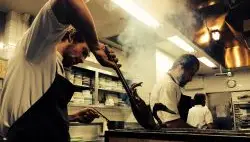
The first documentary in the history of film, Robert Flaherty’s Nanook of the North, recorded the everyday reality of an Inouit family. Almost a century later, an indegenous director returns to her own roots and to the origins of documentary film and joins her fellow Inuit activists as they present themselves to the world as a modern people in dire need of a sustainable economy. Now, a new generation of Inuit, armed with social media and their own sense of humor, are challenging the groups that fight seal hunting. As they raise their voices to defend their tradition, the camera becomes their weapon and survival too
Segments: Food vs. Food
Tokyo, January 2015: The world’s number one restaurant, the Copenhagen based NOMA and its renowned chef-owner Rene Redzepi relocate the restaurant and its entire staff to the Mandarin Oriental Hotel in Tokyo for eight sold-out weeks of spectacular lunches and dinners with specially created menus. A unique look at one of the world’s most well known chefs taking on perhaps one of the biggest challenges of his career.
Segments: Greek Panorama
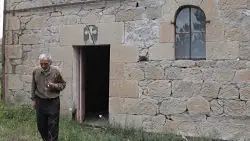
?A Road with a Long History reveals to the public the history of the Greek villages of Georgia. For many people, this almost 200-year-old history remains unknown. A story that began in the early 19th century with the establishment of the first Greek village, which over the years grew to 52. Through the study of everyday life and culture in this rugged environment, the documentary chronicles the period from the establishment to the decline of these villages.

Segments: Memory/History
There are places in Europe that have remained as painful reminders of the past – factories where humans were turned into ash. These places are now memorial sites that are open to the public and receive thousands of tourists every year. But how do visitors behave nowadays? How easily can a concentration camp turn into a theme park and how can the Holocaust become a tourist attraction? The film, whose title refers to the eponymous novel written by W. G. Sebald, reminds us that oblivion is the safest path to human atrocity.
Film Forward: Tribute to Yervant Gianikian & Angela Ricci Lucchi
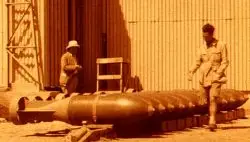
Αs a response to the NATO bombing of Yugoslavia, the directors created a hand-made elegy for the tragedies of war and the humanitarian and ecological disaster in this corner of Europe. The film compiles and juxtaposes frames from scenes in life in the Balkans between 1920-1940, at times aerial shots of the wasteland and at times earthly details of everyday life during that era. An analytical work that draws on the archives of a Nazi officer who participated in the bombing of the Balkans during the World War II.
Film Forward: Tribute to Yervant Gianikian & Angela Ricci Lucchi
Each period has its fascism. With their “analytical camera,” as they define it, the directors dive in the neatly forgotten Italian colonial past in Ethiopia and proceed in a double reading – that of the images themselves and the way in which they were consumed: images of military exercises, a woman with her breasts bare, the reflection of Mussolini in Africa. The result is vital film about Europe that has committed suicide with two world wars and terrifying dictatorships, and now finds itself before new trials.

