
28th THESSALONIKI INTERNATIONAL DOCUMENTARY FESTIVAL
5 MARCH → 15 MARCH 2026


Segments: Greek Panorama
In 1981, after many of the live-music bars in Plaka, Athens, were shut down, two professional musicians, Spiros Podaras and Christos Tolos, decided to open Cafe Santan, a live rock music bar in Volos – a sleepy provincial town – that soon became a place of artistic expression for restless and free-spirited people and changed the way of life of the town’s youth, becoming a legendary landmark. For 28 years, many famous Greek and foreign artists and bands performed live at the Cafe Santan. In 2009, the building that housed Cafe Santan was reclaimed by the owner for private use and its demolition was scheduled. Cafe Santan’s last nights as a live-music bar were full of live music sessions, gatherings of old regulars and new visitors, memories and rock ’n’ roll stories.
Segments: Greek Panorama
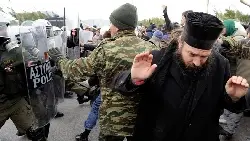
The documentary 128 Keratea: A True Story records the titanic efforts of the residents of a small rural town to repeal a political decision that imposed the creation of a huge landfill site in a forested area of outstanding natural beauty within an archaeological site. For the 128 days that the violent confrontation between the residents of the Lavrion Peninsula and the central government lasted, the camera of the filmmakers was next to the two warring sides and realistically captured the extreme conflict that broke out within a conservative society, where the dangerous escalation of violence triggered global interest. Some of the participants share their stories and talk about the bloody events and the open wounds left on the psyche of the local community.
Segments: Greek Panorama
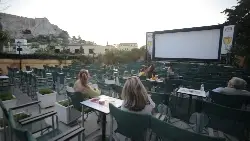
2013. Athens is in the midst of a financial crisis. The camera documents mournful images of dereliction, desolation, and decay in the city center and the suburbs. The open air cinemas of Athens resist; they thrive as landmarks and touristic attractions; they recover their initial traveling form and activity by filling backyards, parks, central squares, and becoming the connecting tissue of a terrified society in crisis. Will the open air cinemas of Athens, a cherished form of communal entertainment, keep on creating an oasis and an escape amidst the bleakness of everyday life, or will they suffer heavy blows from the recession?
Segments: Greek Panorama
On the occasion of making a documentary of a theatrical co-production between Greece, Lithuania and Mexico, and with the original intention of making a film about “the end of the world”, the director/narrator attempts to delve into the depths of the global crisis, discovering at the same time that it’s in fact a personal crisis, as well a crisis for those that try to re-enact it. The story starts with a video of a murder filmed by a Reuters film crew which was released on the Internet by Wikileaks.
Segments: Greek Panorama
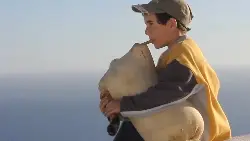
On the small Cycladic island of Anafi lives 77-year-old Manolis Pelekis, a bagpipe player, a farmer, a beekeeper, and a stone builder. He and his son Yannis are the last builders of stone, the last ones of a great generation of Anafiot builders. Manolis teaches his grandson, 9-year-old Manolis, who, following in his grandfather’s steps, learns from him and plays the tsampouna (bagpipe) with him. An Athenian primary school teacher, Nota Kraounakis, requested and was sent to teach at Anafi’s elementary school for a year. Little Manolis is her pupil. The lives of these two teachers and their pupil are documented in the film on this tiny Greek island where plants sprout out of the asphalt road.
Segments: Recordings Of Memory
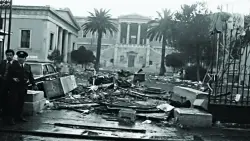
A documentary about cinema censorship during the dictatorship in Greece (1967- 1974), based on never-before-seen state archives. The film includes clips of films which were either censored or banned, newsreels of that era, interviews with famous directors and also secret documents from the reports of the Censorship Committee that are made public for the first time, portraying a revealing picture of the system’s control mechanisms and providing a fresco of that time.
Segments: Stories to tell
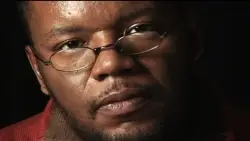
The shocking story of Jayson Blair, the most infamous serial plagiarist of our time. In 2003, Blair was caught plagiarizing in dozens of stories and the daily operations of the Timesnewsroom became a public spectacle as every major news outlet picked up the story. The fact that Blair is African-American was emphasized again and again as accounts of the “Blair Affair” served up details in a soap-opera style tale of deception, drug abuse, racism, mental illness, hierarchy, white guilt, and power struggles inside the hallowed halls of The New York Times. Featuring exclusive interviews, including with Blair himself, A Fragile Trust is the first film to tell the whole sordid story of the scandal while exploring deeper themes of power, ethics, and responsibility in the mainstream media.
Segments: Portraits: Human Journeys
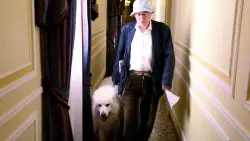
Eighteen years after his last film (The Troubles We’ve Seen: A History of Journalism in Wartime), Marcel Ophuls comes back as one of the last cinema masters – the most causticas well as the funniest. The director of The Sorrow and the Pity shares his memories with us, stories incredibly rich and fascinating, which make Ain’t Misbehavin’ a cheerful and bittersweet trip though the 20th century and cinema itself. Son of the great Max Ophuls, Marcel is generous with his feelings of admiration. And so we meet Jeanne Moreau, Bertold Brecht, Ernst Lubitsch, Otto Preminger, Woody Allen, Stanlely Kubrick and, of course, his friend Francois Truffaut. There’s no such thing as a great filmmaker with no memories; here then is Marcel Ophuls’s “memorabilia store.”
Segments: Society
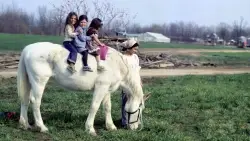
In 1970, 1,500 hippies and their guru Stephen Gaskin founded a commune in rural Tennessee. Members forked over their savings, grew their own food, delivered their babies at home and built a self-sufficient society. Raised in this alternative community by a Jewish mother from Beverly Hills and a Puerto Rican father from the Bronx, filmmakers and sisters Rena and Nadine return for the first time since leaving in 1985. Finally ready to face the past after years of hiding their upbringing, they chart the rise and fall of America’s largest utopian socialist experiment and their own family tree. American Commune finds inspiration in failure, humor in deprivation and, most surprisingly, that communal values are alive and well in the next generation.
Segments: Stories to tell
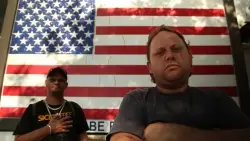
Τhe portrait of one young man searching for his way and his identity in a country that also seems to be suffering from the confusion of an identity crisis due in large part to the trauma of 9/11. Against the background of the tenth anniversary of 9/11 and Julian’s north Florida home, we observe the aftermath of this tragic moment in contemporary American history and the tensions that are tearing at the fabric of American society.
Segments: Stories to tell
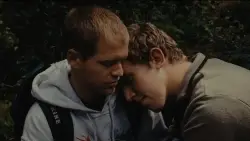
A documentary film about runaway queer youth living in the shadows of the promised city. James ran away from his parents’ home because they didn’t accept that he is gay. He tries to find refuge in San Francisco with his boyfriend, Tyler. They thought they would find a community in the world’s gay Mecca. Instead, they end up sleeping in a park and panhandling in the city’s gay neighborhood. They find themselves stranded in a world of homeless people and the community of other kicked-out queer youth. Eventually, James has to face his past and the place he has left behind... Α coming of age story of a gay boy growing up in small town America. It’s a story about a family coming to grips with what it fears the most.

Tributes: Nicolas Philibert
The Zoology Gallery of the National Natural History Museum in Paris was closed to the public for a quarter of a century, leaving hundreds of stuffed animals in a forgotten twilight zone: mammals, fish, reptiles, insects, amphibians, birds, crustaceans... The film was shot during the renovation work in the gallery (from 1991 to 1994), and describes the resurrection of its strange residents.
Segments: Stories to tell
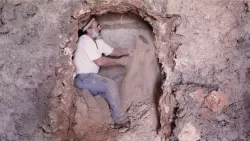
Sixty-seven-year-old Nissim Kahlon made his home in a cave he dug, in a limestone cliff under the Apollonia National Park, on the North of the Herzliya coast, 15 kilometers north of modern Tel Aviv. For years he lived in this cave, without electricity or running water. Today the “home” that he built out of anything and everything – rocks, trash, sand – contains countless caves and tunnels, and Nissim insists on continuing to work on it every day. His work never ends. Nissim’s son, eighteen-year-old Moshe, who was born in the cave and will soon join the military, is moving in with him. Together they work to dig out the cave in which he will live. Through their hard work, a complex relationship between father and son is revealed.
Segments: Portraits: Human Journeys
This feature documentary follows 33-year-old Ariel after his legs are shredded by an industrial dough mixer in Mendoza, Argentina. Ariel embodies the ongoing duel between man and machine: he eventually sets out to rebuild his broken identity, to keep his family together and to design his own artificial legs. Ariel’s newfound transhumanity is represented in a juxtaposition of his daily life with dreamlike inner worlds, pushing the boundary between the real and the imaginary. This story of healing and transformation is an introspective journey tinged with touches of magical realism.
Segments: Portraits: Human Journeys
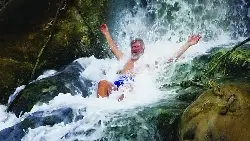
“Even in hell, I would still paint.” Dimitris Andrianopoulos paints relentlessly. However, he refuses to sell his artwork, he doesn’t exhibit and he signs his wife’s name. On his 79th birthday he agrees to open up the door to his painting and share his art and thoughts in a documentary film. Over a period of 12 months, the camera records the microcosm of his colors and his life. The film follows his wanderings in search of answers regarding the relationship between the artist and his work, the difficulty of parting with his works, the mystery of inspiration and the unfathomable influence of the unknown.
Α character driven documentary following a gang of young adults living on the streets of the once secret military city of Perm, Russia. All born during the break down of the Soviet Union, they are the generation of Russian children who ended up on the streets as a result of its turmoil. Now, on the brink of adulthood, they have created their own kind of society on the streets in order to survive. But will this manufactured “family unit” sustain the harsh realities of drug use, abuse and contradicting morality within their own personalities? Or will it face the same moral dilemmas that the USSR faced at the time of its collapse?
Segments: Stories to tell
Is it okay to throw away your old wedding dress? What do you do with all those crystal glasses that nobody wants? Atragicomic documentary exploring the very last acts of a long marriage. A film about the tentative search for a new beginning when something – finally, and unfortunately – is over.
Segments: Greek Panorama
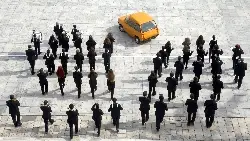
The film is about the Enfield 8000, the world’s first production electric vehicle, which was introduced in the early 70s, 40 years before the auto industry rediscovered the benefits of electric mobility, and manufactured on the Greek island of Syros! Enfield Automotive, a British firm based on the Isle of Wight, managed to win the Electricity Council contract for an initial number of electric vehicles over the Ford and Leyland bids. However, as production was about to start, the famous Greek ship owner John Goulandris, owner of Enfield Automotive, transferred the factory to the Greek island of Syros, a decision which probably proved fatal to the car’s future at a time when the rise in the price of petrol, due to the energy crisis, and growing public awareness of environmental issues could have made the Enfield 8000 the ideal solution for urban mobility.
Segments: Society
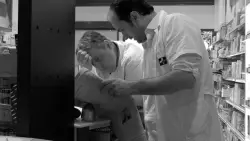
A depiction of Greece during the years 2010-12, through a pharmacy in Athens.
Tributes: Nicolas Philibert
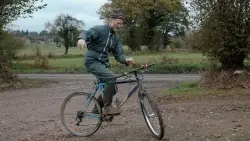
“This film’s origins lie in another film. The one that the director Rene Allio shot in Normandy in1975, based on a local crime and titled I, Pierre Riviere, Having Slaughtered My Mother, My Sister and My Brother... I was 24 at the time. Rene Allio had offered me a position as first assistant director. Shot a few miles from the scene of the triple murder 140 years earlier, this film owed most of its uniqueness to the fact that nearly every part was given to local country people. Today, I have decided to return to Normandy to seek out the transient actors of the film. Thirty years have passed...” Nicolas Philibert
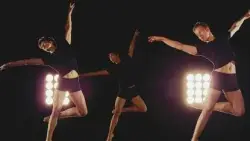
Segments: Music & Dance
It’s not easy being a teenager, especially through the eyes of these three ballet boys! The documentary takes us through disappointments, victories, friendship, first loves, doubt, faith; all mixed with the beautiful expression of ballet.

