
28th THESSALONIKI INTERNATIONAL DOCUMENTARY FESTIVAL
5 MARCH → 15 MARCH 2026

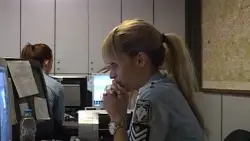
"1 0 0" depicts the wide range of work the police in Athens is asked to perform. By attending the daily life at Police Headquarters we understand that what happens is depicted as symptomatic of a deeper social crisis, including social injustice, racism, poverty and social violence.
Programme Sections: Danish Docs
Film director Omar and his friend Karim were researching a film in Cairo when the revolution broke out in February 2011. They mingle with the rebels, walk the streets and participate in demonstrations against decades of oppression by the regime of Hosni Mubarak.
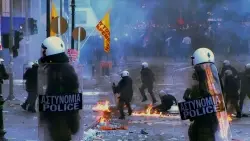
Greece has been chosen to be the first European economy experiment and is the first EU Economy war victim of the new World Order. The film chronicles the events that took place around Syntagma Square (constitution Square) in athens on 28-29 June 2011, during the vote on the austerity measures by the Greek Parliament. It documents the solidarity and spirit of demonstrators from all over Greece and the police brutality with its extensive use of chemicals, and includes footage filmed by other protestors in order to accurately portray the action taken by the police, the government, para-state forces and the demonstrators, during what was probably the most significant vote in post-dictatorship Greece.
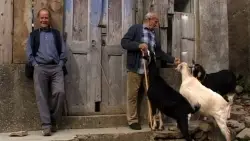
Island of Imvros, 2005-2009. The documentary portrays the lives, the voices, the moments that have passed; the everyday life of people who never left their land. It presents the dreams that people continue to foster for a homeland that they were deprived of, that was violently taken from them, that was devastated. Memories, dreams, sacrifices, suffering, nostalgia, life. All these unfold through the stories of the heroes. It is their homeland that they are looking for in the rubble. It is their lives that they want to recreate. It is their dreams that they wish to be revived.
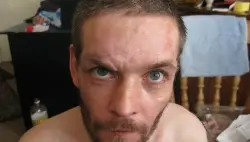
For 66 months, Nigel survived under the radar of social services. This is a dark, lonely and often dangerous place to inhabit. Eventually, Nigel found Robbie, a violent Glaswegian, who, in the absence of anyone else, became his carer. Together they lived in poverty in the midst of the dreaming spires of Oxford. Shot over a 6-year period, this film chronicles the complex relationship between the two men. Alcohol, mental illness and sex all play a part and the film raises many difficult questions about the nature of love, abuse and society’s duty of care. But at its core, this film is a love story, an acutely observed portrait of a dysfunctional relationship within a dysfunctional world
Programme Sections: Balkan Focus
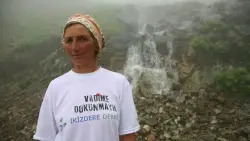
A Few Brave People chronicles the extraordinary struggle of the Black Sea locals to protect their rivers and their livelihood from a government that is keen to sell them to private corporations.The people of Findikli, Ikizdere and Senoz, three valleys in the Black Sea region, cannot make sense of the fact that their rivers are to be rented out to private companies to exploit for the next 49 years. The authorities tell them that this is a must, necessary for Turkey’s development and energy independence. Trees are cut, massive water pipes are laid and as the river goes quiet, it is as if the locals in Senoz slowly begin to expire. In Ikizdere, there are those who believe the dams will mean more employment, and then there are those who are determined to resist this brutal intervention into their lives. Aware of what happened in Senoz and Ikizdere, people in Findikli begin a determined campaign against the state and its corporations. Over the course of three years, this film follows a few brave people who decide to struggle not only for their own sakes, but also for generations to come.
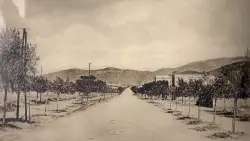
Ambelokipi (Vineyards) is a district of Athens which, though outlying when it was first established, now finds itself at the center of the city. Stretching from the “Elena Venizelos” maternity hospital to the Athens Old People’s Home, Ambelokipi comprises historical landmarks such as the refugee housing estates on Alexandras Avenue, the Panathinaikos football pitch, the Averoff prison, the Kountouriotika neighborhood, and many legendary cinemas. The film chronicles the history, the present and the future of the neighborhood of Ambelokipi, from birth, to life and survival, and into old age.
Programme Sections: Eyal Sivan
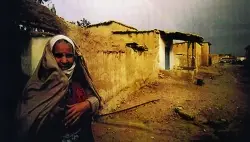
Aqabat-Jaber is one of the sixty Palestinian refugee camps built in the Middle East by the un at the beginning of the 1950s. It is the biggest camp in the Middle East, situated some 3 kilometers south of Jericho. the majority of its 65,000 inhabitants came from those villages in central Palestine that were destroyed in 1948. The 1967 war pushed 95% of that population across the banks of the river Jordan. the traces of war and the effects of erosion by the desert accentuate the contrasts between the abandoned refugees and the huts that they still occupy, and make Aqabat-Jaber look like a ghost town. filmed in 1987, a few months before the Intifada, this film tells the story of a disinherited generation brought up on the nostalgia of places they never knew and which no longer exist. the story of a temporary solution that became a permanent way of life. this film is about a ghost town, fed on nostalgia and memories.
Programme Sections: Danish Docs
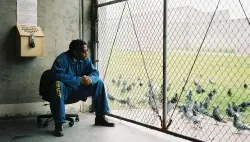
Images from New Folsom, where men at California’s first maximum security prison offer us a glimpse of their world. This world is less about dangerous drama and more, as one of them describes it, “about isolation; about closure of both the mind and the heart; and the spirit.” This intimate documentary shows prisoners, most of them serving a life sentence, who refuse such closure and instead work to reveal and express themselves. Their primary tool is making art and the film takes us to New Folsom’s “Arts in Corrections” program, to prison poetry readings, gospel choirs, blues guitar on the yard, and to many more instances of creativity. At Night I Fly shows the artistic and human journey these men make, as well as the need that fuels it, and the beauty and pain encountered along the way.
Programme Sections: Danish Docs
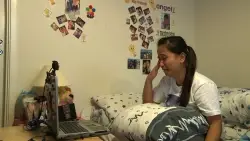
In the film Au Pair we meet three young Filipino women with three different reasons to leave home – and with three different dreams for the future. Roselie has left her country to support her younger sisters’ education. With permission to work in Denmark for only 18 months, she has to find a new host family in Norway or she will have to go back home. Matet supports her parents and a cousin adopted by her parents. But then Matet’s mother is diagnosed with cancer and has to send even more money each month. Theresa has left her two-year-old daughter with her mother back in an extremely poor village. She earns money for her daughter’s survival and future possibilities, but the fact is the whole family is depending on her. The stories of these three women become the story of a complex world, in which it is difficult to tell who is exploiting whom; a world in which money corrupts emotions.
Programme Sections: Danish Docs
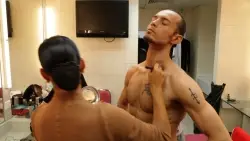
Slavik is a former world champion in Latin American dance. He is about to make his final come - back as a professional dancer with his partner and lover Anna. Slavik is addicted to the limelight and dance. His body, however, is causing him aches and pains and his flaring temper puts his relationship with Anna at risk. Ballroom Dancer follows Slavik and Anna as they put everything on the line in their ultimate push for the throne one last time.

This is a historical documentary with people at its core. A documentary about the repatriated Greek political refugees fromTashkent, Uzbekistan. This is the story of the children of three political refugees. Life before and after their arrival in Greece. The marks that the cultural differences between the two countries have left and continue to leave on their personalities and their very lives.
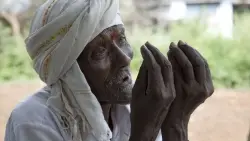
Bitter Seeds, the final film in Micha X. Peled’s Globalization Trilogy following Store Wars: When Wal-Mart Comes to Town and China Blue, explores the future of how we grow things. The worldwide debate focuses on how farming is being drastically transformed by the demands of industrial agriculture. Companies like the US-based Monsanto claim that their genetically modified seeds offer the most effective solution to feeding the world’s growing population, but on the ground, many small-scale farmers are losing their land. In India, the controversy has become a matter of life and death. Every 30 minutes one farmer in India, deep in debt and unable to provide for his family, commits suicide. Featuring compelling characters, Bitter Seeds tells a deeply moving story from the heart of the worldwide controversy about the future of farming.
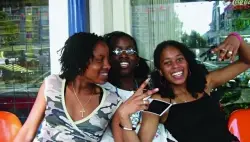
Angele, Sheena and Soraya are friends. They give each other styling tips, go shopping together and party into the early hours of the morning. Their favourite topic of conversation is boys. On the one hand, the girls are tough, wear sexy clothes and speak openly about sex. On the other hand, they are insecure and unsure about their “first time”. Is it true that most boys just want sex?
By-standing and Standing-by is a documentary on sensitive issues such as historical memory, silence, collective trauma, the constructs of official history, the perceptions prevalent in Greece regarding the German Occupation and the extermination of 87% of Greek Jews, one of the Holocaust’s highest killing rates. The documentary starts with the shoah of thessaloniki’s Jewish community – Europe’s most ancient Jewish community – and continues with the unknown story of the rescue of Greece’s smallest Jewish community at the time, that of the neighboring town of Katerini. a documentary/essay comprising testimonials by Greeks who survived the Holocaust, as well as in-depth analyses by leading historians and other scholars, By-standing and Standing by attempts to transcend the stereotypes which, for some reason, persist and continue to poison society to this day.
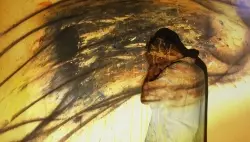
Jean Marc Calvet lived a dark and violent life. Then aged 38, via a terrifying trip to hell and back, he was given a second chance. On the run in Central America and haunted by his past, he shut himself in a house and decided that death was his only way out. For nine months he suffered a terrifying metamorphosis and was saved only by a can of industrial paint. Now a successful artist with solo exhibitions in New York, his work sells for 1000s. But on a quest for redemption, he must return to France and find the six-year-old son he abandoned twelve years ago without a word.
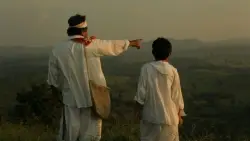
In a small town in Veracruz, clay becomes life and wisdom becomes flight.
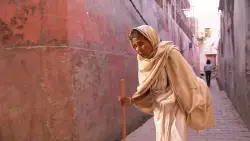
Observing widows from India, Nepal and Afghanistan – countries with the highest population of widows in the world, the most child widows and largest percentage of widows respectively – Cartography of Loneliness is not just telling stories, but showing how these women are able to rise out of their solitude. What emerges are their similarities, despite location and culture. Heart-breaking accounts, beautiful photography and simple, truthful filmmaking, make this documentary an important testament of unjustifiable pain.
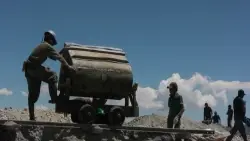
During the 16th and 17th centuries, Cerro Rico – an enormous conical mountain that towers over the city of Potosi, in Southwestern Bolivia – provided half of the world’s silver and sustained the Spanish Empire during colonial times. Most of the mineral wealth of the Cerro has been depleted, but today more than ten thousand miners still work on the slopes and tunnels of the mountain, looking for zinc, tin, lead, or a good vein of silver. Bolivia has recently discovered it contains half of the world’s lithium reserves in the desolate white plains of the Salar de Uyuni, also located in the Potosi region. But the lithium reserves are, for the moment, completely untapped. The parallel stories of the Cerro and the Salar speak of the past and the future of Bolivia, and help create a compelling mosaic of mining life on the high mountains of South America -making us wonder if the Andean nation will be able to finally harness the mineral resources for itself, its people, its own development.
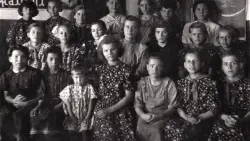
Under Stalin, hundreds of thousands of children were born into or sent to the Gulags. Children as young as 3 years old could be considered dangerous counter-revolutionaries and taken to the wilds of Siberia. Condemned for “coming from the worst stock,” these children were separated from their families, abused, neglected and starved. Over time, more and more babies were born into the hell of the work camps. They grew up never knowing their families or homeland, believing that every child in the world lived the same way. Of the generations that grew up in the Gulags, only a few remain. In this moving documentary, they tell their stories.
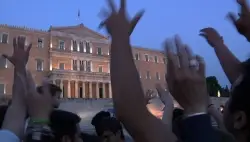
December 6th, 2008, fifteen-year-old Alexandros Grigoropoulos was killed by police while out with his friends. His death prompted thousands of young people to take to the streets in riots that lasted three weeks, setting Athens ablaze and consuming a nation in violence and chaos. In this film, some of those teenagers who witnessed his death and the running battles with the police, reflect on their world three years later, as they deal with Greece’s on-going crisis. This film gives voice to young people thrust into a conflict which changed, and continues to change, their lives. We observe their lives and hear of their hopes, dreams and fears, as they navigate uncertain futures through times of great upheaval.

