
28th THESSALONIKI INTERNATIONAL DOCUMENTARY FESTIVAL
5 MARCH → 15 MARCH 2026

Programme Segments: Greek Panorama
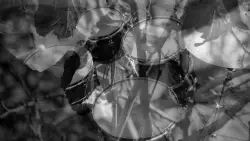
It’s January the 7th 2011 and master drummer Dimitri Varzabetian is setting up for one last time his Gretsch drum-set in the yard, next to one of the few remaining active water wells in Athens. He has practiced there for twenty years. The new owners have decided that it’s time for a new apartment building...
Programme Segments: Stories to Tell
Tributes: Spotlight: Middle East
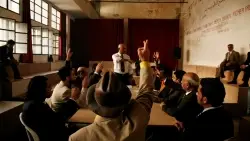
A theater director specialized in working with disadvantaged and traumatized people, Zeina Daccache struggled to set up Lebanon’s first prison-based drama project in the country’s notorious Roumieh Prison. For fifteenmonths, forty-five inmates, some completely illiterate, found themselves working together to present an adaptation of the famous stage play 12 Angry Men, here re-named 12 Angry Lebanese. In the film, the drama therapy sessions, the interviews with the inmates, and the interaction with both director and audience, convey a message of hope, forgiveness and change. Through their artistic journey, these “murderers, drug dealers and rapists” reveal kindness and faith in life. Inspiring and honest, this account of the prisoners’ journey demonstrates the positive effect of drama therapy on some of the most ostracized individuals in society.
Programme Segments: Stories to Tell
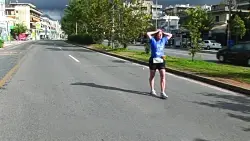
At some point in every marathon route, almost every runner has to face the following dilemma: to listen to the body that screams it’s had enough, or to the inner voice urging the runner to stay the course to the finish line. Life has a lot in common with a marathon race with one significant difference: there is no finish line – just running. Dr. Becky Clark, 50, athlete and writer, is a licensed clinical social worker and sport psychologist in New York City. Deaf since her early teens, she successfully reconnected to the world of sound in 2008 with the aid of cochlear implants. In 2009, she ran the Athens Classic Marathon as a celebration of her healing journey from child physical/sexual trauma.
Tributes: Kyriaki Malama
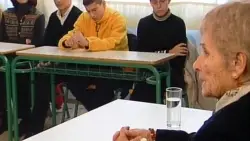
39405 was the number of Zana Santicario Saatsoglou, a Jewish woman from Thessaloniki who was a prisoner in Auschwitz. Fifty-five years later, Zana shares her story with students of the Thessaloniki high school for Intercultural education.

In three chapters from three different parts of our earth, Udo Maurer’s documentary Above Water reports on the existential significance of the element of water for humanity. In this way, a seemingly banal and obvious fact becomes an exciting and immediate narrative about the daily struggle for survival. In spite of water. Because of water. Without water. With water. About flooding and inundation in the delta region of the Brahmaputra in Bangladesh, about the once-thriving fishing port and harbor city of Aralsk on the Aral Sea that now lies lost in the dry Kazakh steppes, and about Africa’s daily war of all against all for a couple of canisters of clean water in Kibera, the largest slum of Nairobi.
Programme Segments: Human Rights
Tributes: Spotlight: Middle East
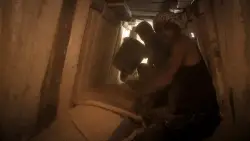
In Rafah, on the southern edge of the Gaza Strip, Abu Jamil Street is the last road before the Egyptian border. The street is the starting-point for all the smuggling tunnels. The destinies of four people – Abu Sleeman, owner of a tunnel bombarded in January 2009, Mouneer and Sameer, his laborers, and Hiyad Keshta, their neighbor – meet and intertwine in a neighborhood under high tension. Abu Jamil Street is a journey into the clandestine daily life of Rafah’s tunnels.
Programme Segments: Habitat
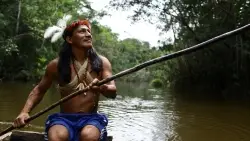
When President of Ecuador Rafael Correa announced in 2007 that he will not exploit the country’s Amazonian oil fields in exchange for financial compensation from industrialized countries in the form of carbon bonds, he made a very bold move. The challenge? To convince them that the safeguarding of nature is worth more than petroleum extraction. The film tells the three-year-story of the scientific team as they try to convince the international community that both north and south would gain by supporting this post-petroleum-era model for sustainable development.
Programme Segments: Stories to Tell
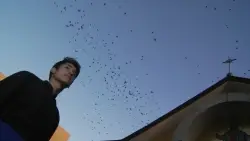
Agnus Dei, Lamb of God is a documentary that interweaves the life of Jesus Romero, the life of Jose Barba, and the life inside a minor catholic seminar. Jesus Romero was an eleven-year-old acolyte when the priest of his church abused him. His mother, a very devoted Catholic, yearning for her son to become a priest, left him at church where the abuse continued for several years. One day, Jesus found out that the priest was exchanging nude photos he had taken of him in a child pornography ring; he also found out that the priest was sexually abusing other children. The story of Jesus is a victim’s story – a victim waging a battle against the indifference and corruption of the Catholic Church, a battle against the complicity of the judges obstructing the legal process to protect predatory priests, and also a battle against himself, trying to leave behind his fragility as a victim and face his aggressor. Only then will he be able to break free of the past and the man who stole his childhood and his freedom.
Tributes: Kyriaki Malama
A film about Edit Mihali, the most accomplished and glamorous diva of Albanian lyric theater today.
Programme Segments: Greek Panorama
Ali is an economic immigrant from Afghanistan. Trying to reach Greece, he trekked through the mountains of Iraq and Pakistan and almost drowned in the Aegean Sea. Why did he finally stay in Greece? Is his life in Thessaloniki as he had imagined it would be?
Programme Segments: Greek Panorama
This documentary discusses the way in which our children are born nowadays in Greece. The film puts forward the view that labor and pregnancy are experiences of self-knowledge and that Greek women are deprived of that experience because labor in Greece is dealt with as a purely medical procedure. The central narrative axis is formed by mothers talking about and describing their labor. These narrations provoke discussions with doctors, midwives, psychiatrists, etc., about disputable medical practices and matters, while also posing questions about our global civilization and Greek mentality and culture. Among others, we interview famous researcher Dr Michel Odent, whom we meet in London. More than a medical documentary, this film is a human conversation about labor, full of wisdom, humor, revelations and emotions.
Programme Segments: Stories to Tell
June 14, 2002: eight-year-old Ola goes missing. On this day, time stopped for her whole family. Despite the lack of evidence, the girl’s mother Dorota trusts that her daughter is alive somewhere, waiting to be found. Unfortunately, some hard facts indicate that Ola has been brutally murdered. Psychics hired by Dorota follow misleading traces, the court is helpless in the absence of evidence, the main suspect smiles at the camera. The search has been going on for seven years in an atmosphere of both hopefulness and suspicion. The film depicts a Polish province, not only through the attitude of its inhabitants towards the unexplained tragedy, but also through a dramatic vision of nature.
Tributes: How I Am: Challenging Perceptions
The portrait of a woman who is desperately trying to understand the perplexing condition that controls her son. A journey through different countries and cultures, where every stopover opens a new path into the depths of autism – and places her son in a strikingly different perspective as it reaches the end. Autism has neither a known cause nor cure, but it affects one child in every 150. The film deals with autism in a deeply comprehensive way, as the growing global issue it has become.
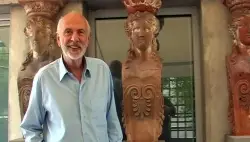
Programme Segments: Portraits: Human Journeys
I was looking up at the Hadjikyriakos-Gika building at number 3 Kriezotou Street which had been beautifully renovated. The door was open and I entered. Boxes, paintings, sculptures, and workers were coming and going and among them stood the director of the Benaki Museum, Mr. Angelos Delivorrias. “Can I turn on my camera?” I asked. With a smile, he answered “yes”. And that is how I began my journey into the interwar years, together with the major Greek artists of that timewhose works will be housed in this new museum.
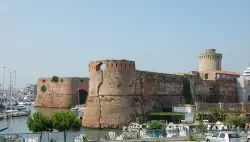
Programme Segments: Greek Panorama
Andreas Calvos, amajor Greek poet, was born in 1792 on the island of Zakynthos. He traveled to Livorno, Pisa, Florence, Zurich and London, and then he returned to Florence. He was arrested by the police for political reasons and was deported to Geneva. There, in 1824, he wrote his ten first odes. He then went to Paris, where he wrote ten more odes. He moved to Corfu where he taught at the Ionian Academy...

Tributes: Sergei Loznitsa
Α day in the life of a small fishing cooperative on the White Sea.
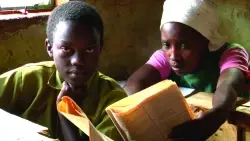
Programme Segments: African Stories
When Holocaust survivor Hilde Back sponsored a young, rural Kenyan student, she thought nothing of it. She certainly never expected to hear from him, but years later she does. Now a Harvard graduate and a Human Rights Lawyer for the United Nations, Chris Mburu decides to find the stranger that changed his life. Inspired by her generosity, he starts a scholarship program of his own and names it for his former benefactor. The top students in the Mukubu primary school are in the exact same situation as Chris once was. They are bright, but can’t afford to pay school fees. With the creation of Chris’s fund, these students have new hope. But the program is small; how many will qualify for a scholarship?
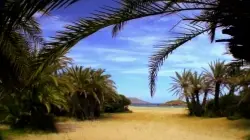
Programme Segments: Greek Panorama
The documentary A Τhousand Lost Golf Balls is about a development proposed by the English company Minoan Group to be carried out on the Cavo Sidero Peninsula in Eastern Crete. The film has a variety of aims: to make a record of this beautiful, unique area of Crete as it is now; to explain exactly what the company proposes to do; and to explore these proposals from many points of view – widening in scope to take in the global picture. Finally, the interviewees look to the future, making a series of alternative proposals.
Tributes: How I Am: Challenging Perceptions
Haus Bucken near Wuppertal is a home for adults affected by autism and is designed to give them a place to live for the rest of their lives. The documentary filmmaker Wolfram Seeger approached the inhabitants gently and with a lot of patience. It is an immersion into a bizarre world that can sometimes be difficult to bear. The autistic people often seem like actors in the theater of the absurd. However, it is a play without a director and nobody knows what moves them. Seeger, who operated the camera himself, managed to get footage that lets viewers feel how severe the inhabitants’ disability is and how exhausting it can be to share a life with autistic people.
Programme Segments: Stories to Tell
Autumn Gold tells the life-affirming story of five athletes as they prepare for the Track and Field World Championships. Their toughest challenge is their age: these potential world champions are between 80 and 100 years old. With ambition and plenty of humor, they accept the task. At the finishing line of their lives, and true to the motto “We can rest after we’re dead”, they seek one more ultimate challenge and give their best on the way to a gold medal in Finland. They want to stand on the podium one last time. It is a competition against age and the other hurdles of life. A story of winning and losing, of setbacks and triumphs. Autumn Gold is an homage to life as it can be: not smooth and wrinkle-free, but full of humor and determination.
Programme Segments: Greek Panorama
Avaton [Sanctuary] is a documentary based on PhD research material about the Athens district of Exarcheia collected from December 2008 to September 2010. The documentary investigates the meaning and management of public space in a tense and singular urban area where the inhabitants, the shop owners, the drug addicts and dealers, the Municipality, the police, the anarchists and the antiauthoritarians fight each other for the use, occupation and control of public space. Who are the good guys and who are the bad guys? Who’s breaking the law, who are the bullies and, ultimately,who has a right to public space?

