
28th THESSALONIKI INTERNATIONAL DOCUMENTARY FESTIVAL
5 MARCH → 15 MARCH 2026

Sections: Views of the World
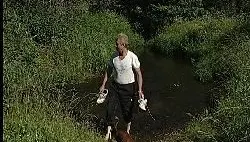
A short documentary about a man who has worked abroad and returns to his birthplace after 40 years. He visits the places and people from his childhood. His most important mission is to bury eleven coins
in the land of his forefathers.

Greek Documentaries: Greek Panorama
Therapis is marrying Aneta in Giannitsa. Panayotis is marrying Kyriaki οn Nisyros. Sabidin is marrying
Cigdem in Drosero, Xanthi. A reality show of Greek society, treated with sensitivity and a sense of humor...

Sections: Views of the World
The intimate portrait of a small rural community in a part of Colombia entirely controlled by paramilitary forces, rendered through the eyes of the children who grow up there, and are often forced into very difficult choices. The documentary follows the young protagonists in this problematic setting through an entire school year, exploring some of the realities that nurture and perpetuate the violence in Colombia.
Sections: Habitat
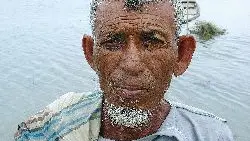
"About Water" tells the three-part story of the element of water and its significance to human existence in three different parts of the world. A seemingly mundane ‘given’ – so often taken for granted – thus becomes a gripping and forthright tale of daily struggle and survival. From the floods and inundations in the Bangladeshi Brahmaputra delta via the once flourishing fishing port and harbor town of Aralsk on the Aral Sea (now landlocked in the barren Kazach steppe), to the daily each-man-for-himself battle over a few jerrycans of clean water in Kibera, Nairobi’s biggest slum. About Water is a documentary Lehrstuck about a major theme: It’s an insistent attempt to throw some questions, doubts and ideas at our views on water, which most of us take for granted and hardly ever challenge.
Tributes: Arto Halonen
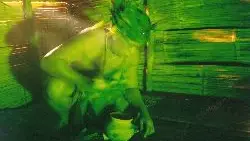
The Temiar Senoi, an indigenous people of Malaysia, live in the realm of a unique dream culture. Their exceptionally harmonious and nonviolent way of living has been claimed to be a direct result of their dream directed habits. Their sole aim is to exist in balance with nature and their fellow man. But nature is under threat by a massive rain forest logging operation masterminded by the Malaysian government. And the tribe itself is under another, direct threat by the same government, who are trying to institute modern customs among the tribes, including state religion and education programs. In the 1930s, Kilton Stewart, an enigmatic American explorer/psychologist/adventurer, visited the tribe and developed the “Senoi Dream Technique”, which aims at personal development through conscious control of dream content. The documentary is a story about a unique tribe whose fight for existence is also a fight for a dream tradition.
Sections: Habitat
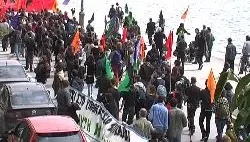
One of the biggest road construction projects that has ever been carried out in Thessaloniki was planned sloppily and ineffectively. The government presented it as a project of national importance, but the citizens of Thessaloniki refer to it as a “big mistake”, since it is seriously lacking in many areas. The aesthetic and environmental destruction it will cause is considerable. What led to such a decision? Whom does this solution serve? how attractive is it for car owners? Ηow contradictory and inaccurate was the Minister of the Environment’s presentation of the project to Parliament? Why did the deputies react? how far are the citizens of Thessaloniki prepared to go in order for the project not to be implemented? The documentary features deputies, organization spokespeople, scientists, but also ordinary citizens who offer evidence against the project.

Sections: Human Rights
In a time when Islam is under tremendous attack from within and without, this is a daring documentary filmed in twelve countries and nine languages. Muslim gay filmmaker Parvez Sharma has gone where the silence is loudest, filming with great risk in nations where government permission to make this film was not an option. A Jihad for Love is the world’s first feature documentary to explore the complex global intersections between Islam and homosexuality. Parvez enters the many worlds of Islam by illuminating multiple stories as diverse as Islam itself. The film travels a wide geographic arc presenting us lives from India, Pakistan, Iran, Turkey, Egypt, South Africa and France. Always filming in secret and as a Muslim, Parvez makes the film from within the faith, depicting Islam with the same respect that the film’s characters show for it.

Greek Documentaries: Greek Panorama
Alex is 25 years old. he was left a quadriplegic after a diving accident four years ago. Since then, he has been swimming competitively. In order to transform his handicap into an opportunity he is participating in the Athens 2004 Paralympic Games. In the swimming-pool, Maria, his coach, is training him harder and harder. She is anxious, and all this pressure makes her very emotional when unexpected situations occur, but she wants to believe in a medal. Alex, on the other hand, is more self-controlled and pragmatic. his family and friends are strongly united around him. Will he win the medal that everyone is hoping for?

Sections: Stories to Tell
Adolescent boys struggle to grow up in a home for juvenile delinquents in rural Russia, where life behind bars may be better than the release to freedom. Filmmaker Alexandra Westmeier provides an intimate glimpse at a society from the inside out, where boys under the age of 14 are held for crimes ranging from theft to rape to multiple murders. They receive food and clothing. They go to school and engage in sports. For the first time in their young lives they no longer have to fight for their daily existence; they can simply be what they are – children. Like many of the boys here, Tolya, a murderer, recounts his crimes with unnerving nonchalance. Nonetheless, moments come through in each boy’s speech or mannerisms that reveal the child within the criminal. A 13-year-old newcomer is not even allowed to say goodbye to his mother. He fights back tears that somehow reflect the sorrows of all his comrades. Austere, yet undeniably powerful, this heart-wrenching film becomes a poignant ode to a lost generation of Russian youth.
Greek Documentaries: Greek Panorama
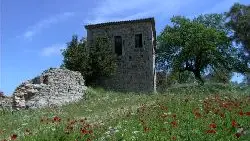
What sort of profession is poetry? By describing the life of the poet Nikiforos Vrettakos, the film attempts to find out how incidents in life become poetry. It detects the residue of the burden of a difficult everyday existence in the personality of a poet, but mainly searches for traces of history in his lifetime, which includes almost all of the brutal twentieth century.
Sections: Human Rights
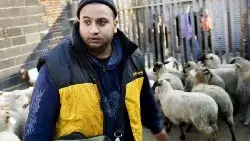
A Son’s Sacrifice follows the journey of Imran, a young American Muslim who struggles to take over his father’s halal slaughterhouse in New York City. [For Muslims, the word halal describes what is lawful in Islam. halal dietary laws dictate certain conditions for the preparation of meat, as well as the types of animals and foods that are lawful for consumption.] Until a short time ago, 27-year-old Ιmran, born to a Bangladeshi Muslim father and a Puerto Rican Catholic mother, worked in advertising. When his father expresses his wish to retire, Imran decides to succeed the family business, and he is given a task to prove his faith. On the holiest day of the year, Imran must lead a sacrifice that will define him as a Muslim, as an American, and as a son.
Sections: Theme: Faces of Fascism
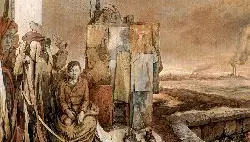
Poet Maya Angelou writes: “I know why the caged bird sings”. So does director hilary helstein, who has traveled the world over the past decade, compiling interviews with survivors who have given us something that history couldn’t: a journal of the holocaust as seen through the eyes of the artist, through the eyes of people who, by the very act of creating, rebelled and risked their lives by doing what they were forbidden to do. As Maya Angelou narrates this powerful documentary, she reveals the story of a brave group of people who fought hitler with the only weapons they had: charcoal, pencil stubs, shreds of paper and memories etched in their minds. These artists took their fate into their own hands to make a compelling statement about the human spirit, enduring against unimaginable odds.
Sections: Views of the World
This documentary tells a contemporary story about a shameful past, about lives scarred by violence and neglect. Dark secrets came to light in late 2006 and turned Icelandic society on its head. The revelations of the next few weeks were shocking: Young boys beaten and raped and systematically humiliated while in the care of the state, at a home for behaviorally disturbed children in the community of Breidavik, on Iceland’s eastern coast. The small island nation faced hard questions as the victims’ voices were finally heard after decades of silence. The film takes a quiet approach with intimate οn-camera narratives from the subjects themselves, interwoven with archival material (including extensive footage from Breidavik in the 1950s and 1960s) and stunning imagery from Iceland’s remote Westfjords region.

Sections: Views of the World
Oualata, a red city on the far edge of the Sahara desert. In this haven, a frail rampart against the sand, three women practice traditional painting, decorating the walls of the city. In a society apparently dominated by tradition, religion and men, these women unreservedly express themselves. They comment freely on the relationship between men and women.
Greek Documentaries: Greek Television
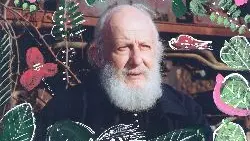
The author Elias Papadimitrakopoulos, a short story writer par excellence hailing from the town of Pyrgos in the Peloponnese, has been living, together with his wife Niovi and their fifty cats, on a breathtakingly beautiful farm that they created themselves on the island of Paros, by the sea. Papadimitrakopoulos, who worked as a military doctor, developed great friendships and professional affinities with writers and poets such as Elias Petropoulos, Takis Sinopoulos, Yorgis Pavlopoulos, Nikos Kahtitsis and Alexandros Kotzias.
Greek Documentaries: Greek Television
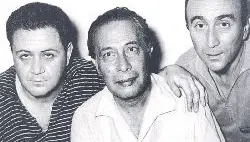
The filmconsists of footage spanning thirty years (1960-1990) of the life and work of Manos hadjidakis. Film and television footage – some of it well known, some of it never before shown – of interviews, studio recordings, concerts, stage rehearsals, and everyday scenes. These amateur and professionalmoving images reveal something of the integrity of the man and the greatness of his work. his comments – pithy and succinct – often sound like amanifesto of intellectual responsibility or as moral injunctions for younger Greek artists. Appearing with hadjidakis are Nikos Gatsos, Melina Mercouri, Nana Mouskouri, Flery Dandonaki, Vasso Papantoniou, Nena Venetsanou and Minos Volanakis.
Sections: Stories to Tell
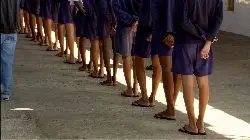
Behave follows the process of minors who have fallen into the hands of the Brazilian legal system. Boys and girls from underprivileged backgrounds faced with crime, rulings, and sentences handed down for theft, drug trafficking, and even murder. Due to legal constraints about revealing the true identity of the minors charged, the accused adolescents were substituted with young people chosen for having themselves lived in similar social conditions, although innocent of any actual crime. All the other characters in Behave – judges, prosecutors, public defenders, correctional agents, family members – are the real people filmed during the hearings in the Juvenile Court in Rio de Janeiro and visits to the Padre Severino Institute, the correctional facility where the law-breaking minors are sent to. At the end of Behave, the film sequences reveal the consequences of a formal society that recommends to their children to behave, but does not set a good example itself.
Sections: Stories to Tell
Tributes: Canadian DOCS
In the Islamic Republic of Iran, a country with strict social mores and traditional values, sex-change operations are legal. Over twenty years ago, Ayatollah Khomeini issued a fatwa (religious edict) making sex change permissible for “diagnosed transsexuals.” Yet homosexuality is still punishable by death. highly feminine and attracted to members of the same sex, yet forced to live in secret for fear of retribution, a generation of young Iranian men are adopting an identity legally allowed to them– transsexual. In pursuit of what one man calls simply, “a decent life,” they flock to the country’s best-established gender reassignment surgeon, Dr. Bahram Mir Jalali, and are counseled by 24-year-old Vida, a post-op woman who claims to be “reborn” but warns of dangers that still await. Be Like Others is a fascinating look at those on the fringes of Iranian life – those looking for acceptance through the most radical of means.
Sections: Recording of Memory
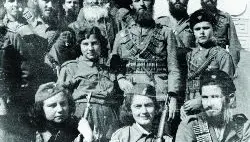
The documentary film Birds in the Mire depicts the – still inconspicuous – role of women during extreme historical events. More specifically, the film refers to the participation in and contribution of women to the Greek Resistance during the German Occupation of 1941-44, as well as to the consequences they suffered. The film is based on the oral testimonies of those women that survived and follows the historical sequence of events. however, the focus of the film is not on the description of the historical events but rather the memories of these women’s experiences and emotional traumas. The film reveals these women’s life stance in the face of extreme circumstances that are usually experienced by men, as well as the fact that under similar conditions women are equally capable of acts of heroism, such as those commonly attributed to men only.
Sections: Portraits: Human Journeys
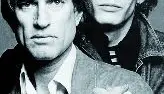
Yale-educated and born with a silver spoon in his mouth, Sam Wagstaff’s transformation from innovative museum curator to Robert Mapplethorpe’s lover and patron is intensively probed in Βlack White + Gray. During the heady years of the 1970s and 1980s, the New York City art scene was abuzz with a new spirit, and Mapplethorpe would be at the center of it. Wagstaff pulled him from his suburban Queens existence, gave him a camera and brought him into this art world that seemed to be waiting for him, creating the man whose infamous images instilled emotions ranging from awe to anger. In turn, Mapplethorpe brought the formerly starched-shirt preppie to the world of drugs and gay S&M sex. The film also explores the relationship both men had with musician/poet Patti Smith, whose 1975 debut album, Horses, catapulted her to fame.
Tributes: Sotiris Danezis
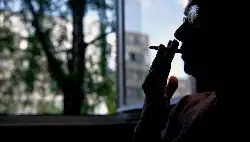
Nuniwatched the Serb paramilitaries slaughter her child before her eyes. Soon after, the same people led her to Vilina Vlas, an old, gloomy hotel just outside Visegrad. The rooms had been turned into cells and the hotel itself had become a concentration camp for Bosnian Moslem women. In order to survive, the women had to become sex slaves for the Cetniks. “There were about two hundred of us. Only a handful came out alive. They even had 13-year-old girls there,” says Nuni, who, to this day, lives with the fear that her rapists will return and take revenge on her. During the war in Bosnia, the group rape of women was used as a weapon by all sides. Rape, a synonym for degradation, was also used as means for ethnic cleansing. What took place at the Vilina Vlas hotelmakes up one of the darkest pages in the history of the war in Bosnia.

