
28th THESSALONIKI INTERNATIONAL DOCUMENTARY FESTIVAL
5 MARCH → 15 MARCH 2026


PORTRAITS: HUMAN JOURNEYS
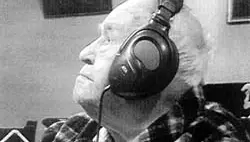
The chronicle of a Holy Week spent by the filmmaker with his grandfather. Also featuring are an Albanian couple that lives with the old man, and his eight-year-old granddaughter. Mixing fiction and documentary genres, the film attempts, in a tender and humorous way, to shed some light on what it might mean to "live to be a hundred".
TRIBUTE TO DIMITRIS MAVRIKIOS
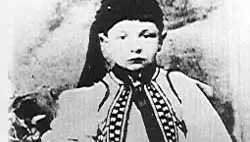
An imaginary train journey starts out from the town of Volos, in 1888, and having run the course of a human life, "returns" to Thessaly 90 years later, only to dissappear into the tunnel that leads to the mythical pantheon of Olympus. "Homeland?" Volos -giorgio de Chiricio's native town-, Athens and Munich -thestarting points of his studies-, Florence, Milan, Turin, Paris, Ferrara -all of them birthplaces of new influences in his work that changed the course of Art-, and finally, Rome, the last stop in his journey, all these cities can lay claim, each one in its own way, ton an affirmative answer in response to the obstinate question: "Homeland?"... For de Chricio himself, any immediate affirmation or negation to this, and even more so to the other momentous and inexorable questions of life and art, would constitute the death of the aenigma. Giorgio de Chirico, one of the greatest painters and thinkers of the 20th century, used to condense his metaphysical relationship with the world into one statement/question: "Et quid amabo nisi quod aenigma est?" ("And what should I love, if not the aenigma?") This key-phrase of his lends to the film both its title and the main axis of its dramatization
PORTRAITS: HUMAN JOURNEYS
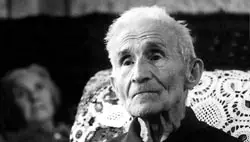
Erno Fisch, the film's protagonist, was born in 1903 in Sighet, the same small town as his world-famous compatriot, Elie Wiesel. Erno Fisch was the only Jew in his town that survived the Holocaust. He escaped deportation by hiding in the forest for six months. From his memories, we find out about everyday life in the area, which later became a part of Romania. Erno Fisch lived in an era when being Jewish did not mean being different, and when he could go to a Catholic school, just because it was closer. His life-story exemplifies the fact that resignation is not the only answer to the challenges of life and history.
PORTRAITS: HUMAN JOURNEYS
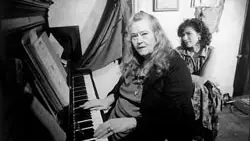
Margie Thorpe works as a barkeeper and sings in her own country band. This film, of which she is both the leading character and co-producer, deals primarily with Margie's complicated relationship with her mother Alma. Born in a southern working-class family, Alma is a charming, funny, but mentally disturbed woman, who conceals the traumas of her past behind wry humor and denial. At age seven, she was raped by an uncle in a cotton field, an incident she refers to as her "first date". Past lovers are romanticized as bank robbers, murderers, and Elvis Presley. In 1965, when Margie was still an infant, Alma was given electric shock treatment in a psychiatric clinic. These events had dire repercussions on the family's life, and made Margie's youth hell. In this intimate and darkly humorous portrait of the Thorpe family, filmmaker Ruth Leitman follows Margie's struggle with a mentally ill mother and an abusive, alcoholic father. Alma is an unflinching examination of family secrets, love and abuse.

VIEWS OF THE WORLD
60s Italy: the fashion for spaghetti westerns is at its height. Before the gradual decline that took place during the 70s, the genre hit its peak in 1967-68, with 150 films being made over the two years. Together with ex-western actor and stunt man Guglielmo Spoletini (film name: William Bogart), the director sets off in search of the actors and stunt men who featured in these B-movie masterpieces. Working as parking-lot attendants, drivers, or simply enjoying a quiet retirement, they look back at the Roman youths they were, usually from quite modest backgrounds, and how one day they turned into the heroes of a fascinating, fictitious world, that of an imaginary America, invented in the Cinecitta studios. The aged actors, the deserted film studios and the "canyons" around Rome are all filmed in the same golden and red desert colours that characterized the films of thirty years ago. America in Rome is not only a sentimental, yet cheerful journey through the golden age of the unofficial side of Italian cinema, but also a history of 60s Italy, when, to afford an Alfa Romeo 2000, ordinary Romans became Mexican bandits and heroic cowboys in a cardboard cut-out America.
PORTRAITS: HUMAN JOURNEYS
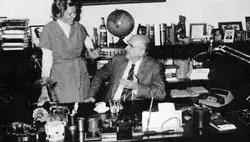
Ιn the documentary Andreas, Memories of a Family, filmmaker Nikos Pilavios has attempted to present a portrait of the private life of Andreas Papandreou, through the reminiscences of his family - his wife and four children. The main body of the film consists of home movies, filmed and lovingly preserved by Margarita Papandreou, starting in the early fifties, up until the mid-eighties. This invaluable material shows Andreas progress from a young husband in love, to a caring father, to a gentle grandfather, while at the same time, from a different viewpoint, we follow his political career, which seems to begin with his first visit to Greece and his father in 1953, after a thirteen-year absence, reaching its peak with the 1981 elections. Apart for this outstanding footage, the documentary is enriched by rare photographs from the family's private life, as well as the testimony of Margarita Papandreou and her four children - Sophia, George, Nikos and Andrikos.
THE RECORDING OF MEMORY
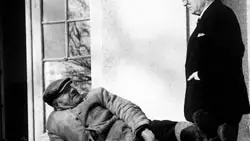
In 1990, the 750,000 acre state farm in the Polish village of Zagorki went bankrupt. The socialist dream was over, leaving farm workers out of a job. From a flourishing, thriving community, the village is now reduced to a sad lot of embittered people, whose sole consolation is a small allowance and whose sole dictraction is the oblivion offered by the cheap "Arizona" wine. Consumed by everyone in the village, whether young or old, sick or healthy, even by those who cannot afford to buy bread, "Arizona" has become the trusty remedy against misery, despair, and hunger. Poems have been written about it, and songs praising its virtues are sung in front of the liquor store. The camera mercilessly registers the dismal condition of the houses and streets, and the numerous candid interviews supply a poignant image of the dead-end situation of this remote village.
VIEWS OF THE WORLD
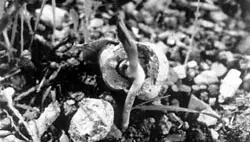
In March 1998, the Macedonian town of Arnissa assigned 50,000 acres of public land designated for development to a bold venture: the land was to be sown, using a method of planting the seeds in clay soil. This method was devised by an 86-year-old Japanese farmer, Masanobou Fukuoka, who actually came to Greece to share his experience and philosophy. Many volunteers participated in the sowing of the hills around Arnissa, and their effort continues to this day. In Arnissa, scenes from the events that took place alternate with excerpts from a discussion with Fukuoka.
JORIS IVENS: CELEBRATING ONE HUNDRED YEARS
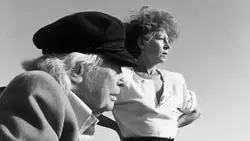
"I have long wanted my films to reflect the times. My generation was ever fighting, but never had the time to ponder why. During my long life I ascertained that metaphysics and dreams are part of reality. They are a bridge between past and present. Science cannot do everything; it only delimits our borderlines. But beyond them lie new horizons and it is the film director's task to discover them. Marceline found the subject for the film A Tale of the Wind. She knows how important nature is to me. All the elements play an important role in the film - the earth, water, air, and particularly the wind. Wind, that natural, cosmic and mythological symbol, pushed its way into our project although we did not know why. To film the wind, that was an excellent idea on how to try and talk about China in a way unusual at the time. I observed the mistral on the beach at Saint-Tropez, saw it fly back and forth, fighting the clouds. I comprehended that the wind comes whenever it likes and with whatever force it likes. The wind is pliable, strong, jealous, delicate. It brings the echo of memories, life, grief, servitude or liberty. I felt as if I were in the avantgarde again, like when I was young and making the film Rain".
VIEWS OF THE WORLD
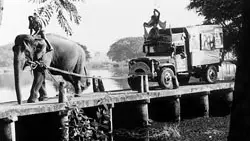
In Europe, the phenomenon of the travelling cinema existed only in the early years of cinema, when the movie theatre was still a fairground attraction; soon, most cities and villages had their own cinemas, followed by video-clubs that rented out films. In India, there are still 2,000 mobile cinemas, one of which, is "Battu s Bioscope", a colourful vehicle, containing an old Soviet projector, a few white cloth sheets, and several kilometers of celluloid film. Mr Battu drives slowly along the sun-scorched roads of India, his quarrelsome assistant Mama at his side, and the young Amit sitting on top of the truck, announcing the next show through a loudspeaker. The elderly Battu is an idealist who thinks you can change people by showing them films. Andrzej Fidyk s team accompanies "Battus Bioscope" from Calcutta, through fishermen s villages and snake hunters settlements, up to the distant Orissa province. This is the dwelling place of primitive tribes, whose way of life hasn t changed for thousands of years. After years of trying, Mr Battu has finally been issued a permit to show a film to these people who do not even know cinema exists.
VIEWS OF THE WORLD
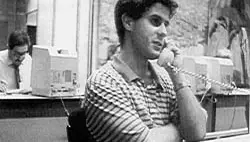
Homicides, traffic accidents, assault and battery: few newspapers can do without them. For a group of journalists of La Cronica, a leading Buenos Aires newspaper, violence is their bread and butter. Everyday, they witness nothing but misery, and if the topics for front-page articles do not automatically present themsleves, they will not hesitate to create them. Take Martha, for example, who calls the morgue every morning from the editorial office, in persuit of a juicy story. In order to keep their ground in the midst of this hectic life and to retain a certain form of dignity, these journalists take refuge in wry humour and dance the tango with great passion. A reflection of life in modern-day Argentina, Tinta Roja reveals the ethical ambivalence of the gutter press, their machinations and cynicism, "in a country where people disappear and where being mentioned in the newspaper, even in a few lines, is a way to stand out".
MUSIC THROUGH THE LENS
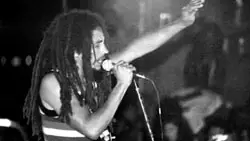
When Bob Marley died on May 11, 1981, he was already a musical legend, not only in his homeland of Jamaica, but worldwide. In his career spanning almost 20 years, he brought reggae to unexpected international popularity, and in doing so, was the first musician to break the Anglo-American monopoly of the pop music market. But Bob Marley was also a political figure, an advocate for the integration of coloured people in Jamaica and beyond. Bob Marley Live in Concert contains footage from his last two concerts: in Jamaica, during the famous 1979 Reggae Sunsplash Festival, and in Dortmund, the following year, during the Uprising Tour. Although the signs of cancer can be clearly seen, he radiates an unbelievable energy and vitality when, accompanied by the legendary Wailers, he celebrates classics such as "No Woman No Cry", "I Shot the Sheriff" or "Get Up Stand Up". Between these concert recordings, Stefan Paul assembles moving pictures of Marley's funeral in Kingston: the funeral march of 500,000 Jamaicans, prime minister Michael Manley's speech at his grave and the subsequent memorial concert with which his companions honoured him. An impressive documentary which will excite not only Bob Marley fans.
THE RECORDING OF MEMORY
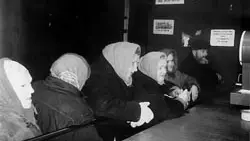
In a hamlet fifty miles from St. Petersburg, a group of elderly people are the only ones left behind. They are living almost completely isolated from the outside world, but once a week the train passes by that brings them their bread. An uncoupled carriage is pushed to the village by the old people themselves and the bread is unloaded. This ritual repeats itself every Tuesday, also called "bread day". With modest means, Russian director Sergei Dvortsevoy has produced a perceptive portrait of this exceptional community and the unusual way in which they obtain and distribute the indispensable bread. In a protracted sequence, Dvortsevoy captures the unhooking of the carriage and the long, humiliating and physically demanding trip by half a dozen elderly people. The heart of this documentary consists of a scene in the bakery, with the camera positioned behind the counter, visible to everyone. Nobody is satisfied with the allotted portion of bread, and the old shop assistant is called everything under the sun, although she doesn't hesitate to respond accordingly. The film ends with a long, drawn-out shot of a gorgeous sunset, as if to remind us that even in the most wretched conditions, life can sometimes be beautiful.
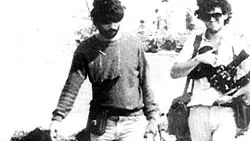
TRIBUTE TO DIMITRIS MAVRIKIOS
Twelve thirty-minute film "journals", of which four will be screened. 1) A Journal for Francesco: When the filmmaker asked him what gift he would like to send him after leaving his half-ruined village, teanager Francesco had asked for postpards from varius places. Instead of cards, Dimitri Mavrikiosdedicated one of the journals from the Bridges Over Ionian Sea to him. 2) The Double Journal: The spectacular maritime celebrations of Venice noblewoman, offer the pretext for a ramble among the sities and through the common history of Greeks and Italians of the Renaissance. 3) The Otranto Journal: The images begin and end in the land of Otranto -the part of Italy closest to Greece. The convoy of the Madonna blessing the waters of the Ionia Sea, the pageantry of the nocturnam celebration of Otranto, the byzantine monuments of Salento, the ancient Greek theatres of Sicily, the famous temple of Segesta, the Dionysian memories of the celebration of Capriniano; all become points of refence in the centuries -old and shared cultural course of the people living on the "shores" of the Ionian Sea. 4) A Journal for Ida de Biasi: On the eve of the 21st century, and on the occasion of Italian teacher Ida de Biasi' s one hundredth birthday, Dimitri Mavrikios dedicates to his "one century old" teacher a "journal" that focuses on the relations between Greeks and Italians during a century thats she lived in as a child, the nineteenth...
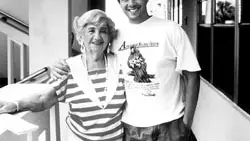
PORTRAITS: HUMAN JOURNEYS
This Emmy nominated documentary is a hilarious portrait of an extraordinary, ordinary Jewish grandmother and a touching account of her grandson's search for his place in the world. Whether taking daily excursions to the grocery store to return under-ripe produce or sharing hard-won wisdom over blintzes on Rosh Hashanah, Lee Abrahams is a woman who lives life on her own terms. For her filmmaker grandson, a young gay man born to a Jewish mother and a Protestant father, 87-year-old bubbeh Lee is a vital link to self- and cultural identity, not to mention a reformed icon of love and acceptance. As the two of them relate feelings of love lost or hidden, kibbitz about strategies for shopping , and avoid meddling matchmakers, the strength of their bond emerges. A spirited reflection on family, culture and identity, Bubbeh Lee & Me examines the legacies passed through generations and shows that the journey of self-discovery can begin at any age.

THE RECORDING OF MEMORY
After twenty-three years in exile, filmmaker Patricio Guzman returns to his homeland to show his landmark film The Battle of Chile (1973-1979) for the first time, and to explore the political dynamics of contemporary Chile. Made more than two decades after General Pinochet's army toppled Salavador Allende's government in a bloody coup, Guzman's latest film follows a handful of survivors and Popular Unity movement supporters as they recall the events surrounding the coup and Allende's death. In a series of emotional interviews, several middle-aged Chileans talk about the struggle to come to terms with their country's past and with their grief for colleagues who were rounded up, tortured or "disappeared" during the wave of terror that washed over Chile in 1973. Guzm·n also shows The Battle of Chile to university students who grew up hearing an official, homogenized version of the events. For the young Chileans, the film provides a devastatingly emotional realization of their manipulation by mistruths. By using footage from his earlier documentary and juxtaposing an older generation's anguish with a younger generation's vigorous demands for political disclosure, Guzman has created powerful documentary that eloquently advocates the safeguarding of a country's historical memory and truth.
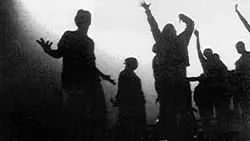
THE RECORDING OF MEMORY
In the spring of 1994, auditions were held in the heart of Washington D.C., for a cast of young people to create and perform a musical production based on their own lives. The cast came from prestigious private schools and inner-city public schools. Some came from the streets; others were court referred. Each had a powerful story to share. Making the cut wasn't based on a great voice or how well you could sing or act. It was about real voices with real stories to tell. Filmmakers Susan and Christopher Koch spent over a year documenting the lives and rehearsals of this diverse group of young people who made up the cast of City at Peace. At first, tensions seemed insurmountable between the different cast members. Fear and prejudices divided them. Coming together was not easy. They began by sharing their life stories which would provide the raw material for the show. We watch the cast as they begin to face issues of racism, violence, AIDS, breakdown of their families and death. Gradually, they reach out to one another. When one cast member is gunned down and seriously wounded on the streets of Washington, his fellow cast members stay by his hospital bed. "The cast", he says, "was the family I never had". His mother, father and stepfather are all in prison. Their experience together changes them in profound ways. As one young woman explains, "If one of us ever needed something, I know that all sixty of us would be there".
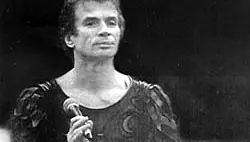
PORTRAITS: HUMAN JOURNEYS
Rudolf Nureyev, Dance Director at the Paris Opera for five years, made the greatest ballets in history part of the company's repertoire. These productions of breath-taking beauty were choreographed and directed by Nureyev himself. The company's dancers often remember Nureyev as a "dreamer". All the dancers interviewed in this film helped make Nureyev's dreams come true by bringing to life the roles he chose especially for them. As we accompany them from the initial rehearsals right up to the opening night, we will discover the true essence of each role, and the difficulties linked to its interpretation. We will also talk with them about the particulars of Nureyev's choreographic style and how it influenced their own dancing style in subsequent roles.
VIEWS OF THE WORLD
In March 1998, the village council of Paleo Keramidi, a small village in northern Greece, forbade Albanian immigrants from going outside after sunset. The curfew was imposed to restrict the crime rate which had been on the rise. Many months later, a TV crew visited Paleo Keramidi and invited the villagers to a public discussion. At first, almost all the members of the community defended the decision made a year earlier. Journalist Stelios Kouloglou and his colleagues then showed the villagers a documentary about the treatment of Greek immigrants in the USA in the early 20th century. The way survivors of those times tell it, the Greeks were victims of race discriminations and prejudice ̄just like Albanians in modernday Greece. "They never said Greeks; they always called us Dirty Greeks". The discussion following the screening was most revealing: apparently, when the curfew was imposed, no serious incident or robbery had been committed by Albanians. Will the villagers admit that they have been treating Albanians just like the Americans treated the "Dirty Greeks" years ago, and that the curfew was a mistake?

VIEWS OF THE WORLD
Filmmaker Kim Longinotto and anthropologist Ziba Mir-Hosseini spent six weeks in a family law court in Tehran, presided over by a male clerical judge. What they saw and documented were women from all walks of life and ages, fight alternatively with tooth and nail, humour, cunning, threat, theatricality, and passion for a dignified and equitable divorce. Jamileh is mistreated by her husband; Maryam is fighting for the custody of her children; and 16-year-old Ziba wants to divorce her 38-year-old spouse. Despite their resilience and artfulness, the fact is that the law favours the men, allowing women to divorce their husband on few grounds, such as lying at the time of marriage, madness, and addiction. However, this, often hilarious, documentary proves once again that one cannot judge a country by its legal codes, as we watch fearless chador-clad claimants stand up against judges, clerks, husbands and fathers, with a vigour that belies their subservient status. And while the filmmakers stand squarely against what they clearly view as the inequitable aspects of Islamic divorce law, with admirable impartiality their film occasionally makes us sympathize with the browbeaten defenders of the status quo.
TRIBUTE TO DIMITRIS MAVRIKIOS
A historical retrospective and short trips -especially in Thessaloniki of the 80's and 50's- along the ancient Roman road that was the continuation into the Balkans of the Appian Way, joining Rome and Constantinople.

