
FFGR



MATERIALS & PROCUREMENT
We have already taken measures in order to reduce the demand for plastic water bottles: water coolers have been installed in public areas and offices, while we encourage guests and audiences to use their own reusable water bottle.
PROVISIONS IN THE CONTRACTS
We are revising our procurement policy in order to make our supply chain as “green” as possible, while supporting our partners and suppliers in this transition towards sustainability. We are striving to reduce the negative impacts of our daily operations in terms of the use of resources, by reconsidering the way we work and the choices we make.
- We have already taken measures in order to reduce the demand for plastic water bottles: water coolers have been installed in public areas and in our offices (the Festival has carried out laboratory analyses and quality checks on the water supplied to the various buildings through the grid), while reusable water bottles, mugs, and glasses are available for purchase at our venues.
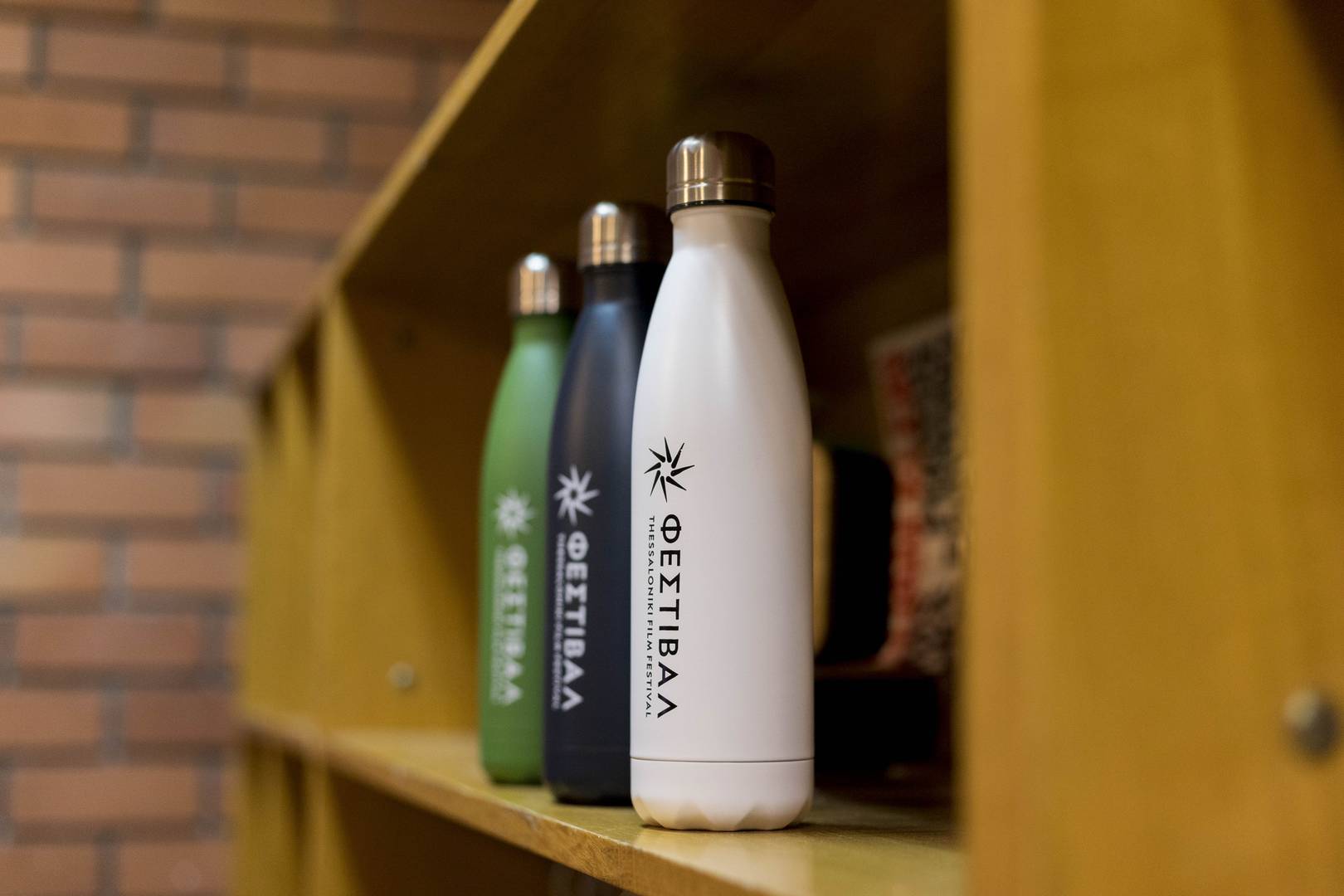
- The Festival provided all volunteers and staff with free reusable water bottles or mugs during festival events, with the same goal in mind.
- We are trying to establish cooperation with a company capable of supplying water in environmentally friendly packaging, as we did at the November 2024 Festival. At that time, through our collaboration with ERGON, which supplied water in certified, 100% environmentally friendly packaging, we avoided the purchase and disposal of around 10,000 plastic water bottles.
- TFF offices both in Athens and Thessaloniki have fully functional and equipped kitchens, so as to avoid food & beverage deliveries, plastic packaging and single-use plastics, such as cups and plates.
- The procurement and distribution of paper cups containing plastic has been discontinued. The canteens operated by the Festival, both during its annual operations and during the Festivals and the proceedings of the AGORAs, use biodegradable or compostable cups and lids. The same materials are also supplied to staff working in areas where kitchen facilities are not available.
- The repair of equipment is favored over buying new; while durability and sustainability are always taken into account, when procuring equipment and office materials.
- The official catalogs of our festival events have been downsized in terms of the number of pages and the print-run has been radically reduced, with additional information offered to guests through our website and the ThessFest App.
- Many of the festival’s publications are printed on FSC certified paper, while the majority of tickets are issued via an electronic ticketing system. The invitations for the special events are available exclusively in digital form.
- We stopped printing programs for the annual activity events, placing emphasis on digital media & communication.
- The majority of contracts (staff, partners, suppliers) are signed digitally to avoid the unnecessary use of paper.
- Among TFF’s e-shop’s best sellers are the upcycled handmade banner bags, made from the large canvases from festival banners.
- The Festival plans to gradually replace its incandescent lamp projection systems and switch to less energy-intensive laser technology. In early 2026, it initiated the upgrade of a conventional technology projector to laser, with the aim of reducing energy consumption.
- During the design and development of the Festival’s renewed website, parameters related to reducing the environmental footprint of its management and use were carefully considered. To limit the website’s environmental impact, implementation focused on Efficient User Navigation, Optimized Imagery and Media, Sustainable Web Design Philosophy, Fully Responsive Design for All Devices, Automated Data Integration, Mindful and Efficient Content Strategy.
- The Festival includes provisions related to environmental sustainability in the tenders it runs and in the contracts it concludes (e.g., tenders/contracts for leasing canteens, printed materials, cleaning services, etc.), always taking into account the restrictions arising from the regulations on public tenders and contracts.

