
FFGR


PROGRAM
For decades, TFF has offered compelling stories that explore the fragile relation of mankind with the environment and provided a space for critical conversations for filmmakers and audiences alike.
FILMS AND TRIBUTES
The Thessaloniki Film Festival aims at serving as a source of information and audience awareness through its program. Many of the films screened in the official selection of the Thessaloniki International Film Festival, held in November, and the Thessaloniki International Documentary Festival, held in March, explore themes that pertain to the fragile relation of mankind with the environment. Moreover, within the framework of the Festival, a series of tributes on the repercussions of hyper-consumption and excessive exploitation of our planet have been hosted.
- The 21st Thessaloniki International Documentary Festival (March 2019) placed under the microscope a bond that dates back to the early days of our world, but unfortunately has ominously degraded over the course of time: the relation between human beings and animals. Within the context of the tribute “Why look at animals?”, a series of biting questions attempted to offer answers to the following question, bringing forth the complex and valuable sides of our relation with animals, while also unraveling true stories that portray pure love for animals, but also their ruthless exploitation by humans. The tribute drew inspiration from the titular essay by John Berger (1926-2017), the British groundbreaking intellect, art theoretician, writer and painter, who cast a thorough and unique glance at the ways we see, perceive and grasp the world around us.
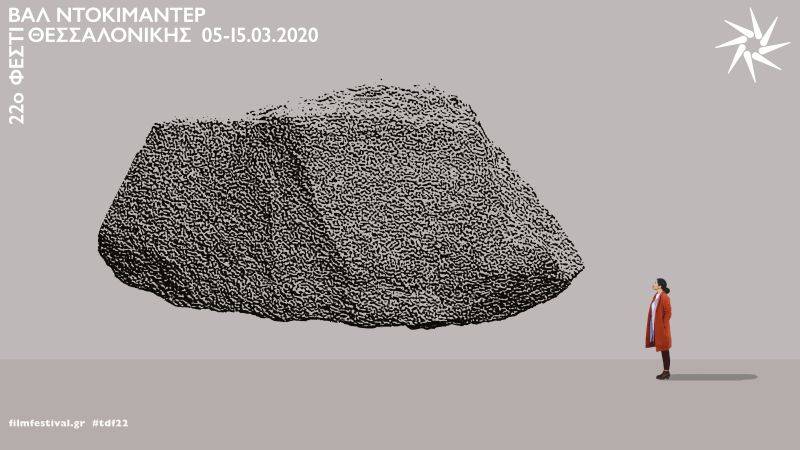
- The 22nd Thessaloniki International Documentary Festival (May 2020 – online) showcased a grand tribute on the Anthropocene Era. A growing number of scientists argue that the Holocene Era has come to an end, passing the baton to a new geological era, the Anthropocene: since the mid-20th century, human activity had radically disrupted the planet’s balance, undermining its future, possibly in an irreversible way. The tribute’s ten films shed light on this pivotal change from an ecological, philosophical, cultural and political standpoint. The tribute was accompanied by a special edition on the Anthropocene Era, which delves into an issue with geological, environmental, social, philosophical, political and cultural implications. In the two-language (Greek and English) special edition of the Festival titled “Anthropocene”, scientists, film and art historians and philosophers make an effort to provide answers to the various questions triggered by this new reality.
- The 61st Thessaloniki International Film Festival (November 2020) presented a large-scale tribute titled “Prophecies from Another World: Sci-fi and cli-fi (1950-1990)”, featuring rare and lesser-known sci-fi films, forming a corpus of cult and challenging creations that exceed the stereotyped boundaries and use the form of an allegory to take a stand on some of the most crucial and complex issues of human existence. The pandemic-originated frustrations, the fear of the otherness and the unknown, our dystopic relation with the environment, the newly established distances that drive humanity away once again, but also the drive for a more substantial approach on diversity, were unveiled through this highly intriguing tribute. The Festival turned its focus on this beloved film genre to foreground some of its least prominent aspects, such as the cli-fi subgenre. The term climate fiction may be recent, nevertheless it has defined films, both of past decades and contemporary, that make use of the sci-fi tools to speak about the human-driven intervention on the environment, the physical destructions, the nuclear energy terror and climate change. The Festival published a voluminous two-language special edition with articles, studies, and essays that lay out the allegorical dimensions of sci-fi and cli-fi in particular.
- The 25th Thessaloniki International Documentary Festival (March 2023) hosted a tribute on the Austrian filmmaker Nikolaus Geyrhalter, who transforms reality into film works of art, recording through sophisticated and meticulous frames, shots and geometrical compositions the never-ending struggle of man vs. nature and the devastating repercussions of the Western way of life.

