
FFGR


ENVIRONMENTAL POLICY
TFF’s environmental policy is being detailed and systematized into an action plan, which is an integral part of our administration, daily operations and overall organizational culture.
DATA COLLECTION & ANALYSIS
Following several green initiatives in 2021 and 2022, TFF adopted a comprehensive environmental policy, which supplements and re-contextualizes the overall cultural mission and the values of the organization, in response to the major challenge of our times, the climate and environmental crisis.
This policy constitutes our commitment to join global efforts towards a sustainable future, support the goals of the Paris Agreement and of the EU Green Deal, contribute to Thessaloniki’s role in the “EU mission: 100 Climate Neutral and Smart Cities”, and comply with Greek environmental legislation and the country’s climate targets.
- The Festival’s environmental policy has been approved by its Board of Directors, and TFF’s General Director is responsible for its overall supervision. The Green Officer is responsible for implementing and coordinating actions, in collaboration with the Festival’s cross-departmental Green Team (greenteam@filmfestival.gr).
- Since spring 2023, the Festival employs the services of an expert consultant on sustainable cultural management, for the design of the organization's environmental policy, strategy and action plan and their effective implementation.
- TFF’s environmental policy is being detailed and systematized into an action plan, which is an integral part of our administration, daily operations and overall organizational culture.
- The action plan is regularly revised and re-evaluated and continues to reflect and support our environmental ambition: to understand and minimize our environmental impacts, to implement new policies and modes of work across our activities and operations, to gradually reduce the organization’s carbon footprint.
- Within this framework, one of the first initiatives undertaken by TFF was the commissioning of a carbon footprint analysis study, along with an energy audit and proposals for energy upgrades for its venues and operations (throughout the year and during the festival events) to the Process Equipment Design Laboratory (PEDL) of the Aristotle University of Thessaloniki. The study has been completed, and its results and recommendations were presented to staff members and stakeholders in early 2026.
- Among other things, the aim of the study was to further enrich TIFF’s environmental strategy and action plan and also provide the basis for environmental certifications according to international standards.
- TIFF invited a certification body to audit its environmental management system against the requirements of EN ISO 14001:2015 and is currently preparing for the second stage of the relevant audit.
- TFF is a co-signatory of the Green Charter for Film Festivals, a European initiative of the Festival Network MIOB. By registering, festivals commit to “follow a progression path to lower the pollution generated by our activities and be in a constructive attitude toward our environment”. The Charter includes a carbon assessment tool, where data on energy, transportation, food, waste etc. are submitted and measured for each festival event, with the possibility to compare environmental performance over time. Furthermore, the Festival receives an Environmental Responsibility Certificate from Charter for each event for which it collects data and submits a report.
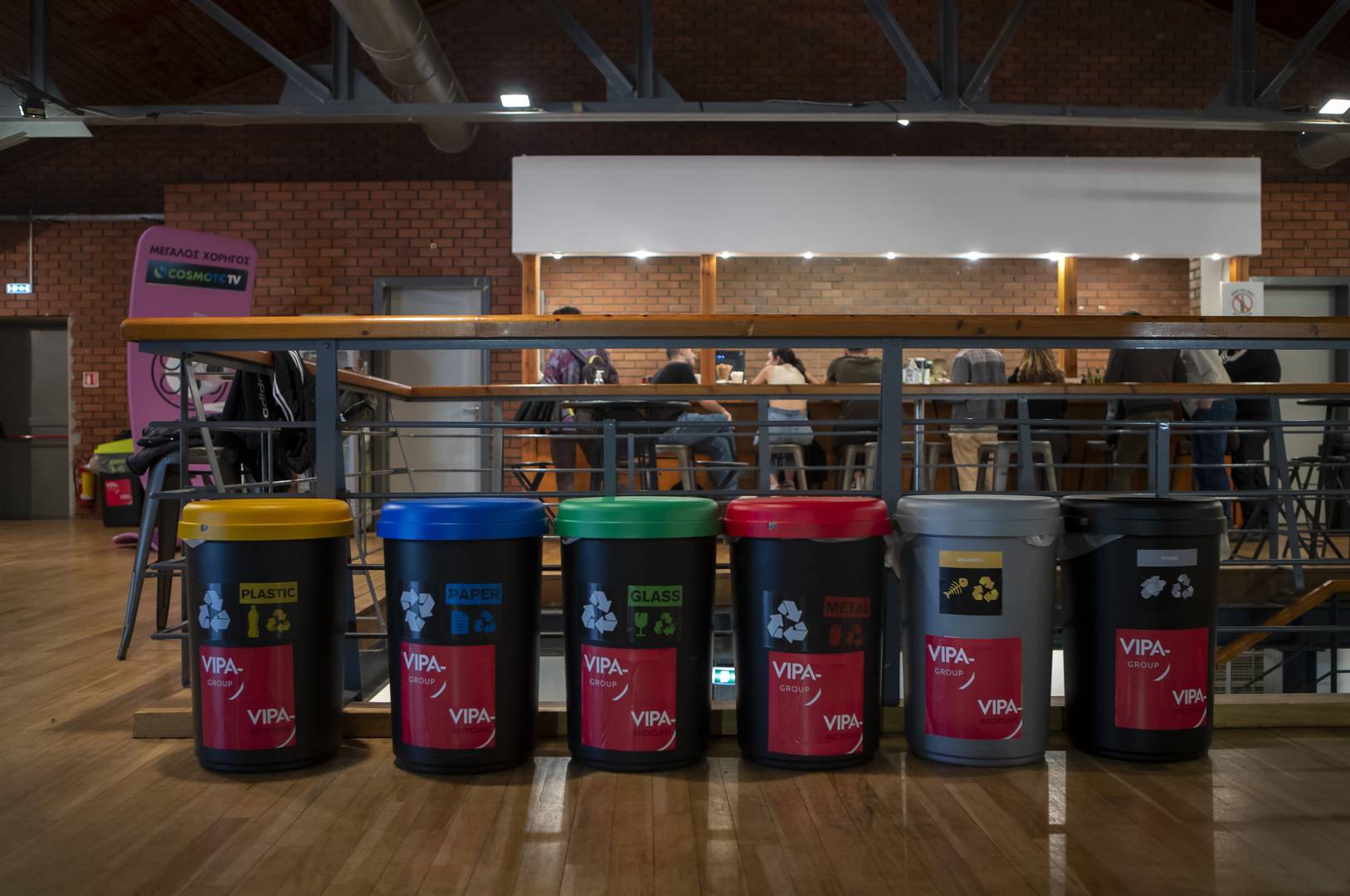
- In parallel, TIFF collaborates with VIPA HELLAS S.A. to conduct carbon footprint reports for the individual Festivals/AGORAs. The approach follows the Greenhouse Gas Protocol, the analyses take into account 100% of the emissions from activities under the Festival’s operational control, allowing us to monitor our performance over time. For example, a comparison of performance indicators between two Festivals/AGORAs held in November shows a reduction in emissions per person from 0.016 CO2eq/person in 2022 to 0.012 CO2eq/person in 2023.
- Through the aforementioned processes, the organization has systematized the collection and analysis of relevant data, i.e. regarding energy and water consumption, waste management, procurement of services/food/materials, travel and transportation etc.

