
FFGR
Honorary Golden Alexander to Yorgos Papalios
15.03.2026
NEWS
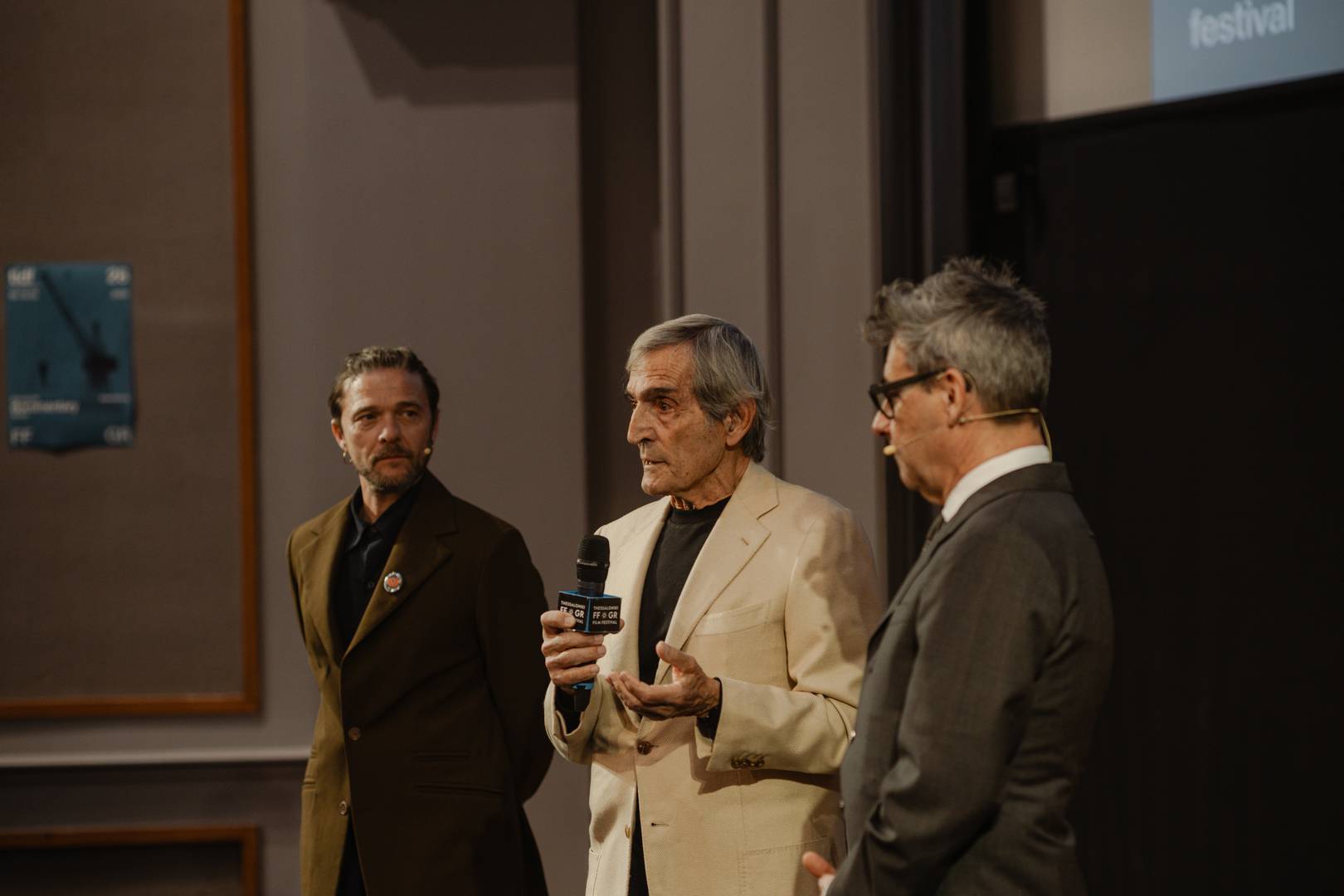
As part of the 28th Thessaloniki International Documentary Festival, the distinguished producer Yorgos Papalios was awarded an Honorary Golden Alexander on Saturday, March 14, in recognition of his lasting contribution to the New Greek Cinema and to culture.
The award was introduced by the TiDF’s Artistic Director, Orestis Andreadakis, who noted: “Yorgos Papalios was there at two of the most decisive moments in the history of Greek cinema. He was there as a producer in the 1970s, when the generation of Angelopoulos, Panayotopoulos, Sfikas and Psarras made the transition that gave birth to the New Greek Cinema. And he was there again decades later, as President of the Greek Film Centre, when Lanthimos, Koutras, Tsangari, Papadimitropoulos, Tzoumerkas and other filmmakers challenged established norms and gave momentum to what academics later described as the ‘Greek New Wave.’ He was there because, as a marathon runner, he knows very well that art and life are not a sprint but a marathon, where what ultimately matters, besides the speed of finishing, are endurance and longevity.”
One of the figures closely associated with the rise of the “Greek New Wave,” actor Christos Passalis, presented the Honorary Golden Alexander to Yorgos Papalios. Known for his roles in Dogtooth and Homeland, co-director of The City and the City and director of Silence 6-9, Passalis addressed the audience with heartfelt words: “It means a great deal to me to stand here among you and honour a person who, for those of us who love cinema and work in it, has been a constant point of reference, an inspiration and a source of strength. Someone who taught Greek cinema to dream more than it once did. For that, we are all grateful to him.”
Receiving the award, Yorgos Papalios thanked the Festival and spoke about the people who stood alongside him in those early years: “I would like to thank all the directors, those who are no longer with us and those who are still here. I would also like to thank the actors, the crews behind the camera, and everyone who supported us during those difficult years. Together we made films and played our small part in what would later come to be known as the New Greek Cinema”.
I would also like to thank my colleagues at the Greek Film Centre, and especially the committees that selected the films which later carried the New Greek Cinema forward. I would also like to thank the Ministry of Culture for taking forward the initiative launched by the Doxiadis Committee and shaping the first version of a new law for cinema, which later came into force under Pavlos Geroulanos. I would also like to thank someone who loved cinema deeply and supported us in those difficult years, Loukas Papazoglou. At the same time, I would like to share this award with someone with whom, 55 years ago, I started a journey into the world of cinema. Together we made short and feature films, documentaries and TV series. She also created her own festival for people with disabilities and travelled with it around the world for three years: Mary Papaliou. In the film you will also watch a few short films I made when I was 20, so please watch them with generosity. They are the reason I eventually decided not to become a director, but a producer,” he said with a laugh.
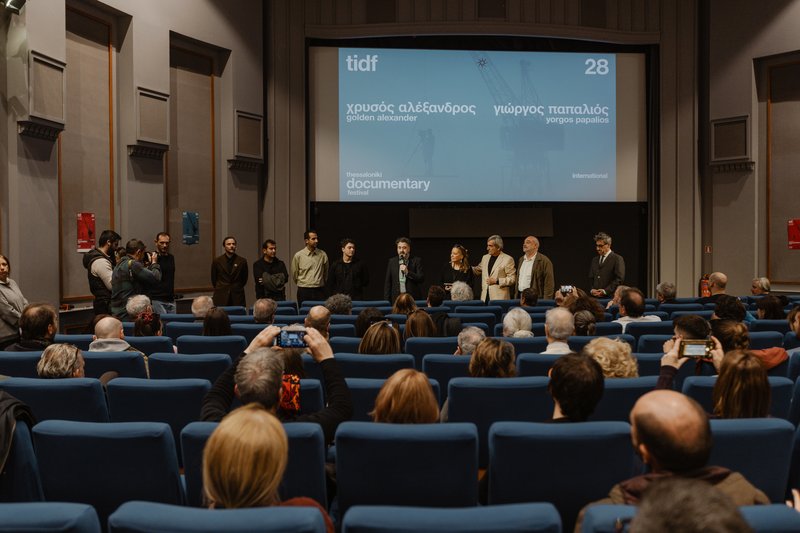
As a marathon runner, Yorgos Papalios knows very well that art and life are not a sprint but a marathon, where what ultimately matters, besides the speed of finishing, are endurance and longevity. - Orestis Andreadakis
After the screening of the documentary Running on Waves, directed by Yannis Karapiperidis and dedicated to the life of the iconic producer, the discussion continued with the audience. Joined on stage by Yorgos Papalios and the film’s producer Konstantinos Moriatis, Karapiperidis spoke about the challenge of shaping the script, bringing together a personal story with an important chapter in the history of contemporary Greek cinema. “Everything is decided in the editing room. We spent five months working with our editor, Dimitris Peponis. We had a vast amount of archival footage in front of us, and we tried to assemble it like a large puzzle until the story found its rhythm. It’s a process that takes time, patience and experimentation.” Speaking about the film’s archival sources, he added: “A large part comes from Yorgos Papalios’s personal archive, while the rest required extensive research. Each image had to earn its place, serving not only the scene, but the feeling of the moment.”
During the Q&A, Markos Holevas, former President of the Board of the Greek Film Centre, drew attention to a lesser-known chapter of Yorgos Papalios’s work, one that the documentary touches upon briefly through an archival moment: his early role in bringing international productions back to Greece. “It’s something you may not know, but he was among the first to help bring international productions back to Greece, at a time when even speaking about such plans would be met with suspicion,” he remarked. Papalios then added: “At some point Markos and I said that Greece also needed what exists everywhere else in the world, a Film Commission. And in the end we made it happen, laying the foundations for everything that can take place today.”
Before the discussion came to an end, Yorgos Papalios also revealed that he is currently working on a book about cinema, one that will bring together pages from his personal diary and stories from his years at the Greek Film Centre.



