
FFGR

TiDF28: Spotlight on Bill Morrison and honorary Golden Alexander
19.02.2026
NEWS
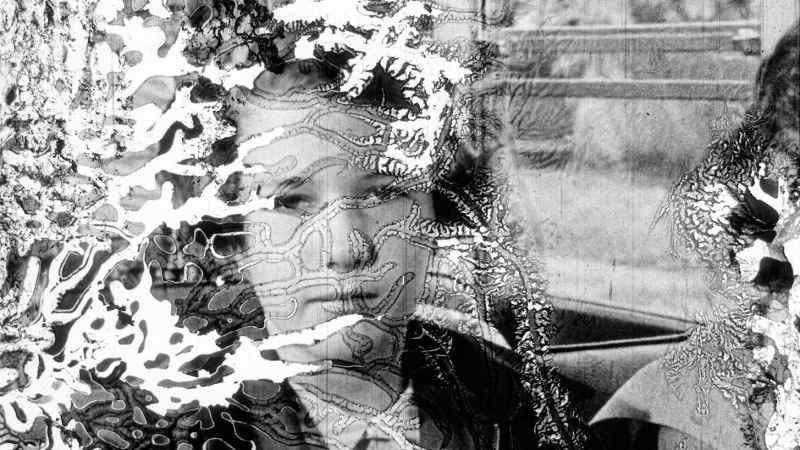
Bill Morrison, heralded by the New York Times as the “poet laureate of lost films”, transforms the film’s distortions into a commentary on the fleeting nature of images, comparing them to memories, ghosts or ciphers. The American filmmaker will deliver a masterclass in Thessaloniki titled Uncovering the Hidden Frame, where he will discuss his evolution as an artist and filmmaker, specifically addressing how archival footage has played a role in his practice.
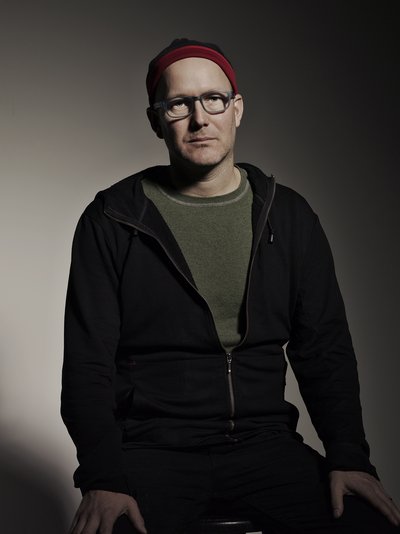
The spotlight’s films:
In The Village Detective: a song cycle (2021), Morrison makes use of archival footage in a totally and utterly unexpected way. During the summer of 2016, a fishing boat off the shores of Iceland made a most curious catch: four reels of 35mm film, seemingly of Soviet provenance. Unlike the film find explored in Bill Morrison’s Dawson City: Frozen Time, it turned out this discovery wasn’t a lost work of major importance, but an incomplete print of a popular comedy starring beloved Russian actor Mihail Žarov. Does that mean it has no value? Morrison thought not. To him, the heavily water-damaged print and the way it surfaced could be seen as a fitting reflection on the life of Žarov, who loved this role so much that he even co-directed a sequel to it. Morrison uses the story as a jumping-off point for his latest meditation on cinema’s past, offering a journey into Soviet history and film accompanied by a gorgeous score by Pulitzer- and Grammy-winning composer David Lang.
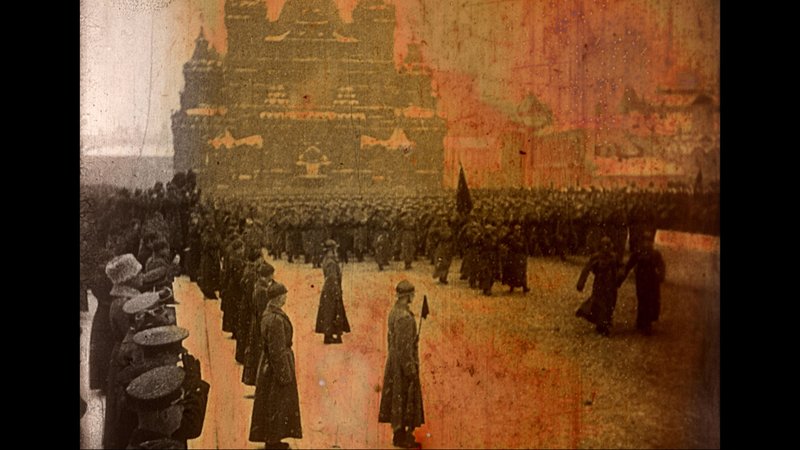
In Dawson City: Frozen Time (2016), a compilation of archival footage, rare films of the silent era newsreels, interviews and photos of historical significance tells the strange yet true tale of a collection that amounts to more than 500 films of the 1910-1920 period, considered lost for a whole 50 years before they resurfaced after having been buried under a swimming pool, in the boondocks of the Yukon territory, in Canada. The most prolific archivist-filmmaker of our times crafts a unique and highly meticulous collage made of a fragile raw material, aiming to revive an equally delicate reality that moves over thin ice.
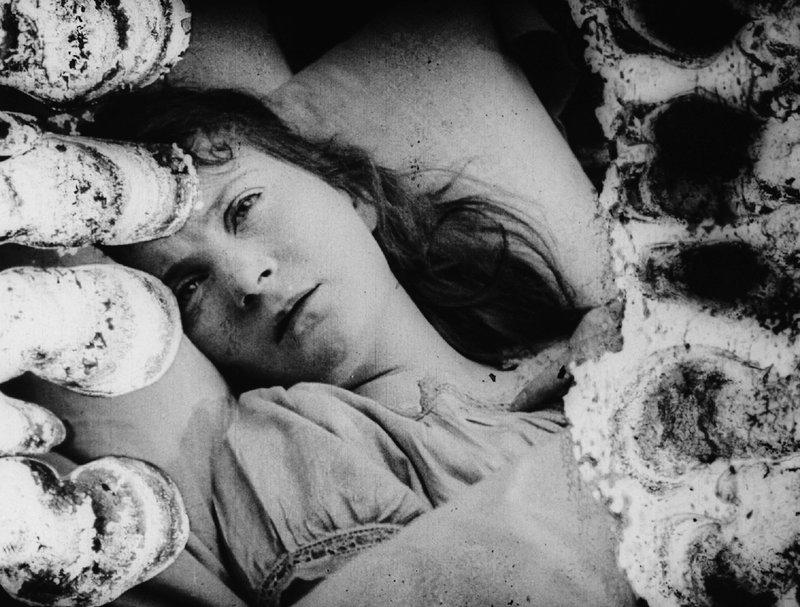
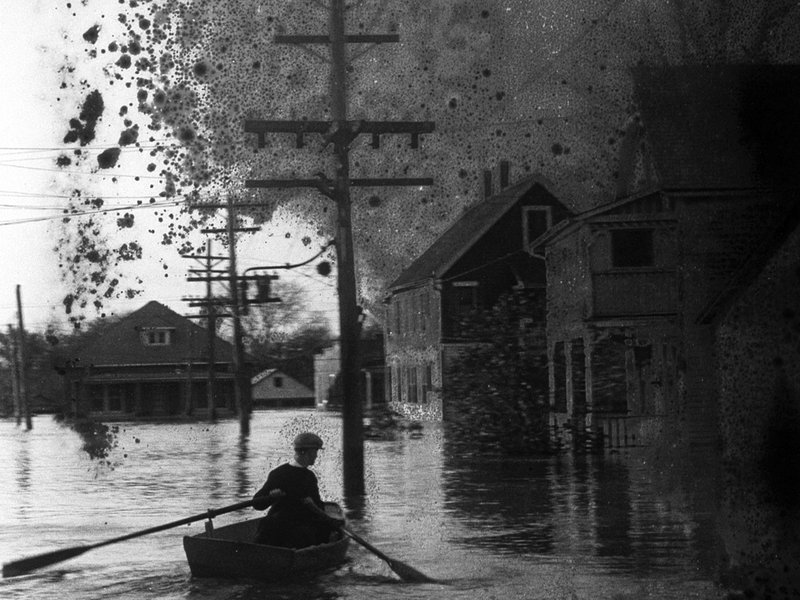
The Mississippi River Flood of 1927 was the most destructive river flood in American history. In the spring of 1927, the river broke out of its banks in 145 places and inundated 27,000 square miles to a depth of up to 30 feet. Part of its enduring legacy was the mass exodus of displaced sharecroppers. Musically, the “Great Migration” of rural southern Blacks to northern cities saw the Delta Blues electrified and reinterpreted as the Chicago Blues, Rhythm and Blues, and Rock and Roll. In The Great Flood (2013) filmmaker Bill Morrison and composer/guitarist Bill Frisell, using minimal text and no spoken dialog, have created a powerful portrait of a seminal moment in American history through a collection of silent images matched to a searing original soundtrack.
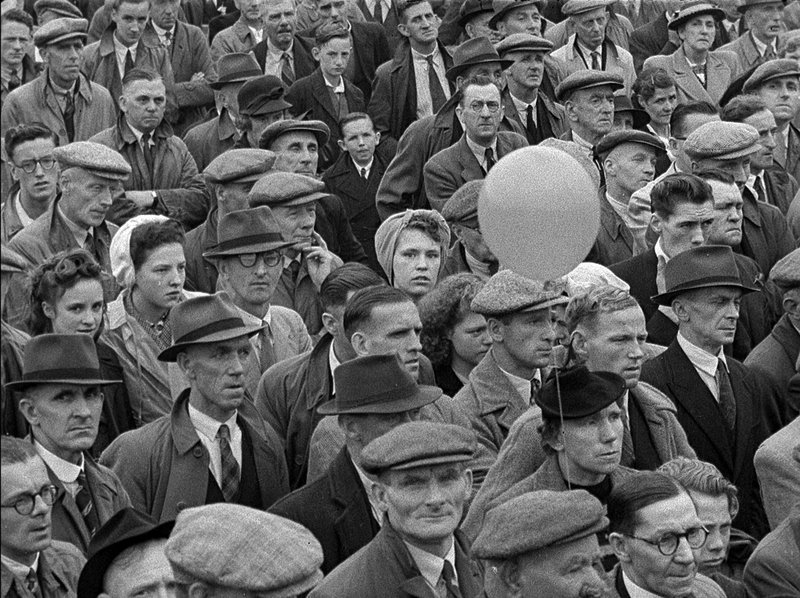
The Miners' Hymns (2011) renders homage to the coal mining history of the northeast of England and was the first collaboration between renowned American multimedia artist Bill Morrison and the late Icelandic musician and composer Jóhann Jóhannsson. Using rarely-seen archival footage of Durham and its coalfield, The Miners' Hymns celebrates the social, cultural, and political aspects of an extinct industry. Structured around a series of activities, including the hardship of pit work, the role of trade unions in fighting for workers’ rights, the annual Miners' Gala, and the pitched battles with the police during the 1984 strike, the film cuts between footage spanning 100 years. While almost entirely composed of black and white archival footage, the film also includes two contemporary sequences in color, shot from a helicopter hovering over the sites of former collieries, now rendered invisible and replaced by temples of modern leisure and consumerism. Jóhann Jóhannsson’s exquisite composition for the film draws upon the brass music tradition that was so intertwined with mining communities in the United Kingdom and adds an emotional, and at times visceral, weight to the archival imagery collected by Morrison; a timely reminder of choices that were made a generation ago regarding the role of labor in a corporate-based economy, the repercussions of which are being felt today.
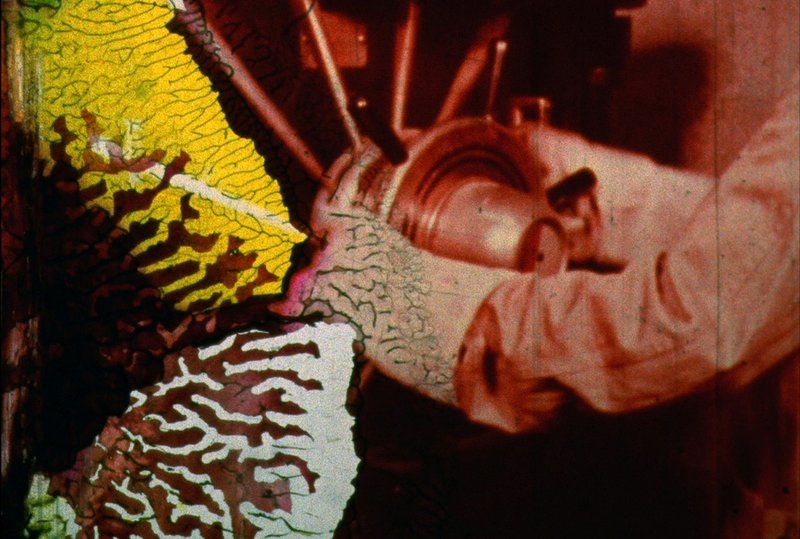
Spark of Being (2010) is a found footage re-telling of Mary Shelley's Frankenstein by filmmaker Bill Morrison, using archival and educational films. It was created in collaboration with composer and trumpeter Dave Douglas, who composed a score for his six-piece electric ensemble, Keystone. The project was commissioned by Stanford Lively Arts and was developed at Stanford during a year-long residency. Spark of Being has no dialogue, narration, or narrative exposition other than the thirteen chapter headers that appear before each section. As in the original text, the story begins from the perspective of a ship's captain who is exploring polar regions when he takes a mysterious passenger onboard. The passenger is a Doctor, who tells how he created a living creature with his own hands. The story is then told from the perspective of this Creature, who describes his education of the world and his ultimately fruitless quest for love, through decaying and distressed archival footage and educational films. The Creature ultimately confronts his Creator and, in a twist on the original story, the Doctor flees the monster, ultimately captaining a boat to the polar regions seen at the beginning of the film. In this way, it is revealed that the Doctor is also the Captain and that the Creature is also a mysterious traveler who boarded the ship to reveal himself as the Doctor. Hence, the film returns full circle with Creator and Creation in reversed and interchangeable roles.
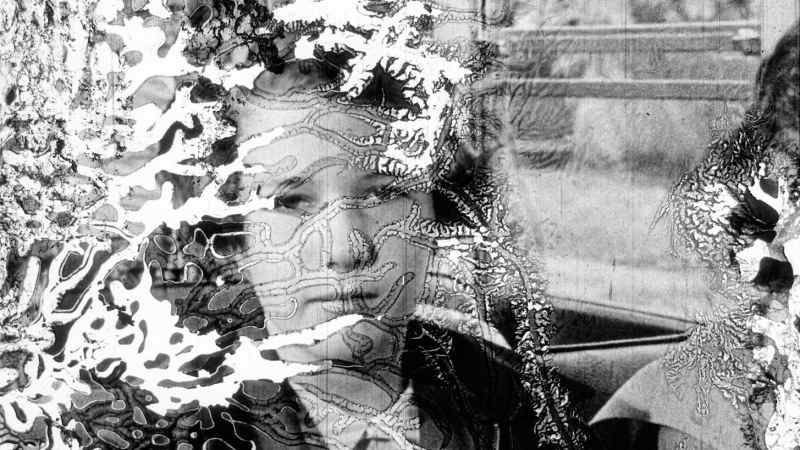
Decasia (2002) is the first film of the 21st century to win a place in the Library of Congress – having been deemed by the National Film Registry to be a flagship example of American film heritage – is also a spectral archive boasting a singular aesthetic. An archaeologist of cinema offers up a symphonic work here, a rhythmic composition made up of film strips in early or advanced states of degradation, where signs of decay on the celluloid become elements of a narrative that encompasses the entire history of the cinematic experience and substitutes the precision of film historiography with the ecstasy of the ephemeral. It is a cyclical work – like the dance of the dervishes in the shots that open and close the film, like a reel spinning steadily inside a movie projector, like the human experience of time itself. And as the first bona fide contemporary masterwork of the new millennium, built upon the resplendent forgotten ruins of the past, it convinced even Kenneth Anger to call it the most compelling and disturbing thing he had ever seen, and forced the documentary filmmaker Errol Morris to concede it was the greatest film in history.
Bill Morrison has premiered feature-length documentary films at the New York, Sundance, Telluride and Venice film festivals. He has received fellowships from the Guggenheim Foundation, the Alpert Award, and the Foundation for Contemporary Arts, as well as production grants from Creative Capital, the National Endowment for the Arts and Arté - La Lucarne. He had a mid-career retrospective at The Museum of Modern Art in 2014. His found footage opus Decasia (2002) was the first film of the 21st century to be named to the Library of Congress’ National Film Registry. The Great Flood (2013) was recognized with the Smithsonian Ingenuity Award for historical scholarship. Dawson City: Frozen Time (2016) was included on over 100 critics’ lists of the best films of the year and was later listed as one of the best films of the decade by the Associated Press, Los Angeles Times, and Vanity Fair, among others. In 2021 Morrison became a member of the documentary branch of the Academy of Motion Pictures Arts and Sciences. Incident (2023) won the Best Short Film Award from International Documentary Association in 2023, the Cinema Eye Honors for Outstanding Nonfiction Short in 2025, and it was nominated for an Academy Award in Documentary Short in 2025.



