
FFGR
The opening ceremony of the 28th TiDF
06.03.2026
NEWS
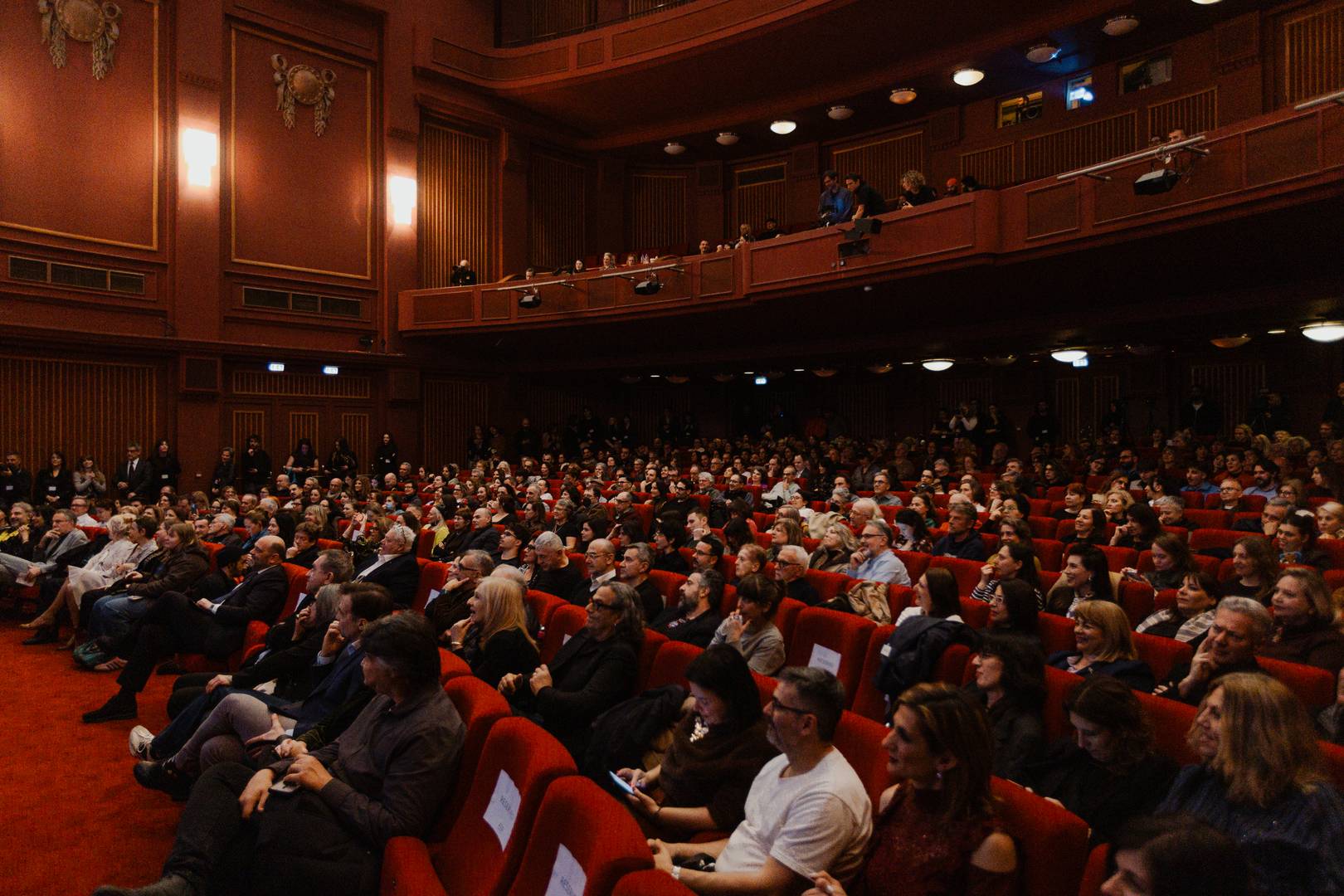
The opening ceremony of the 28th Thessaloniki Documentary Festival took place on Thursday, March 5, before a full house at the Olympion theatre. The warm atmosphere of the evening highlighted both the importance of close collaboration among the city’s cultural institutions and the growing significance of documentary filmmaking in the turbulent times we are living through.
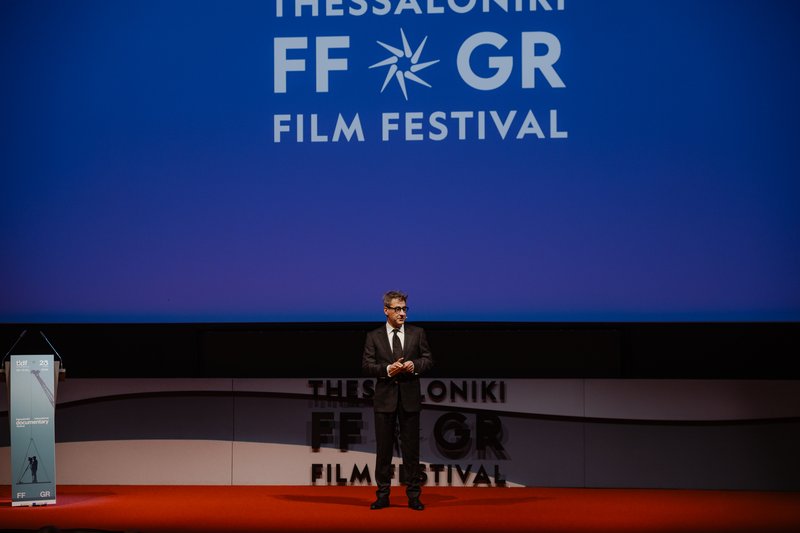
Artistic Director Orestis Andreadakis welcomed the audience with a surprise announcement. “This year, alongside the films we will watch in the theatres, we will also take part in a film that is being shot as we speak and will continue to unfold throughout the Festival. It is a film created for the Festival by our Grand Sponsor, COSMOTE TELEKOM, produced by COSMOTE TV, about the history and the experience of the Thessaloniki Film Festival. Starring Christos Passalis and Konstantina Messini, the two will move among us like ghosts, capturing the hidden moments of the Festival and of Thessaloniki itself. The film will be directed by Georgis Grigorakis, winner of the Golden Alexander. It is a love story about every kind of love, real and imagined, that began in a dark theatre and will remain with us forever through the magic of moving images.”
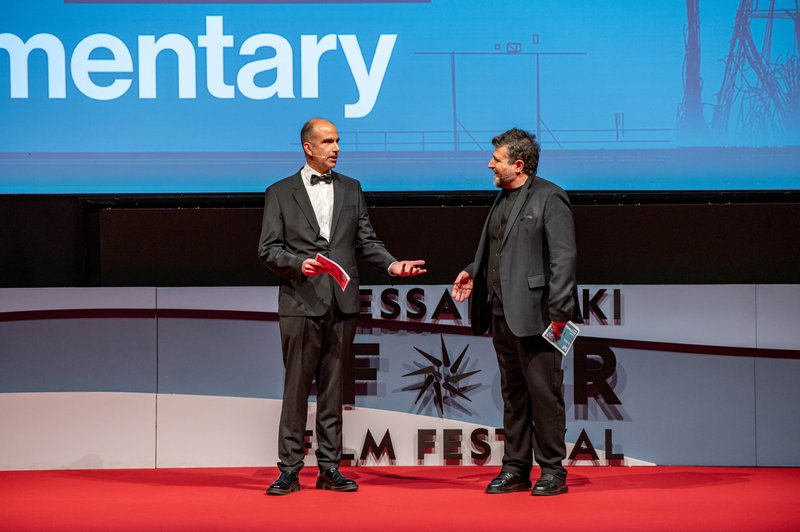
Shortly afterwards, Orestis Andreadakis welcomed the ceremony’s two hosts: Christos Galilaias, Artistic Director of the Thessaloniki Concert Hall, and Asterios Peltekis, Artistic Director of the National Theatre of Northern Greece (NTNG). The two presenters greeted the audience and noted that the Festival has brought Thessaloniki international recognition, while also helping the city connect with the world.
They then gave the floor to TFF’s General Director, Elise Jalladeau, who spoke about the important role documentary cinema and archives play in helping us understand the past, especially in moments of crisis such as the one we are living through today. “Together, we are living through this strange and dizzying feeling of watching History unfold right before our eyes. For some, History repeats itself. For others, tragically, it ‘stumbles’. Yet for everyone it remains the key to understanding what is happening around us today. At the Thessaloniki Documentary Festival, we decided to turn our attention to this past that speaks so loudly, through archive films that open the doors to ‘All the World’s Memory’, as Alain Resnais once said. His film Night and Fog, which we are screening as part of this year’s edition, was shown to students across France when I was in secondary school. It was a difficult film for children, but absolutely necessary in shaping citizens with awareness, in a Europe that was then still taking shape,” Elise Jalladeau said.
At the Thessaloniki Documentary Festival, we decided to turn our attention to this past that speaks so loudly, through archive films that open the doors to ‘All the World’s Memory’ - Elise Jalladeau
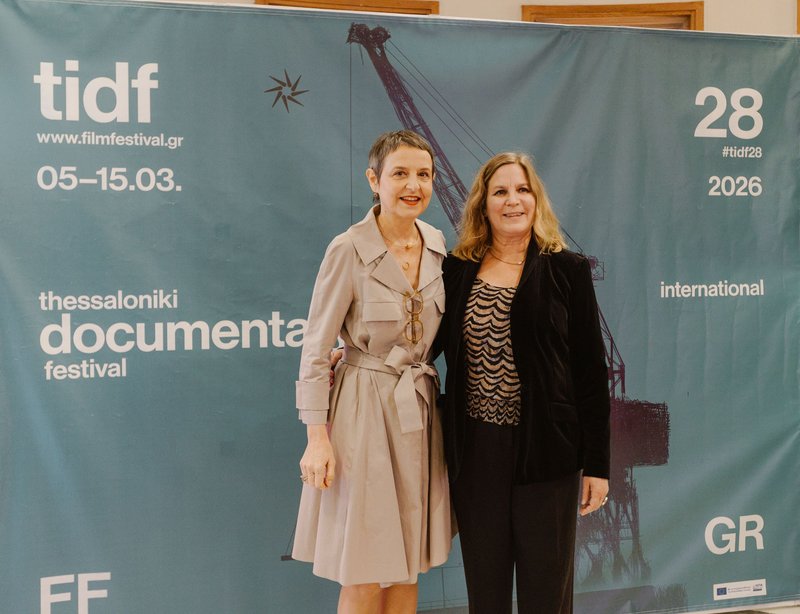
“Today, more than ever, we need our past, our archives, our memory, to understand where we come from before deciding where we are going. We need this memory to remain accessible and alive,” she said. She also referred to the platform filmography.gr, a joint initiative of the Thessaloniki Film Festival, the Hellenic Film and Audiovisual Center, and the Hellenic Film Academy, noting that it brings together “the entire memory of Greek cinema.” She described it as “a whole world in itself, a foundation for shaping the Greek cinema of tomorrow.”
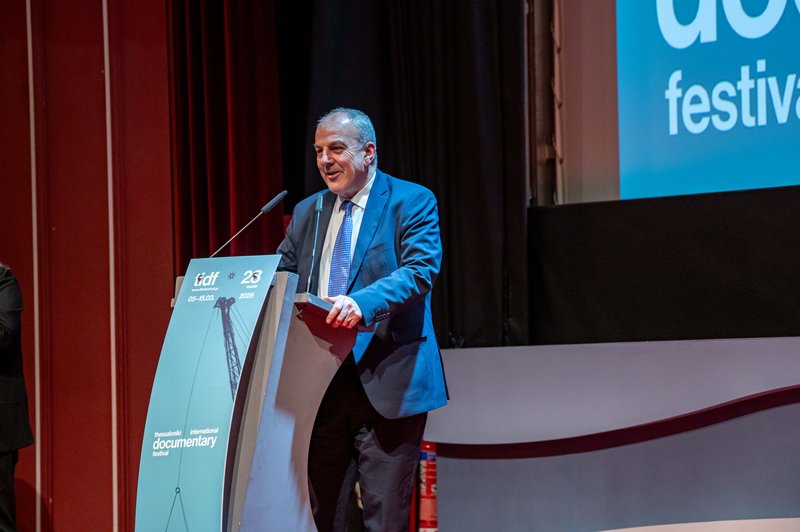
At that point, Christos Galilaias and Asteris Peltekis presented this year’s Festival spot, directed by Steve Krikris, featuring images from Thessaloniki’s past, present and future. They then invited the Deputy Regional Governor for Culture and Sports of the Region of Central Macedonia, Christos Mittas, to address the audience, who underlined the importance of the Festival for Thessaloniki’s identity. “The Festival is something special for Thessaloniki. In cooperation with the Minister of Culture, the Region, the Municipalities and all cultural institutions, we work together to serve and support this city in the best possible way. Culture brings us together, and that is why we are all proud,” he noted.
During the opening ceremony, this year’s honorary award recipients were also announced: the pioneering filmmaker Vouvoula Skoura, the iconic producer Yorgos Papalios, and the radical American multimedia director Bill Morrison. The two presenters also highlighted the presence of a beloved guest of the Festival, the luminous star of French cinema Juliette Binoche, who will present her directorial debut In-I In Motion at the 28th TiDF and will take part in an open discussion with the audience.
Then, the Deputy Minister of Culture responsible for Contemporary Culture, Iason Fotilas took the floor. He announced that a new “distinct and dedicated budget for documentary” will be introduced, while underlining that documentary filmmaking “is a cornerstone of every democratic society.” More specifically, Mr Fotilas said: “From today until March 15, Thessaloniki becomes a living laboratory of ideas. At a time when cynicism, brutality and rawness increasingly shape our public conversation, documentary cinema stands as a necessary counterbalance. Documentary is not simply a cinematic genre. It is an act of responsibility, a witness to its time, a steady gaze that illuminates what risks being lost in the noise of information. The power of images today is immense. They can inform and awaken. They can cultivate empathy and critical thought. Yet they can also mislead. Images often become tools of propaganda, instruments of manipulation, carriers of misinformation. The speed of their spread is not always accompanied by the verification they require. For this very reason, documentary, with the time it devotes to research and the depth of analysis it demands, remains a foundation of democratic society,” he said.
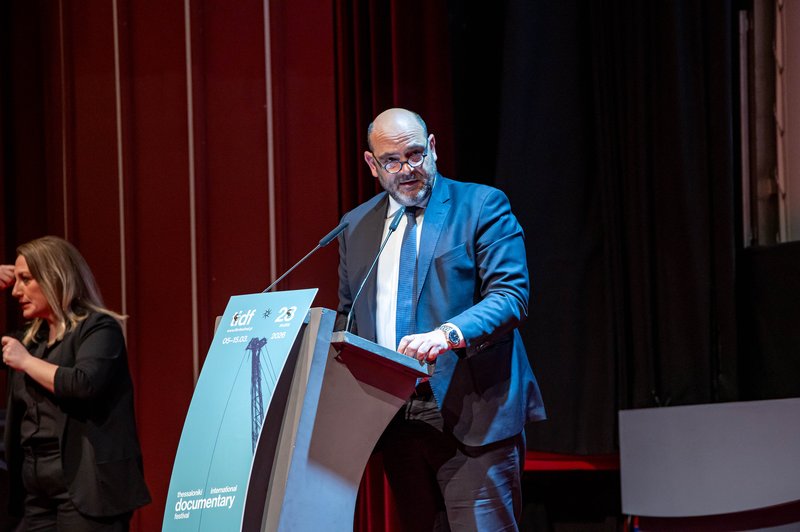
“I follow the global conversation unfolding around the importance of documentary filmmaking, and I am pleased that part of this dialogue is taking place within the framework of our own Festival. In this spirit, and in recognition of the longstanding contribution of our filmmakers, the Ministry of Culture is moving forward with meaningful support initiatives. For the first time within the selective funding programmes, we are establishing a distinct and dedicated scheme for documentary, accompanied by its own clearly defined budget. This reflects our recognition of the strength and significance of the genre, as well as the contribution of documentary creators to the Greek audiovisual production. It is a new and fair reform, part of the broader increase in the overall budget of the selective funding programmes, an increase approved by the Ministry of National Economy following the coordinated efforts of the Ministry of Culture and the Hellenic Film and Audiovisual Center. The budget now stands at 15 million euros, up from 7 million euros in 2025, a figure that had already marked a significant rise compared to previous years. In this way, we are giving filmmakers the tools they need to continue recording, researching and telling their stories,” Mr Fotilas concluded.
Just before the screening of Ask E. Jean by Ivy Meeropol, the Festival’s opening film, Orestis Andreadakis invited the documentary’s director on stage to share a few words with the audience. “Thank you for this incredible gift. Thank you for supporting my film from the very beginning, when you first saw an early cut almost a year ago. After more than six years of work, tonight marks the international premiere of this documentary. I only wish the whole team could be here, but I will make sure to carry this atmosphere back to them,” she said.
“We arrived in this beautiful, vibrant city, where cinema and truth are celebrated. And yet we are living through a difficult time in the world, especially for those who care about truth, justice, and the right to live freely, without fear of violence, displacement, or retaliation. When I first approached Elizabeth Jean to ask if she would take part in the documentary, she replied, ‘I’d rather eat my shoe,’ because even the bravest defenders of justice may not wish to see a film made about their lives. Still, I persisted, and in the end I convinced her. It then became my responsibility to carry her story, and to persuade her how important it would be to share it with all of us. If she were here with us tonight, she would urge us to feel outrage, but also to remain hopeful, to draw inspiration from her struggle, to laugh, and to embrace her story. Thank you for the great gift of being here tonight,” the American filmmaker concluded.



